Princeton, Texas has spent most of its history as a quiet agricultural town along US-380 in eastern Collin County, a place where cotton fields and cattle defined the landscape for well over a century after its founding in the 1870s. That story changed dramatically in the 2010s and accelerated through the early 2020s, when Princeton became one of the fastest-growing cities in the entire state. New master-planned communities rose on land that had been farmland just seasons before, and the population swelled from a few thousand to tens of thousands in under a decade. Out along US-380, we handle chimney sweep and chimney cleaning in Princeton, first service for new-build fireplaces, and chimney repair in Princeton on the older homes near downtown.
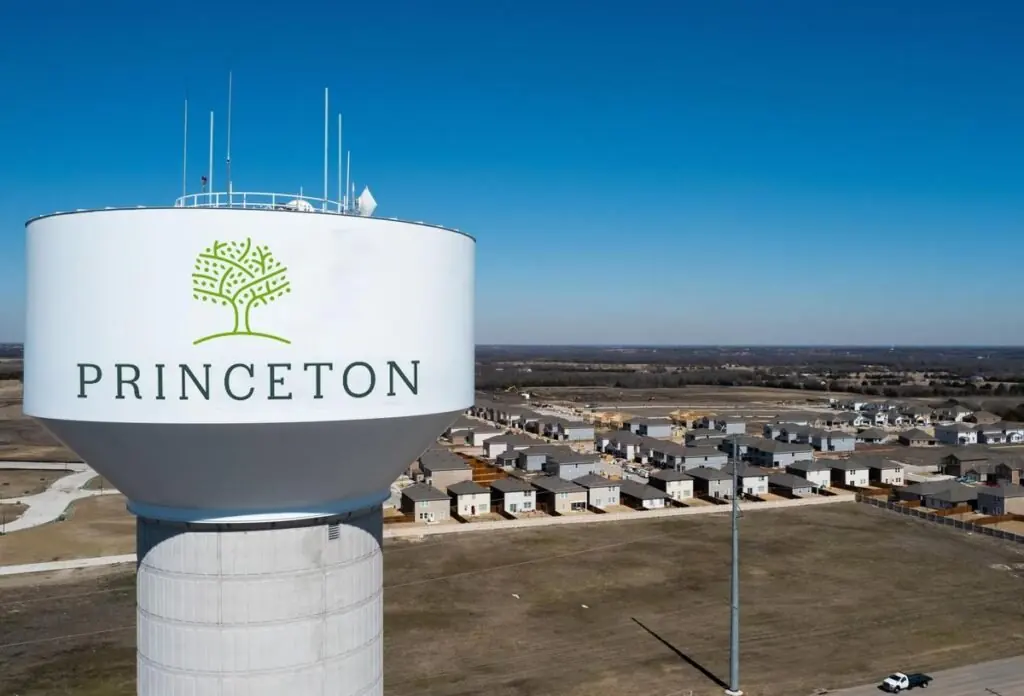
That explosive growth means Princeton is now a city of two very different housing eras living side by side. There are older ranch-style and craftsman homes near the original downtown core, some of them with brick fireplaces that have been in service for thirty, forty, or even fifty years. And then there are the vast new subdivisions stretching south and east of US-380, filled with production homes built between 2018 and today, most of them with prefabricated gas fireplaces installed during construction. Each era comes with its own chimney questions, its own maintenance timeline, and its own set of things that can quietly go wrong.
Lowes Chimney Sweep has served the Dallas-Fort Worth area for 25 years and across 98 cities, including Princeton and its Collin County neighbors. Whether you're in an established home near downtown or a brand-new build in one of Princeton's newer neighborhoods, we show up with protective floor coverings, HEPA dust control, and clear explanations before any work begins, no surprise pricing, no pressure. Our standard single-flue chimney cleaning with a Level 1 visual inspection is a flat $299, and everything beyond that is priced after an on-site inspection so you always know exactly what you're paying for and why.
Princeton was founded in the 1870s along the Missouri-Kansas-Texas Railroad, the Katy line, and for most of its history it was a quiet East Collin County farming community built around cotton, cattle, and small-town life. For well over a century, Princeton's population stayed modest, and the town's identity was shaped by its agricultural roots rather than suburban sprawl.
That changed fast. Princeton has become one of the fastest-growing cities in the entire state of Texas, with its population surging from roughly 6,000 residents in 2010 to well over 25,000 today, and still climbing. New master-planned subdivisions have been rising along US-380 and FM-982, pulling in thousands of families priced out of Frisco, McKinney, and Allen to the west.
That explosive growth means Princeton is a city of two very different eras living side by side. The old railroad-era core and mid-century homes near downtown carry a century or more of history in their walls. The brand-new subdivisions on what was recently farmland are still settling into the Collin County clay. Understanding both sides of Princeton's story is exactly why chimney service here requires more local knowledge than most cities in the Metroplex.
In most established DFW suburbs, the housing stock is fairly uniform, you can make reasonable assumptions about what you'll find behind the chase cover. Princeton doesn't work that way. Within a few miles of each other, you have older masonry fireplaces built decades ago with handlaid brick, mortar that has been through hundreds of freeze-thaw cycles, and clay flue tiles that may never have been inspected, sitting right next to brand-new production homes with factory-built zero-clearance fireplace inserts and prefab metal flue systems that are less than five years old.
Those two categories have almost nothing in common from a service standpoint. Older masonry systems need attention to mortar joints, crown condition, brick spalling, and original damper hardware that may be corroded or broken. Newer prefab systems require inspections focused on metal firebox integrity, panel condition, chase covers, and whether the gas log or insert was ever commissioned and cleaned after the builder handed over the keys.
That range, historic masonry on one street, fresh construction on the next, is what makes Princeton genuinely different. A technician who only knows one type of system will miss problems on the other. Our team works across both categories every week throughout Collin County, and we bring that dual expertise to every Princeton home we visit.
Free online quotes · Custom stainless chase covers · Gas fireplace specialists · Open 7 days
(214) 225-8874📍 1008 Ridgefield Dr, Plano TX 75075 | 🕗 Open 7 days · 8AM-8PM
The older residential streets near downtown Princeton and the Hunt Street corridor tend to hold the city's original housing stock, homes built from the mid-20th century back through earlier decades. Fireplaces in these areas are typically full masonry systems: brick fireboxes, clay tile-lined flues, and mortar crowns that have weathered decades of North Texas summers and ice storms. By this point, many of those crowns have developed hairline cracks that funnel rainwater into the flue, and original cast-iron dampers are often rusted or misaligned. These homes benefit most from a thorough sweep combined with a careful visual inspection of the crown, cap, and mortar joints.
Farther out along the US-380 corridor and into the master-planned communities developing along FM-982 and beyond, the picture shifts completely. Subdivisions that have gone up in the last ten to fifteen years are filled with production builder homes featuring factory-built fireplaces, brands like Superior, Heatilator, or Majestic installed in a framed chase rather than a full masonry structure. Many of these homes also have gas log sets or gas fireplace inserts rather than wood-burning systems. These newer fireplaces need different care: gas valve and burner inspections, confirmation that the chase cover is shedding water properly, and verification that the firebox panels haven't cracked from thermal stress.
Whether your Princeton home is a classic on an older block or a newer build in one of the growing subdivisions, the starting point is always the same: an honest, documented look at what you actually have before any recommendations are made.
Princeton sits squarely in the zone of North Texas weather extremes. Summer temperatures push well past 100°F for weeks at a time, causing masonry materials to expand. When winter arrives, sometimes suddenly, as it did during the hard freezes that have hit Collin County in recent years, that same masonry contracts rapidly. Repeated expansion and contraction is one of the leading causes of cracked crowns, spalled brick faces, and deteriorating mortar joints. A chimney that looked fine in September can have new damage by February.
Ice storms are a particular concern. When water gets into small cracks in a crown or mortar joint and then freezes, it expands and widens those cracks, sometimes dramatically. Princeton has seen significant ice events, and after each one, chimney caps get knocked loose, crowns crack further, and flashing seals that were already soft give way entirely. Spring rains then drive moisture into those newly opened gaps, starting the cycle of interior water damage that can threaten the firebox, the smoke chamber, and eventually the ceiling or wall framing around the fireplace.
Princeton also sits on Collin County's expansive clay soils, the same black and dark gray clays that cause foundation movement across the region. When the ground shifts, masonry chimneys attached to a home's foundation can develop cracks in the flue liner or at mortar joints that are impossible to see without a proper inspection. If your home has shown any signs of foundation movement, your chimney deserves a close look as well.
The most common call we get from Princeton is for an annual chimney sweep, and the busiest window runs from September through November as homeowners prepare for the first fire of the season. A standard sweep removes creosote and debris from the flue and is $299 flat (standard single-flue cleaning + Level 1 inspection). For Princeton's many newer gas fireplace homes, we also book a significant number of gas fireplace inspections, because gas systems don't produce creosote, they often go uninspected for years, but the burner assembly, ignition system, and firebox panels still need periodic review for safe operation.
Cap and crown repairs are the second most frequent category. Princeton's weather cycle is hard on crowns, and once a crown starts cracking, it rarely heals itself. We also see a steady stream of damper replacements, both on older homes where the original throat damper has rusted beyond function, and on newer homes where homeowners want to upgrade to a top-sealing damper that closes off the flue entirely when the fireplace isn't in use, improving energy efficiency year-round.
Mortar joint repointing comes up regularly on Princeton's older homes, particularly those that haven't had chimney work in a decade or more. Deteriorated mortar is one of the quieter threats to a chimney, it doesn't announce itself with a visible leak right away, but it allows moisture to penetrate the masonry from the outside and can lead to structural damage over time. Every one of these services is priced after we've actually seen your chimney, so there are no surprises when we arrive.
Princeton has a small but genuine older core. Homes built before 1990 near the original townsite along US-380 are typically masonry-construction properties that have seen decades of North Texas weather. Clay tile flue liners crack over time, mortar joints erode, and chimney crowns deteriorate, none of which is visible from the roofline. If your home predates 1990, a Level 2 inspection is the right starting point to confirm whether your liner is still intact and your firebox is safe to use.
The wave of growth Princeton experienced in the 1990s and early 2000s brought a different type of fireplace: the factory-built prefab unit. These metal fireplaces have a designed service life, and many that were installed 20 to 25 years ago are now approaching or past it. Damaged panels, deteriorating refractory, and warped damper components are common findings in homes from this era. A professional inspection will tell you honestly whether the unit can be serviced or whether replacement is the more cost-effective path.
Princeton's most dramatic growth has happened since the mid-2010s. Subdivisions like Parks of Princeton, Bridgewater, and The Reserve have added thousands of production homes in a short span, and nearly all of them include builder-grade gas or wood-burning fireplaces. Builder-grade does not mean low-quality, but it does mean the fireplace was likely used for the first time without any professional inspection. A first-season chimney sweep and inspection is the single best thing a new Princeton homeowner can do before lighting that first fire.
When a Lowes Chimney Sweep technician arrives at your Princeton home, they arrive on time and ready to work. Before anything is touched inside, protective floor coverings go down around the fireplace opening and a HEPA-filtered vacuum is set up to capture fine creosote and ash particles before they ever reach your air or your floors. Chimney sweeping is an inherently dusty job, we treat your home as if the mess is our problem to manage, not yours to clean up afterward.
After the sweep, you receive a clear verbal and documented explanation of everything found. If the chimney is in good shape, we tell you that. If there are issues, a cracked flue tile, a deteriorating crown, a damper that isn't sealing, we show you the before-and-after documentation and explain what it means in plain language. No technical jargon, no pressure. Every recommendation we make is something you can approve, decline, or schedule for another visit. The decision is always yours.
We back every job with a 100% guarantee: if something goes wrong with our work, we come back and make it right. That standard has held for 25 years across nearly 100 DFW cities, and it holds the same way in Princeton. You will never receive a surprise charge after the fact, everything beyond the initial sweep is quoted on-site after inspection, and nothing moves forward without your go-ahead.
Standard single-flue chimney cleaning is $299 (includes a Level 1 visual inspection) and removes creosote buildup, ash, and debris from the firebox, smoke chamber, and flue. It is the foundation of chimney safety and is recommended every season for wood-burning fireplaces. Chimney Inspections go deeper, we assess the liner, firebox, damper, crown, cap, flashing, and exterior masonry to identify any conditions that could allow heat, gas, or water to go somewhere it shouldn't. Cap and Crown Repair addresses the two most weather-exposed parts of your chimney: the metal cap that keeps animals and rain out of the flue, and the concrete crown that sheds water away from the masonry below. Both are common points of failure on Princeton homes.
Flashing Repair seals the junction where your chimney meets your roof, one of the most frequent sources of water intrusion we find in Collin County homes. Damper Repair and Replacement covers both the traditional throat damper just above the firebox and top-mount dampers, which also double as chimney caps. A damper that doesn't seal wastes energy year-round. Firebox Repair rebuilds damaged refractory panels or brick and mortar inside the firebox itself, restoring the heat-resistant barrier between the fire and your home's framing.
Gas Fireplace Servicing includes cleaning the burner assembly, inspecting the ignition system, checking the venting, and making sure the unit operates safely, important maintenance that many gas fireplace owners overlook because the fireplace looks clean. Chimney Waterproofing applies a vapor-permeable sealant to exterior masonry that allows the chimney to breathe while blocking rain absorption, critical in a climate like North Texas where temperature swings cause repeated freeze-thaw stress on brick and mortar.
Does a new-build gas fireplace really need sweeping? Yes, not for creosote, but for inspection. Construction debris, dust, and even small animals can find their way into a flue before or after a home is finished. Gas fireplaces also need their venting, burner, and ignition components checked to confirm they're operating correctly. A builder walkthrough is not a chimney inspection, and most Princeton homeowners are surprised to learn their brand-new fireplace has never been professionally evaluated.
How often should a wood-burning fireplace be cleaned in Collin County? The National Fire Protection Association recommends an annual inspection and cleaning for any fireplace that is used. In North Texas, where winters are relatively mild and fireplaces sometimes only get a handful of uses per season, homeowners occasionally wonder if every year is necessary. It is, even light use deposits creosote, and a single season is enough time for an animal to take up residence or for a cap to come loose.
What does a cracked chimney crown actually look like? From the ground, usually nothing, which is the problem. A crown crack is typically only visible from the roof or with a camera inspection. What you might notice instead is water staining on the ceiling or walls near the chimney, efflorescence (white mineral deposits) on the exterior brick, or deteriorating mortar joints on the upper courses of masonry. Any of these signs on a Princeton home warrants a crown inspection before the next rain.
What is that rattling sound coming from the damper? In most cases it is either a damper plate that has warped from years of heat and no longer sits flat in its frame, or a top-mount damper whose tension spring or rubber gasket has worn out. Both are common findings on older Princeton homes, and both mean the damper is not sealing properly, which allows conditioned air to escape up the flue all winter and summer long. It is usually a straightforward repair or replacement once the cause is confirmed on-site.
Princeton sits at the eastern edge of Collin County, and Lowes Chimney Sweep serves the full ring of communities around it. To the west, we regularly work in Wylie and Lavon, two fast-growing cities whose housing stock mirrors Princeton's mix of older established homes and newer production neighborhoods. McKinney, the Collin County seat, is also well within our service area and brings its own range of home ages, from historic properties near the downtown square to large master-planned communities built in the last decade.
To the east, we cross into Hunt County to serve Royse City and Greenville. Royse City has seen its own growth surge as families look for more affordable Collin County-adjacent options, and Greenville's older housing stock includes many wood-burning fireplaces that benefit from regular professional maintenance. To the north and east of Princeton, Farmersville homeowners also call us for both routine sweeps and larger masonry repairs.
Whether your home is in Princeton proper or in one of these surrounding communities, you are getting the same technician standards, the same HEPA dust control, the same no-pressure inspection process, and the same 100% guarantee. One call to 214-225-8874 covers the entire eastern Collin County and western Hunt County area.
Yes, and newer homes are actually where we find some of the most important first-time issues. Builders install gas fireplace inserts and wood-burning fireplaces quickly, and construction dust, debris, and even leftover materials can end up inside the firebox or flue. A sweep before your first real fire gives you a clean, documented starting point and confirms the system was installed correctly.
We've been serving the eastern Collin County corridor, including Princeton, Farmersville, and Royse City, for 25 years, long before the building boom brought tens of thousands of new residents. We schedule Princeton homeowners routinely and are familiar with the specific builders and fireplace models common to your ZIP codes. Fall is our busiest season, so booking in late summer keeps your wait short.
Homes in that vintage typically have direct-vent or B-vent gas fireplaces, and the most common needs we see are a level-one inspection, a burner and pilot assembly check, and a look at the termination cap and chase cover for any early weathering. Princeton's clay-heavy soil can cause subtle foundation movement that occasionally affects chase framing, so a visual inspection every couple of years is worthwhile even on newer homes.
Older Princeton homes built in the mid-20th century or earlier often have unlined brick chimneys that were designed for wood fires but were sometimes later connected to gas appliances without proper liner upgrades. We'll inspect the flue liner condition, look for mortar deterioration from decades of North Texas freeze-thaw cycles, and check the crown and cap. We explain everything we find before recommending any work.
A standard single-flue chimney cleaning with a Level 1 visual inspection is $299. Anything beyond the sweep, repairs, liner work, chase cover replacement, damper service, is quoted after our technician completes an on-site inspection and reviews the findings with you in person. We don't quote repair prices over the phone because every chimney's condition is different, and we believe you should see exactly what we see before agreeing to anything.
It absolutely can. The expansive clay soils throughout Collin County, including Princeton, swell when wet and contract when dry, and chimneys are particularly vulnerable because their footings behave differently from the main house slab. We look for stair-step cracking in exterior brick, gaps where the chimney meets the roofline, and interior signs of movement during every inspection. Catching these issues early is far less costly than waiting.
Yes. Hail and high winds can crack flue tiles, dislodge or damage chase covers and termination caps, and compromise the chimney crown without leaving any visible signs from street level. Water that enters through those small cracks can cause significant interior damage over a single rainy season. A post-storm inspection is one of the most practical things a Princeton homeowner can schedule.
It could be, and it warrants prompt attention. An unusual flame pattern can indicate incomplete combustion, a partially blocked flue, or a problem with the burner assembly. A faint smell could signal a venting issue that's allowing combustion byproducts to drift into your living space. We recommend not using the fireplace until it's inspected. Call us at 214-225-8874 and describe what you're seeing so we can prioritize your appointment appropriately.
We service both. The majority of Princeton's post-2015 homes have direct-vent or vent-free gas inserts, and we're experienced with the brands and configurations that Collin County builders commonly install. For wood-burning fireplaces, which still appear in some Princeton homes, particularly older ones and certain custom builds, we offer full sweep, inspection, and repair services.
It's a smart move. Buyers' home inspectors often flag chimneys, and an unresolved chimney issue discovered during a buyer's inspection can delay closing or reduce your negotiating position. Having a current sweep and inspection on record, with before-and-after documentation, gives buyers confidence and can help your transaction move smoothly. We provide documentation you can share with your agent or the buyer.
A Level 1 inspection covers the readily accessible portions of the fireplace and flue and is appropriate for chimneys that have been in regular use with no changes. A Level 2 inspection is more thorough and is recommended when you're buying or selling a home, after any significant weather event, or if the chimney system has been altered. Our technician will recommend the appropriate level based on your home's history when they arrive.
A standard sweep and inspection typically takes between 60 and 90 minutes. Yes, we ask that an adult homeowner be present, not just to provide access, but because we review our findings with you directly before leaving. We use protective floor coverings and HEPA dust control so your home stays clean, and we'll walk you through anything we photographed during the appointment before recommending any next steps.
Chimney Sweep · Chimney Inspection · Chimney Repair · Fireplace Repair · Chimney Cap Repair · Service Areas/frisco Tx · Service Areas/plano Tx · Service Areas/mckinney Tx · Service Areas · Chimney Guides
Princeton, Texas is one of the most remarkable growth stories in Collin County, a small cotton-era town that has become one of the fastest-growing communities in the entire country, with thousands of families putting down roots each year. That growth brings a genuinely unique mix of chimneys: vintage brick structures that have weathered decades of North Texas weather, and brand-new gas fireplace systems that have barely seen a full winter. Lowes Chimney Sweep has been serving the communities of eastern Collin County for 25 years, and we understand what Princeton's soil, climate, and housing stock actually demand from a chimney company.
Whether your fireplace is original to a mid-century home near downtown Princeton or was installed last year in a new build off of Highway 380, we bring the same honest, documented, no-pressure approach to every appointment. No surprise pricing. No work done without your approval. A 100% guarantee that if something goes wrong, we fix it. That's what 25 years and 98 DFW cities of experience looks like, and it's exactly what Princeton homeowners deserve.
Serving Princeton homeowners across every neighborhood and build year, from the original downtown streets to the newest master-planned communities along FM 982. Standard cleaning + Level 1 inspection is $299, and we'll explain everything we find before any repair is ever discussed.
"Very pleased with the professionalism and promptness of service. The chimney sweep was done quickly and efficiently at significantly less cost than the first quote I got from another company. Happy to recommend Lowes Chimney Sweep to anyone in Plano!"
"Outstanding chimney sweep service from start to finish. They were punctual, courteous, and left our chimney spotless with no mess in our home. I won't use anyone else for chimney services in Dallas TX!"
More reviews from homeowners across the metroplex are on our reviews section, or learn more about our team before you book.
Full-service chimney care across Princeton and the DFW metroplex.
Helpful guides: