● Pricing reviewed & current for October 2026
Not every damaged chimney cap needs replacing. A loose cap, torn screening, or failed sealant is often a straightforward repair. Our trained technicians assess what you have, repair it when it is sound, and tell you honestly when it is not worth saving.
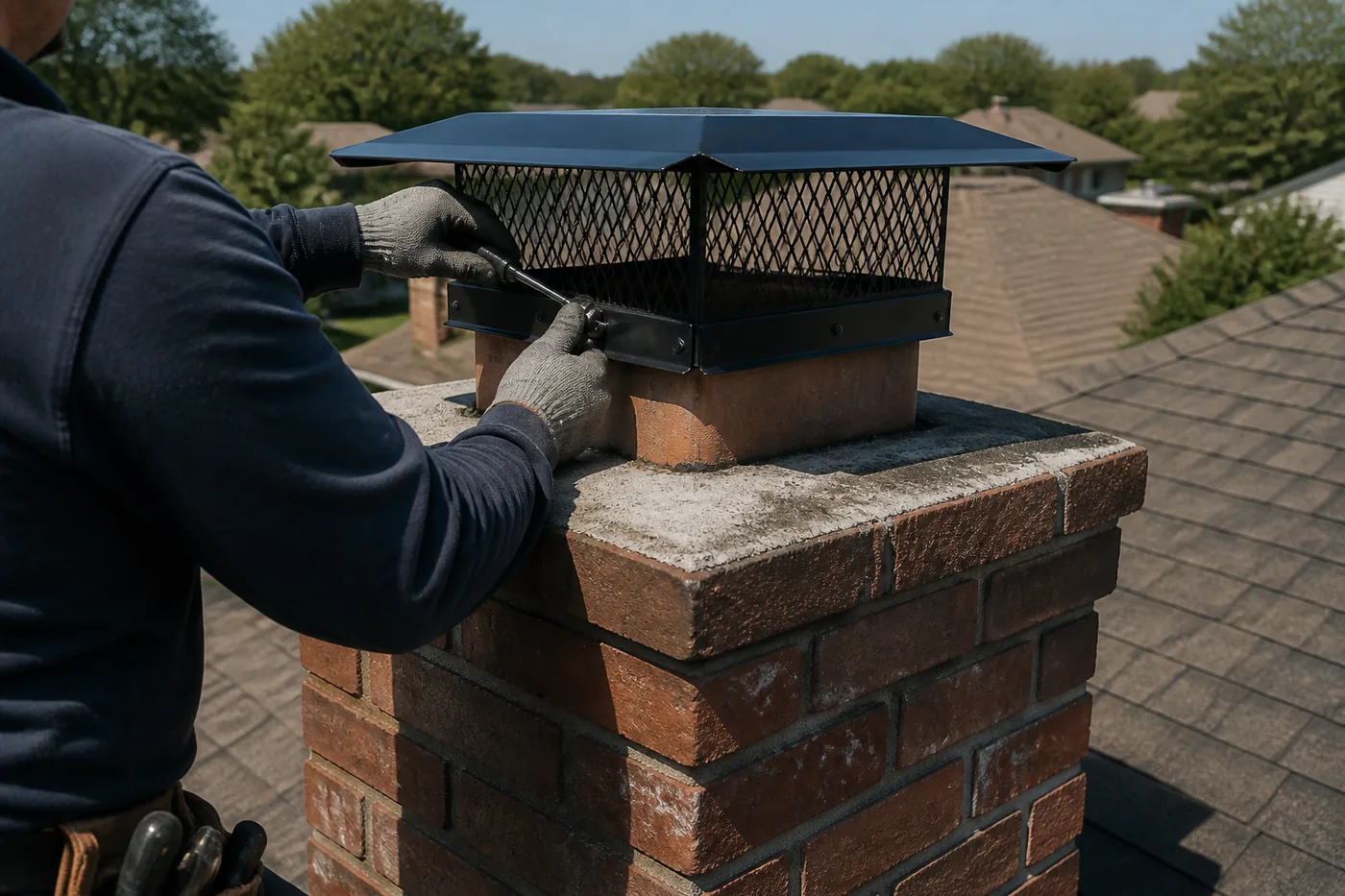
Quick answer: Chimney cap repair in Dallas-Fort Worth typically costs $300 to $700 in 2026, depending on the damage and whether the cap can be repaired or needs replacing.
Most homeowners find out their chimney cap is damaged when someone tells them it needs replacing. Often it doesn't. A cap that has come loose in a storm, lost its screening, or opened up at a seam is frequently repairable for a fraction of replacement cost, and it will keep doing its job for years.
What damages caps in North Texas: hail is the big one, along with the wind that comes with our spring storms. Both work on the fasteners, the mesh, and the seams. Add year-round humidity and you get surface corrosion on cheaper steel caps. The damage looks alarming from the ground, but the question that matters is whether the cap's structure and mounting are still sound.
That's the assessment we do. If the base and body are solid, we re-secure, reseal, and restore it. If the metal has failed or the fit was wrong to begin with, we say so and point you to cap replacement rather than charging you for a repair that won't hold.
Not sure which one you need? Call (214) 225-8874 for a straight answer.
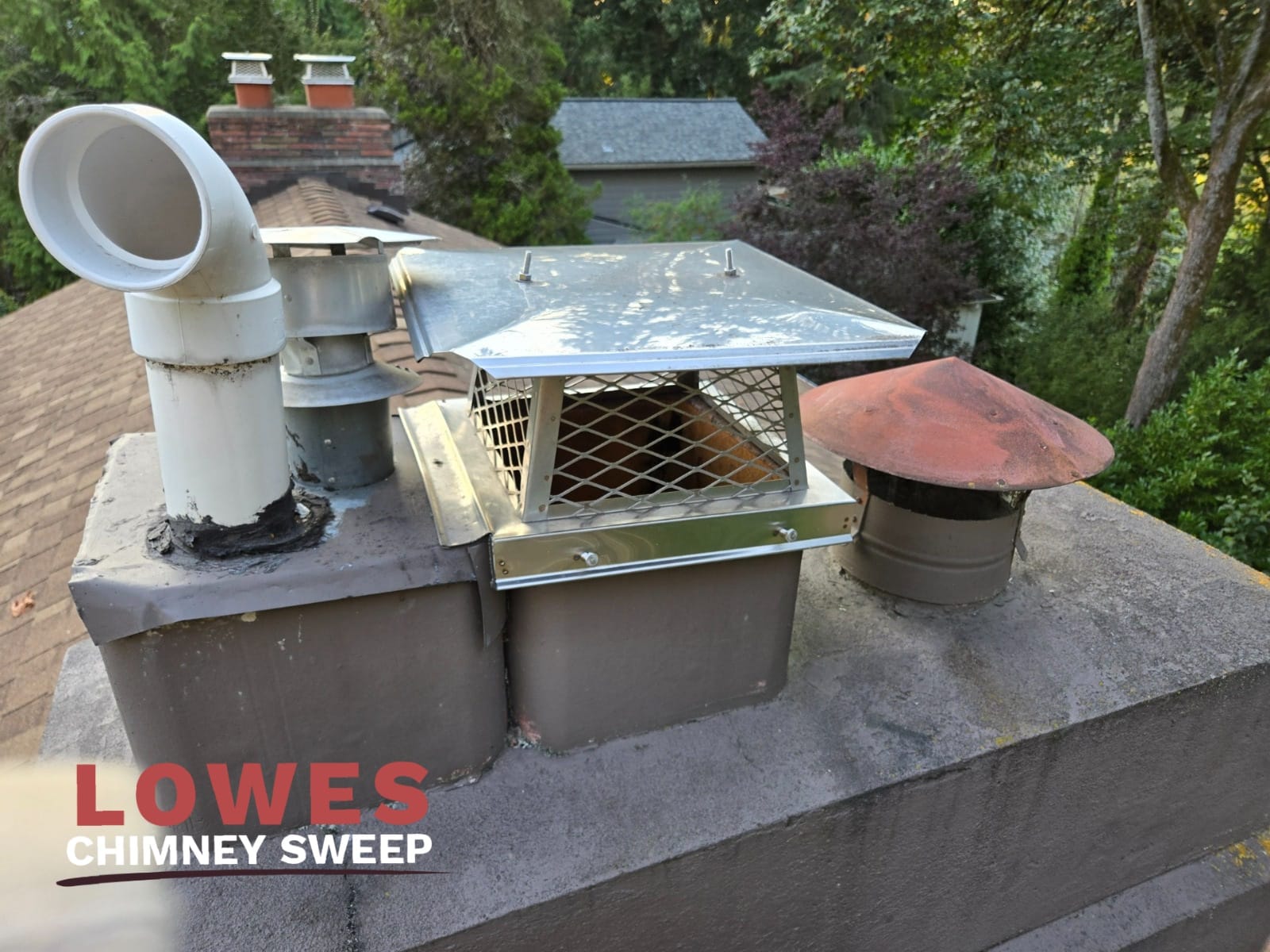
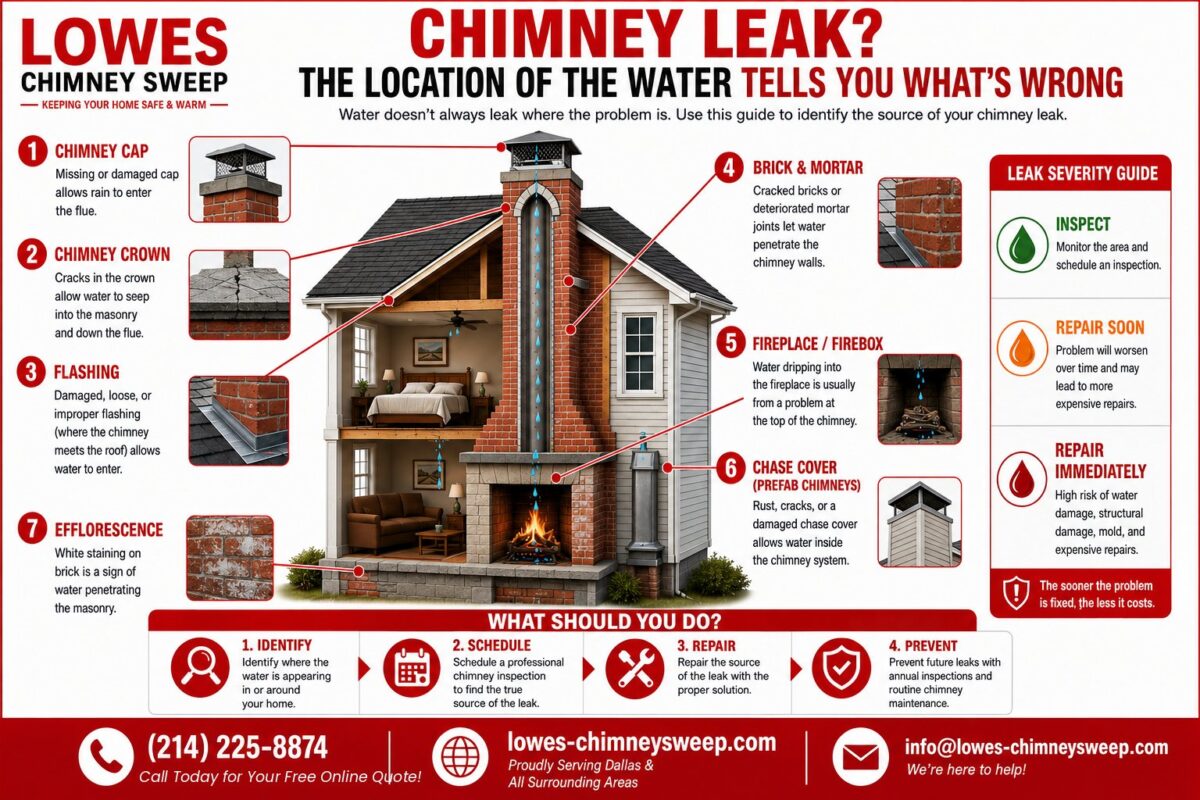
Repairable damage has a pattern to it: the cap itself is intact, but something holding it together or sealing it has given way. Here's what usually falls on the repairable side:
These are the problems we fix regularly without replacing the cap:
An uncapped or badly capped flue is an open pipe into your home, which is how water, animals, and debris get in. Have it assessed, call (214) 225-8874.
Cap work happens on the roof, which is exactly why so many caps get misdiagnosed from the driveway. Here's how our trained DFW technicians handle it:
We get on the roof and examine the cap directly, mounting, seams, mesh, and metal condition, rather than guessing from the ground.
We determine whether the body and base are still solid, which is what decides repairable versus replace.
You get clear photos of the damage so the recommendation is something you can see, not something you take on faith.
If it is repairable we quote the repair. If it is not, we tell you plainly and explain why a new cap is the better spend.
We re-secure fasteners, replace screening, reseal the base, and treat surface corrosion as needed.
We confirm the seal at the crown, since a cap repair that ignores the surrounding surface leaves the leak in place.
We confirm the cap is properly anchored and sealed, clean up, and back the work with our written promise.
Get the cap assessed before the next storm, FAST scheduling across DFW, 7 days a week.
(214) 225-8874This is the question that brings most people to this page, so here's the straight version. The deciding factor isn't how bad the cap looks, it's whether the metal and mounting are still structurally sound.
If the cap body holds its shape, the base sits properly on the crown, and the damage is limited to fasteners, screening, sealant, or surface rust, repair is almost always the better spend. You keep a cap that already fits your flue correctly, and you spend a fraction of replacement cost.
We won't repair a cap that can't hold the repair. Replacement is the honest answer when the metal has rusted through rather than just on the surface, when the body is crushed or bent out of shape, when the mounting base has corroded to the point it won't anchor, or when the cap was the wrong size for the flue in the first place. Patching any of those is money you'd spend twice, and chimney cap replacement is the correct fix.
A builder-grade galvanized cap that has done ten North Texas summers. Sometimes there's enough metal left to justify a repair, and sometimes it's at the end of its life. We'll show you photos and let you decide with real information instead of a sales pitch.
Then there's nothing to repair, and what you need is chimney cap installation. An open flue is the single easiest chimney problem to fix and one of the most expensive to ignore.
Worth checking at the same time. A cap can only do its job if the crown it sits on is sound, and cap and crown problems tend to arrive together. Request your Free Online Quote and we'll assess both.
Cap condition cannot be judged from the ground, and a surprising number of quotes are written that way. Our technicians inspect the cap in place, which is the only way to tell surface rust from rot-through.
The bigger ticket is always the new cap. We quote the repair first whenever the cap can carry it, and we show you the photos that justify whichever call we make.
A cap that failed has usually been letting water in for a while. We look for the downstream damage, staining, active leaks, or animals that got in while the flue was open, so you know the full picture.
If a cap repair we performed doesn't hold, we come back and correct it at no charge. In writing.
Loose caps re-anchored, screening rebuilt, corroded caps replaced, browse real before-and-after photos from chimney projects across Dallas Fort Worth.
View the Before & After GalleryA chimney cap is a small piece of metal doing three jobs at once: keeping water out, keeping animals out, and containing sparks. When it fails, each of those becomes a separate problem with its own fix:
Cap trouble is rarely isolated. See how it fits the wider system on our chimney repair page, or start with a chimney inspection.
From our home base in Plano, our cap repair crews cover 98 cities throughout the DFW metroplex, including:
+ 78 more DFW cities! See our full service area list, or call (214) 225-8874, chances are we serve your neighborhood.
"Very pleased with the professionalism and promptness of service. The chimney sweep was done quickly and efficiently at significantly less cost than the first quote I got from another company. Happy to recommend Lowes Chimney Sweep to anyone in Plano!"
"Outstanding chimney sweep service from start to finish. They were punctual, courteous, and left our chimney spotless with no mess in our home. I won't use anyone else for chimney services in Dallas TX!"
More reviews from homeowners across the metroplex are on our reviews section, or learn more about our team before you book.
Frequently, yes. If the cap body and mounting base are structurally sound and the damage is limited to fasteners, screening, sealant, or surface rust, repair is usually the better spend. Replacement becomes necessary when the metal has rusted through, the body is crushed, or the cap never fit the flue properly.
Common signs are rattling on windy days, a visibly tilted cap, rust streaks down the chimney, animals or nesting sounds in the flue, or debris and moisture showing up in the firebox. Any of those is worth a rooftop look.
It depends on what failed. Re-securing a loose cap or replacing screening sits at the lower end, while resealing and corrosion treatment cost more. All of it is materially less than a new cap, which is why we assess before quoting. Request your Free Online Quote.
Yes, and it is one of the most common cap repairs we do. Torn or rusted screening can usually be replaced while the cap stays mounted, which restores both the animal barrier and the spark arrestor function.
Usually. Wind-loosened caps are typically a matter of repositioning and re-anchoring with proper fasteners. We also check whether the wind exposed anything else, since a cap that shifted may have been letting water in for a while.
Humidity and rain, accelerated on galvanized builder-grade caps. Surface rust can often be treated and sealed. Rust that has eaten through the metal cannot, and at that point replacement is the honest recommendation.
More than most people expect. A compromised cap leaves the flue open to water and animals, and water is what drives the expensive chimney repairs. Fixing the cap is one of the cheapest preventive steps available.
We'd advise against it. Cap work is rooftop work, and a cap that is re-secured incorrectly can shift or come off entirely. Improper sealing at the base can also trap water against the crown, which creates a worse problem than the one you set out to solve.
Yes. Every cap repair is covered by our written promise. If the repair doesn't hold, we return and correct it at no charge.
Usually same or next day. We run crews across all 98 DFW cities seven days a week, and an open or badly damaged cap gets priority because of what it lets in. Call (214) 225-8874.
A cap problem usually points somewhere else too. Because we handle the whole system, we can deal with the cause and the consequences in one visit:
Want the background first? Our guides cover chimney caps versus chase covers, why chimneys leak, and warning signs your chimney needs repair. You can also browse the before-and-after gallery, see every DFW city we serve, or request your Free Online Quote.
Free online quotes · FAST scheduling service · We work Sundays · 5-star rated across DFW
(214) 225-8874📍 1008 Ridgefield Dr, Plano TX 75075 | 🕗 Open 7 days · 8AM-8PM
It's a lid with a screen: it keeps rain out of the flue, blocks animals from nesting, and stops sparks landing on your roof. Three jobs, one small piece of metal, and all three stop when it fails.
North Texas hail dents lids, tears screening, and works fasteners loose in a single storm. A lot of the cap damage we repair each spring traces to one bad afternoon rather than slow wear.
This is the distinction that decides repair or replace. Surface corrosion can be treated and sealed and the cap goes on working. Rust that has perforated the metal cannot be patched into soundness, and we'll tell you so.
A well-made cap fitted to the wrong flue size will never seal properly, no matter how many times it's re-secured. When we find a cap that was mis-sized from the start, repair isn't the answer and we say that up front.
Damaged mesh is one of the most repairable faults and one of the most consequential to ignore, since it's the difference between a sealed flue and an open invitation for nesting animals.
The cap protects the crown, and the crown supports the cap. When one has failed, the other is usually worth inspecting in the same visit, which is why we look at both before quoting either.
Straight answers from our DFW chimney pros before you book.
Get an honest ballpark range for this service, no phone call needed. Built from real Dallas-Fort Worth pricing, then book when you’re ready.
Get My Instant Estimate →