Ballard Avenue's brick storefronts have watched a century of Texas weather, including the night in 2016 the sky threw softballs. Wylie's rooftops earned careful hands, and they get ours. Since the 2016 hail, chimney repair in Wylie has meant caps and crowns first; we also handle the yearly chimney sweep in Wylie and chimney cleaning for the newer homes out toward the lake.
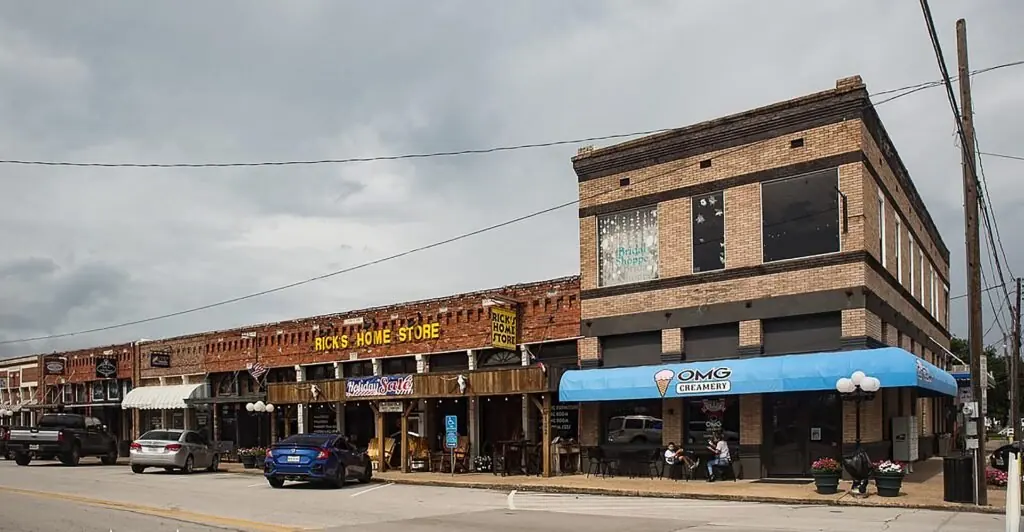
Wylie grew from a rail-line farm town into one of the corridor's proudest addresses without losing its center: Ballard Avenue still runs brick storefront to brick storefront, one of the best-preserved main streets in the region. Around it, the '00s and '10s boom built family neighborhoods by the square mile.
Then came April 11, 2016, the hailstorm that put Wylie in the national news, softball-sized stones that broke windshields, skylights, and roofs across virtually the entire city. The roofs were claimed and replaced within the year. The chimney tops, mostly, were not, and eight years of freeze-thaw have been compounding that gap ever since.
The Wylie toolkit leads with the storm ledger: stainless cap installation retiring hail-dented originals, crown repair for chips that became cracks, flashing repair where impact met sealant, and tuckpointing matched into everything from boom brick to Ballard-era masonry.
The historic downtown core around Ballard holds Wylie's founding masonry, senior flues that predate the lakes and the boom alike, served camera-first with matched mortar always. The '00s-'10s boom neighborhoods carry the city's biggest cohort: builder tops crossing their first maintenance decade with 2016's scars on many of them.
The newer phases toward Lavon and Ray Hubbard add lakeside notes, a touch more moisture, metal earning its keep a little faster, and the established grids off Highway 78 bridge the eras in between.
Logistics: Wylie anchors the far end of our northeast loop past Garland and Sachse, same-week standard, seven days, windows confirmed the day before.
Recognize the ledger? Call (214) 225-8874, eight years is long enough.
A Typical Wylie Project
A 2008 two-story in the boom grids, roof replaced within months of April 2016, chimney untouched since the builder left. The audit read like the storm's diary: cap dented and rusted through along the crease, crown chipped in three places with one chip grown into a crack halfway across, flashing sealant split at an impact point. One visit closed the ledger: stainless cap, crown recast, flashing cut in properly, every step photographed. Storm-tested town, detail-tested work, eight years late is still better than nine.
2016 was the outlier, but Wylie's ordinary weather never stopped working: the northeast corridor takes garden-variety hail most springs, freeze-thaw winters compound every chip the big storm left, and the Blackland clay beneath flexes boom-era slabs and Ballard-era foundations alike through every wet-dry cycle. The historic storm gets the headlines; the ordinary seasons collect the interest.
The standard holds through all of it: NFPA 211 calls for annual inspection of every chimney, with homeowner guidance from the Chimney Safety Institute of America. In a town still carrying unexamined 2016 scars, that annual look is how the ledger finally gets closed.
The Ballard Avenue core, founding masonry, senior protocol, camera first. The Highway 78 grids, the bridge eras, first-renewal joints and caps. The '00s-'10s boom neighborhoods, the biggest cohort, crossing their first decade with 2016 scars aboard. The lakeside phases, every chapter, plus the water's quiet tax.
Photos before prices, the storm's diary read honestly, and no scare tactics in a town that met the real thing and rebuilt its roofs within the year. The before-and-after gallery shows the work; the reviews run from Ballard to the lake phases.
Wylie anchors the far end of our northeast loop past Garland and Sachse, same-week appointments are standard, with windows confirmed the day before. Seven days a week, 8AM to 8PM, and storm-season surges get triaged honestly: safety issues first, cosmetic checks scheduled right behind.
Wylie's file starts with one date, April 11, 2016, and spreads out from there. The hail that night wrote itself onto nearly every rooftop in town, and chimney tops that missed the roof claims still carry it: dented caps, chipped crowns, creased chase covers. Beneath the storm layer sits the usual timeline: '00s-'10s boom homes hitting their first real maintenance decade and a historic core with genuinely senior masonry.
It matters most now. A hail-chipped crown doesn't leak the next morning, it lets water start a slow campaign that freeze-thaw compounds every winter after. Eight years is exactly when those chips become cracks and those dents become rust-throughs. If your roof was replaced in 2016 and your chimney top wasn't inspected then, the bill for that gap is coming due, and catching it now keeps it small.
The blocks around historic Ballard Avenue hold the founders, downtown Wylie keeps one of the corridor's best-preserved brick main streets, and the houses around it carry masonry that predates the lake, the boom, and most of the county's pavement. Those senior flues get our careful protocol: camera first, matched mortar, no shortcuts.
The boom cohort is crossing its first real maintenance window: builder caps and chase covers showing first rust, flashing sealants finishing their service life, veneer printing the slab's first decade of settling, all of it hail-tested in 2016 besides. A single documented inspection resets the whole file: what's fine, what's watching, what's due.
The same seasonal swell-and-shrink that works every North Texas foundation: boom-era slabs drift from their chases a hairline at a time, veneer prints stair-step lines after dry summers, and the historic core's older foundations move in their own senior rhythm. Stable hairlines are aging; widening gaps get measured, photographed, and planned.
All of them, the established grids off 78, the boom-era master plans, and the newest phases stretching toward Lavon and Ray Hubbard. Lakeside streets get the same note we give every water-adjacent address: a touch more moisture means metal earns its keep a little faster, which makes the annual look slightly more worth keeping.
Regularly, 2016 was the historic outlier, but the northeast corridor takes ordinary hail most springs, and each season adds its small marks to tops that never get looked at. The pattern to break is simple: roofs get claimed and replaced, chimney tops get forgotten. Roof newer than the chimney top is the tell worth acting on.
Late summer through September beats the metroplex rush, warm months suit crown and mortar work best, and any spring with newsworthy hail earns the chimney top a photo check on the roof's claim clock. For anything still carrying unexamined 2016 scars: this season, not next.
The northeast loop pairs Wylie with Sachse next door, the city that shared the 2016 hail, and Garland down the corridor, both page-deep already, with Murphy page-deep now and Lavon coming soon. Every one of the 98 DFW cities we serve is listed now.
Free online quotes · 2016-hail top audits · Historic-core protocol · Open 7 days
(214) 225-8874📍 1008 Ridgefield Dr, Plano TX 75075 | 🕗 Open 7 days · 8AM-8PM
"Very pleased with the professionalism and promptness of service. The chimney sweep was done quickly and efficiently at significantly less cost than the first quote I got from another company. Happy to recommend Lowes Chimney Sweep to anyone in Plano!"
"Outstanding chimney sweep service from start to finish. They were punctual, courteous, and left our chimney spotless with no mess in our home. I won't use anyone else for chimney services in Dallas TX!"
More reviews from homeowners across the metroplex are on our reviews section, or learn more about our team before you book.
Full-service chimney care across Wylie and the DFW metroplex.
Helpful guides: