Corinth filled in through the '90s and 2000s as the calm stretch between Lewisville and Denton, and its chimneys, built in one long wave, are now reaching the age where original caps rust out and builder crowns crack almost in unison.
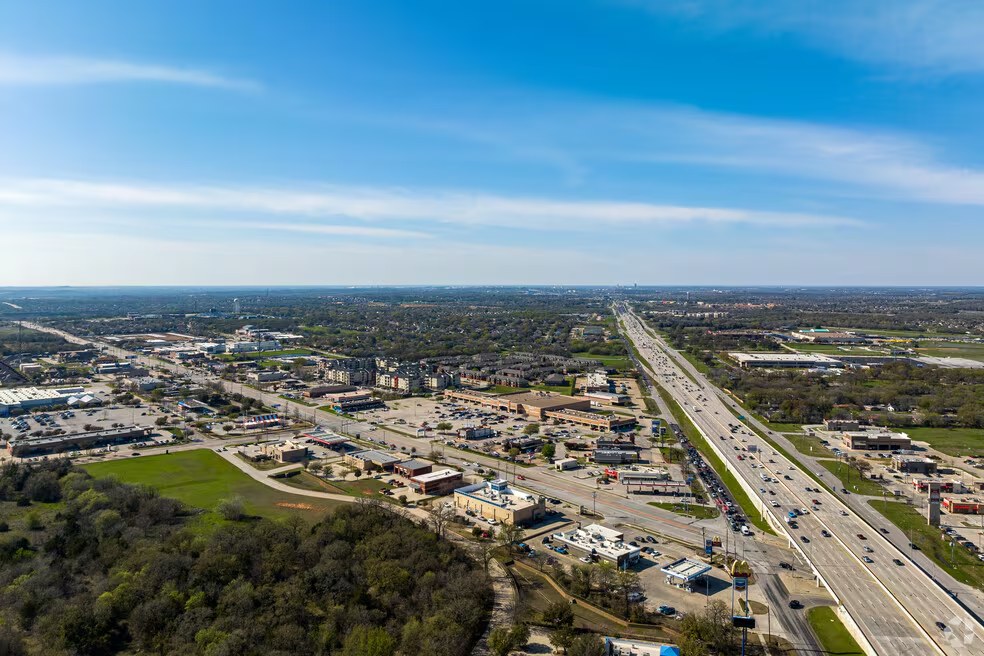
Corinth is what the 35E corridor looks like when it goes right: steady ’90s and 2000s neighborhoods between Lewisville and Denton, big enough for good schools and quiet enough to stay livable. For chimney purposes, that one-wave construction history means something specific, the original galvanized caps, the thin builder crowns, and the first-generation fireboxes across town are all hitting their service ceilings within a few years of each other.
When one neighbor's cap rusts through, the identical cap three doors down is usually a season behind it. We plan our Corinth routes around exactly that math.
Original builder caps from this vintage are galvanized and near the end. A stainless chimney cap, measured to your flue with a real spark screen, retires the problem permanently, one visit, done for the life of the house.
Two decades of winters put real creosote in Corinth flues. The annual chimney sweep the NFPA recommends keeps the season safe, floors covered, HEPA dust control running, no trace left inside.
Cracked refractory panels, sagging dampers, doors that no longer seat, the original fireboxes are showing their age together too. Our fireplace repair service restores them properly, and tells you plainly when a panel swap beats a bigger job.
Because the housing stock is this uniform, a Corinth chimney inspection is efficient: we check the known failure points of the era first, cap, crown, panels, damper, and photograph each one so the scope writes itself honestly.
Get ahead of it, documented inspections and FAST scheduling up and down the 35E corridor.
(214) 225-8874A Corinth homeowner near the Lake Sharon corridor booked a sweep after years of steady winter use and mentioned the fireplace had started smelling sharp during fires. The sweep cleared moderate creosote, but the camera told the bigger story: both side refractory panels had cracked through, and the original cap's screen had rusted open wide enough for a bird to have started nesting material down the flue. We replaced the panels, cleared the debris, and fitted a stainless cap in the same visit. One trip, three era-typical problems retired, and the owner got photos of each before approving any of it.
We know this vintage by heart. Background-checked technicians working to CSIA standards, checking the era's known weak points in sequence, photographing every finding before recommending anything. Interiors stay protected with floor coverings and HEPA dust control.
Straight answers, written scopes. Every job starts with a Free Online Quote. When only the cap needs replacing, the scope says cap, in a corridor town where neighbors compare notes over fences, honesty is the entire marketing plan.
Booking is one call to (214) 225-8874 or one Free Online Quote request online. Tell us the year the home was built, with this vintage, that single detail lets us arrive carrying the exact parts the visit is most likely to need.
Corinth sits square on our 35E route: Denton is minutes north, Lewisville anchors the south end, and Highland Village is just across the lake corridor west. The crew passes through Corinth daily in both directions.
Look for rust streaks on the chase or crown, a screen that's matted or rusted open, or a lid that rattles in wind. Galvanized caps from the '90s and 2000s are at or past their design life, if yours is original, replacement is a when, not an if.
They're the heat-resistant panels lining a prefab firebox, and they crack from thermal cycling, decades of heating and cooling. Cracks that you can fit a coin edge into mean the panel should be replaced before the next season; it's a straightforward, contained repair.
Yes, buildup is cumulative, and twenty years of weekend fires adds up to serious deposits. The danger point isn't how often you burn in one winter, it's how long since the flue was last cleaned to bare liner. Annual sweeping resets the clock.
Usually, yes. Corridor-era dampers sag, rust at the pivots, or seize from debris, most are restored with cleaning, adjustment, and lubrication, and stubborn ones can be replaced with top-sealing units that also cut winter drafts.
That's the standard Corinth visit, honestly, the era's problems cluster, so we come equipped for all of them. One trip, one written report, photos of everything, and you approve each item separately.
Absolutely. The housing stock's uniform age means predictable wear, and a documented chimney inspection tells you whether the sellers kept up with it. It's one of the cheapest pieces of leverage in the whole transaction.
Request a Free Online Quote, tell us the symptoms and the home's approximate age and we'll return a documented number, usually FAST scheduling. No trip charges, no roof-top upselling.
Completely. Floor coverings go down before tools come in, HEPA dust control runs during the sweep, and we don't consider the job finished until the hearth area looks the way we found it.
Usually within a day, Sundays included, we run 35E between Lewisville and Denton daily. Call (214) 225-8874 for a real arrival window.
Caps, sweeps, panels, inspections, request your Free Online Quote and retire the era’s problems in one visit.
(214) 225-8874Denton County homeowners in Corinth (76208 and 76210) call us for everything from a first-time sweep to full masonry work. We arrive with the brushes, the camera, and the honest recommendation.
"Very pleased with the professionalism and promptness of service. The chimney sweep was done quickly and efficiently at significantly less cost than the first quote I got from another company. Happy to recommend Lowes Chimney Sweep to anyone in Plano!"
"Outstanding chimney sweep service from start to finish. They were punctual, courteous, and left our chimney spotless with no mess in our home. I won't use anyone else for chimney services in Dallas TX!"
More reviews from homeowners across the metroplex are on our reviews section, or learn more about our team before you book.
Full-service chimney care across Corinth and the DFW metroplex.
Helpful guides: