● Pricing reviewed & current for October 2026
Creosote is the tar-like fuel that turns an ordinary fireplace into a fire hazard. Lowes Chimney Sweep removes every stage of it, safely and completely, so your family can enjoy a warm fire without the worry.
Quick answer: Chimney creosote removal in Dallas-Fort Worth typically costs $299 to $700 in 2026, depending on the creosote stage and how much buildup is present.
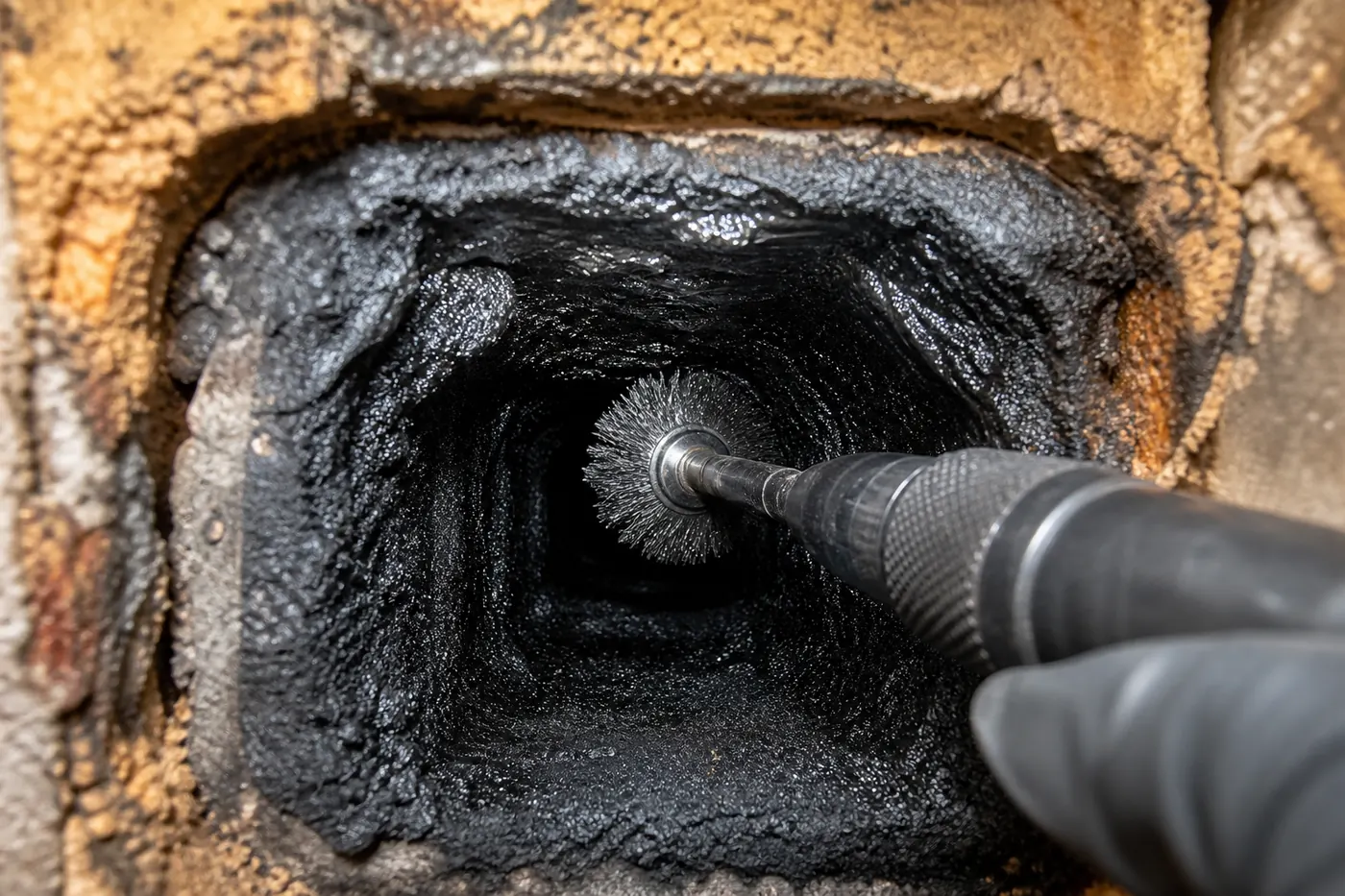
Every time you burn wood, the smoke that rises through your chimney carries unburned particles, water vapor, tar, and gases. As that smoke cools on its way up a relatively cold flue, those byproducts condense and stick to the inner walls. The residue they leave behind is creosote. It starts thin and flaky, but with continued burning it accumulates into thick, hardened layers that coat the entire flue.
The problem is that creosote is highly combustible. It is essentially concentrated fuel lining the very passage that is supposed to carry heat and smoke safely out of your home. When enough of it builds up and the flue gets hot enough, that lining can ignite, producing an intense, fast-moving chimney fire that can reach temperatures high enough to crack clay tile liners, damage masonry, and spread into the surrounding structure. Beyond the fire risk, a creosote-choked flue also restricts draft, which pushes smoke and carbon monoxide back into your living space. Thorough chimney creosote removal is the single most important step in keeping a wood-burning system safe, and it is why we treat this service as the heart of everything we do.
Not all creosote is the same, and understanding the differences explains why a real removal job is more involved than a quick brushing. Chimney professionals classify creosote in three stages, each progressively harder to remove.
Identifying which stage you are dealing with is part of the job. We inspect the flue before we choose our tools, because using the wrong method, or simply brushing over hardened glaze, leaves the hazard in place while giving a false sense of security.
There is no single tool that handles every flue. Effective creosote removal comes down to matching the right method to the deposit, and often layering more than one.
We carry all three approaches on every job and decide on site, based on what the flue actually contains, rather than forcing one method to do work it was never designed for.
We work methodically so that nothing gets missed and your home stays clean throughout.
Because we are certified and fully insured, and because we offer same-day and even Sunday service across the metroplex, you are never stuck waiting when you have a fire hazard sitting in your chimney.
Creosote often builds silently, but a fireplace will usually give you warning signs when it needs attention. Call us if you notice any of the following:
Fire-safety guidance from the National Fire Protection Association, reflected in its widely referenced standard, is that chimneys should be inspected at least once a year and cleaned when needed. If you notice any of the signs above, do not wait for that annual date to arrive. A flue with active Stage 2 or Stage 3 buildup should be cleared before your next fire.
When you book creosote removal with Lowes Chimney Sweep, you get a complete, professional job rather than a rushed brush-and-go. Every service includes:
We are a 5-star Google-rated company, and we earned that rating by doing the full job right and treating each home with respect.
Homeowners always want to know what a job will cost, and the honest answer is that it depends on the flue. Rather than quote a number that may not fit your situation, here are the real factors that influence pricing:
The best value is regular maintenance. Keeping creosote from ever reaching the glazed stage is dramatically cheaper, and safer, than dealing with a hazardous, heavily built-up flue after years of neglect. We are glad to give you a clear, upfront quote once we see what we are working with.
North Texas has its own set of conditions that accelerate creosote buildup, and after years of serving Dallas, Fort Worth, Plano, and the surrounding communities, we see the patterns clearly. Our burn season is short but intense. When a genuine cold snap hits the metroplex, families run their fireplaces hard for a stretch of weeks, packing a season's worth of burning into a compressed window that builds deposits quickly.
The bigger culprit, though, is wood. A lot of firewood sold and stored around DFW is not properly seasoned. Burning unseasoned or green wood, wood with high moisture content, produces cooler, smokier fires. That cooler smoke condenses far more readily on flue walls, which means significantly more creosote, and faster progression toward the dangerous glazed stage. Our humidity swings do not help either, since moisture in the system contributes to that tarry, odor-heavy buildup many homeowners notice in spring and summer. If you burn wood anywhere in the Dallas-Fort Worth area, assume your flue is accumulating creosote faster than the calendar suggests, and have it checked before each heating season.
People often ask how creosote removal differs from a routine cleaning or sweep. The truth is that they are deeply connected. Removing creosote is the central purpose of both a chimney sweep and a professional chimney cleaning, because clearing out that combustible buildup is exactly what makes a flue safe to use again. When we describe this as a dedicated service, we are simply focusing on the part of the work that matters most for fire safety, the thorough, complete elimination of soot and creosote from the flue walls. Whether you book it as removal, a sweep, or a cleaning, our goal is the same: a flue that is clear, drafting properly, and safe to light.
Lowes Chimney Sweep is certified, fully insured, and proudly serving 98 cities throughout the Dallas-Fort Worth metroplex from our home base in Plano. From Frisco and McKinney to Fort Worth, Arlington, Irving, Garland, and everywhere in between, we bring the same complete creosote removal to every home we visit. With same-day availability and Sunday service, we make it easy to get a hazardous flue cleared on your schedule rather than ours. If you have smelled that tarry odor, seen buildup on the damper, or simply cannot remember the last time your chimney was cleaned, call us at (214) 225-8874 and get it handled by a team that does the job right.
"Very pleased with the professionalism and promptness of service. The chimney sweep was done quickly and efficiently at significantly less cost than the first quote I got from another company. Happy to recommend Lowes Chimney Sweep to anyone in Plano!"
"Outstanding chimney sweep service from start to finish. They were punctual, courteous, and left our chimney spotless with no mess in our home. I won't use anyone else for chimney services in Dallas TX!"
More reviews from homeowners across the metroplex are on our reviews section, or learn more about our team before you book.
Chimney creosote removal in Dallas-Fort Worth typically costs $299 to $700 in 2026. Light Stage 1 soot brushes out quickly, while hardened Stage 3 glazed creosote needs more time and specialized treatment. We assess the stage and quote before starting.
For most wood-burning households, once a year is the baseline, and fire-safety guidance recommends an annual inspection with cleaning as needed. In DFW, where unseasoned firewood and intense cold snaps speed up buildup, some homeowners who burn frequently benefit from more than one service per season. The safest approach is to have the flue checked before each heating season.
You can knock down light Stage 1 soot with a brush, but do-it-yourself methods do not reliably handle hardened Stage 2 flakes or glazed Stage 3 creosote, which are the most dangerous forms. Creosote-sweeping logs can help loosen some deposits but do not replace a real cleaning. Professional removal uses rotary tools and chemical treatments that clear the flue completely.
Glazed creosote is Stage 3 buildup, a hardened, shiny, tar-like coating that has fused to the flue wall. It is packed with concentrated fuel and is the form most associated with serious chimney fires. It will not brush off and typically requires specialized rotary chains or heads and chemical modifiers to remove safely.
Yes. We offer same-day service and even Sunday appointments across the Dallas-Fort Worth metroplex whenever our schedule allows. If you have a flue you are worried about, call (214) 225-8874 and we will do our best to get to you quickly.
Absolutely. Burning unseasoned or green wood with high moisture content produces cooler, smokier fires that condense far more creosote on your flue walls. A lot of firewood around DFW is not properly seasoned, which is a major reason local chimneys build up so fast. Burning dry, well-seasoned hardwood is one of the best ways to slow buildup.
Left unchecked, creosote keeps accumulating and hardening into glazed layers of combustible fuel lining your flue. That dramatically raises the risk of a chimney fire, and the buildup also restricts draft, which can push smoke and carbon monoxide back into your home. Regular removal eliminates that hazard and is far cheaper than dealing with fire damage.
Straight answers from our DFW chimney pros before you book.
Get an honest ballpark range for this service, no phone call needed. Built from real Dallas-Fort Worth pricing, then book when you’re ready.
Get My Instant Estimate →