● Pricing reviewed & current for October 2026
When a routine sweep isn't enough to cut through hardened, glazed creosote, you need a deeper approach. Lowes Chimney delivers professional chimney deep cleaning across the Dallas-Fort Worth metroplex, using rotary tools and chemical treatments to restore even the most neglected flues.
Quick answer: Chimney deep cleaning in Dallas-Fort Worth typically costs $299 to $450 in 2026, depending on the amount and stage of creosote buildup.
Chimney deep cleaning is an intensive restoration process that goes far beyond a standard sweep. A routine sweep removes soft, flaky soot and light creosote deposits that brush away easily. Deep cleaning, on the other hand, is designed to tackle the hardened, stubborn buildup that a normal brushing simply cannot budge, most often heavy or glazed creosote that has bonded to the flue walls over many burning seasons.
Think of it this way: a standard sweep is like sweeping a floor, while deep cleaning is like stripping and refinishing it. When creosote has been baked onto your flue liner in thick, tar-like layers, it needs aggressive mechanical tools, chemical treatments, and a level of patience that ordinary maintenance doesn't require. At Lowes Chimney, we approach deep cleaning as a full-system service, addressing not just the flue but the entire chimney structure that feeds it.
Homeowners across Dallas-Fort Worth call us for deep cleaning when they have inherited a neglected chimney, when a previous sweep couldn't fully clean the flue, or when a smoke or odor problem has told them something more serious is going on inside the system.
Understanding the difference between the two services helps you choose the right one for your home. A standard chimney cleaning is the regular maintenance most fireplaces need once a year. It clears everyday soot and stage-one creosote, keeps your flue drafting properly, and is the foundation of safe fireplace ownership. For most households that burn seasoned wood and use their fireplace moderately, an annual sweep from a professional chimney sweep is all that's required.
Deep cleaning is what you turn to when that routine cleaning is no longer enough. If creosote has advanced to a hardened, glazed, or tar-like state, a soft brush glides right over it without removing anything. That's the point where the buildup has become both difficult to remove and genuinely dangerous, because glazed creosote is highly flammable and a leading cause of chimney fires. Deep cleaning uses stronger methods specifically engineered to break that bond and pull the material off the liner.
In short: routine cleaning handles the buildup you can prevent with regular care. Deep cleaning handles the buildup that has already gotten out of hand.
Creosote is the byproduct of wood combustion, a residue of unburned particles and condensed gases that coats the inside of your flue. It forms in three progressively worse stages, and knowing which stage you're dealing with explains why deep cleaning becomes necessary.
Stage one is light, flaky soot that a brush removes with ease. This is what a routine sweep handles. Stage two appears as harder, shiny black flakes, often described as looking like cornflakes, that are already more difficult to remove and usually signal restricted airflow or cooler burning. Stage three, the stage that demands deep cleaning, is glazed creosote: a thick, tar-like, hardened coating that has effectively fused to the flue wall. It looks shiny and almost dripped in place, like hardened molasses.
Stage-three glazed creosote is the most dangerous form because it is dense, extremely flammable, and nearly impossible to remove with brushing alone. A single chimney fire can crack a liner or damage masonry in minutes. When our technicians find glazed creosote in a DFW chimney, we recommend deep cleaning right away rather than waiting for it to build further.
Not every chimney needs deep cleaning, and we'll never upsell you into a service your system doesn't require. That said, there are clear situations where it is the right call. Neglected chimneys are the most common: if a fireplace has gone several years without a sweep, or you've just bought a home and have no service history for the chimney, deep cleaning is often the safest starting point.
You also need it when a standard sweep can't finish the job. Our technicians sometimes begin a routine cleaning only to discover that the flue is coated in stage-two or stage-three creosote that won't brush away. In those cases, deep cleaning is the appropriate next step. Heavy fireplace users, especially those who burn wood as a primary heat source through the winter, accumulate creosote faster and reach the deep-cleaning threshold sooner than occasional users.
Persistent problems are another signal. If you have ongoing smoky rooms, poor draft, or a strong campfire-like odor that lingers even when the fireplace is cold, those are often symptoms of heavy buildup restricting the flue. A thorough deep cleaning frequently resolves issues that a light sweep leaves behind.
Most homeowners aren't climbing onto the roof to inspect their own flue, so it helps to know the warning signs you can spot from inside the house. Watch for these indicators that your chimney has moved past what a routine sweep can handle:
A strong, tarry, or campfire smell that persists year-round, not just during a fire, often points to heavy creosote saturating the flue. Smoke pushing back into the room instead of drawing cleanly up the chimney can mean buildup has narrowed the passage. A thick, shiny, or crusty black coating visible in the firebox or damper area is a direct visual clue of advanced creosote. Difficulty getting a fire to start or keep drawing suggests restricted airflow. And if you've had a recent chimney fire, even a small one you barely noticed, deep cleaning and a full inspection are essential before you burn again.
If you're seeing any of these signs in your Dallas-area home, it's worth having a certified technician take a look. We can tell you quickly whether a standard sweep will do or whether deep cleaning is warranted.
Deep cleaning is a methodical, multi-step process, and every job we perform begins with a thorough evaluation. Before any tools go into the flue, our technician inspects the system to understand exactly what you're dealing with: the stage and extent of creosote, the type and condition of the liner, and any structural concerns that could affect the cleaning.
Next, we prep and protect your home. We lay down drop cloths, seal off the fireplace opening, and use professional HEPA vacuum systems to keep soot and debris contained so your living space stays clean throughout the work. This containment is one of the details that separates a professional deep cleaning from a rushed, messy job.
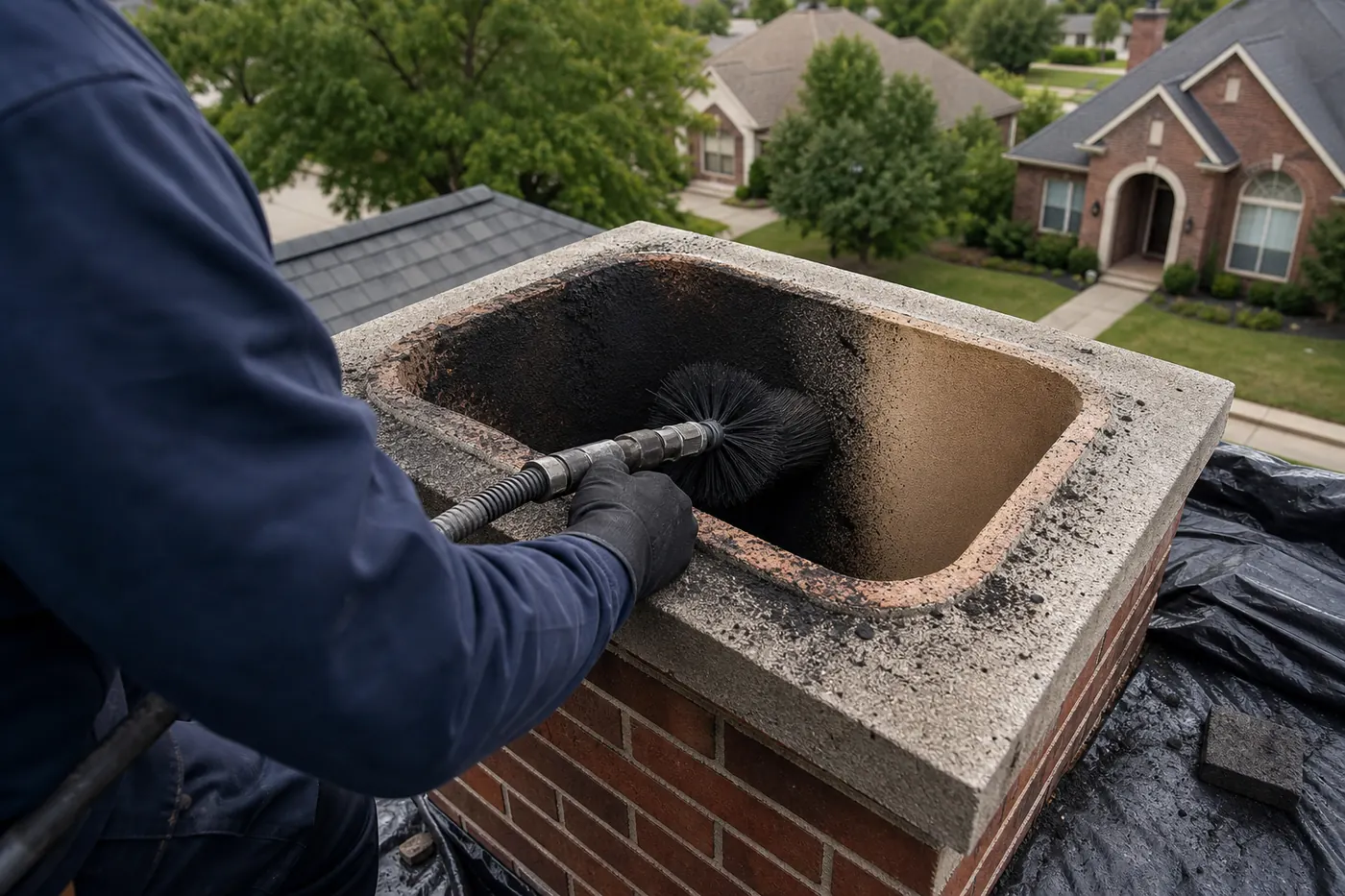
The heart of the process is mechanical removal. For heavy and glazed creosote, we use rotary cleaning systems, powered tools that spin flexible cleaning heads or chains against the flue walls to break apart hardened deposits that brushes can't touch. Rotary tools apply the controlled, aggressive action needed to fracture glazed creosote and knock it loose without damaging a sound liner. For the most stubborn stage-three glazing, we apply professional-grade chemical treatments that penetrate the creosote and change its structure, turning that hard, fused coating into a more brittle, removable form. The chemical does the softening; the rotary tools finish the removal.
Once the flue is clear, we clean the full system, not just the vertical run. That means the smoke chamber, smoke shelf, damper, and firebox, the areas where creosote and debris love to collect and where a hurried sweep often stops short. We finish with a final inspection to confirm the flue is clean and to flag any repairs your chimney may need going forward.
The right equipment is what makes deep cleaning effective. The centerpiece is the rotary cleaning system. Unlike a hand brush that relies solely on scrubbing pressure, a rotary tool uses a drill-driven, flexible shaft fitted with specialized heads, chains, or brushes that spin at high speed to pulverize hardened creosote. This is the standard method professionals use for stage-three deposits, and it's the reason deep cleaning can accomplish what manual brushing cannot.
Chemical treatments are the second key element. Applied as a spray, gel, or powder depending on the situation, these professional formulations are designed to break the chemical bonds holding glazed creosote to the liner. After treatment, the softened creosote responds far better to mechanical removal. In some heavily glazed chimneys, treatment is applied first and the flue is left for a period before the rotary work begins, a staged approach that gets results on the worst buildup.
Throughout the job, HEPA vacuums and containment systems keep the process clean and safe, and our inspection tools let us verify our work from top to bottom. Every technique we use is aimed at one outcome: a flue returned to a genuinely clean, safe condition.
When you book a chimney deep cleaning with Lowes Chimney, you get a complete, whole-system service. That includes a pre-cleaning inspection to assess the creosote stage and overall condition, full protection of your home with drop cloths and containment, and mechanical removal of heavy and glazed creosote using rotary tools.
It also includes chemical treatment of stubborn glazed deposits where needed, cleaning of the entire system, flue, smoke chamber, smoke shelf, damper, and firebox, and a thorough HEPA vacuuming to leave your space clean. We finish with a post-cleaning evaluation so you know the true condition of your chimney and whether any repairs, a new liner, or preventive steps are worth considering. Our goal is that you finish the appointment with a safe chimney and a clear understanding of its health, with no surprises.
Deep cleaning is more involved than a standard sweep, so it's priced accordingly, but the exact cost depends on your specific chimney. The biggest factor is the severity and amount of creosote. A flue with moderate stage-two buildup takes less time and product than one coated top to bottom in stage-three glazing. The more hardened material there is to remove, the more labor and chemical treatment the job requires.
Other factors include the height and design of the chimney, how accessible the system is, the type of liner, and whether the buildup has caused any damage that needs attention. A chimney that has gone many years without service will generally take longer than one that's only a season or two behind. Rather than guess, we evaluate your chimney first and give you a straightforward assessment before any work begins. You'll always know what the service involves and why before we start, and we'll never recommend deep cleaning if a routine sweep is all your system truly needs.
Lowes Chimney provides professional chimney deep cleaning throughout the Dallas-Fort Worth metroplex, serving 98 cities across the region from our base in Plano. Whether you're in Dallas, Frisco, McKinney, Arlington, Fort Worth, or any of the surrounding communities, our certified and insured technicians bring the same thorough, honest service to your door.
DFW homes see a wide mix of fireplace use, and our warm climate means many households burn only during a handful of cold snaps each year. That intermittent, low-and-slow burning actually encourages creosote to build up faster, which is exactly why we see so many local chimneys reach the deep-cleaning stage. We understand the local housing stock and the common issues these systems develop, and we tailor every deep cleaning to the chimney in front of us. With same-day appointments available and Sunday service to fit your schedule, getting a neglected chimney back to safe, clean condition has never been more convenient. Call us at (214) 225-8874 to schedule your deep cleaning.
"Very pleased with the professionalism and promptness of service. The chimney sweep was done quickly and efficiently at significantly less cost than the first quote I got from another company. Happy to recommend Lowes Chimney Sweep to anyone in Plano!"
"Outstanding chimney sweep service from start to finish. They were punctual, courteous, and left our chimney spotless with no mess in our home. I won't use anyone else for chimney services in Dallas TX!"
More reviews from homeowners across the metroplex are on our reviews section, or learn more about our team before you book.
Chimney deep cleaning in Dallas-Fort Worth typically costs $299 to $450 in 2026. Because deep cleaning targets hardened, glazed creosote with rotary tools and treatment beyond a routine sweep, the price depends on how much buildup is present and its stage. We assess and quote before starting.
A regular sweep removes light, flaky soot and stage-one creosote with brushes. Deep cleaning tackles hardened, glazed, tar-like creosote that brushing can't remove, using rotary tools and chemical treatments to break the buildup loose and clean the entire system.
Glazed creosote is stage-three buildup, a thick, shiny, tar-like coating that has fused to your flue walls. It's extremely flammable and a leading cause of chimney fires. Because it's so dense and bonded to the liner, it requires deep cleaning rather than a standard sweep to remove safely.
Common signs include a persistent tarry or campfire odor, smoke backing into the room, a thick shiny black coating in the firebox, poor draft, or a chimney that's gone years without service. A technician can inspect and tell you quickly whether a routine sweep will do or deep cleaning is needed.
No. We protect your space with drop cloths, seal off the fireplace opening, and use HEPA vacuum containment systems throughout the job. Keeping your home clean is a standard part of our professional deep cleaning process.
It depends on the severity of the buildup. A moderately fouled flue may take a couple of hours, while a heavily glazed, long-neglected chimney can take considerably longer, especially when chemical treatment and extensive rotary work are required. We'll give you a time estimate after inspecting your system.
Yes. We serve 98 cities throughout the Dallas-Fort Worth metroplex, with same-day appointments and Sunday service available. Call (214) 225-8874 to schedule your deep cleaning with our certified, insured team.
Straight answers from our DFW chimney pros before you book.
Get an honest ballpark range for this service, no phone call needed. Built from real Dallas-Fort Worth pricing, then book when you’re ready.
Get My Instant Estimate →