● Pricing reviewed & current for October 2026
This page is the gas system: pilots, thermocouples, gas valves, ignitors, remotes and log sets. Cracked firebox panels, loose brick or fireplace doors is fireplace repair.
A gas fireplace should light every single time. When the pilot quits, the burner sputters, or the remote does nothing, our trained technicians bring the parts and the patience to make it press-and-glow again.
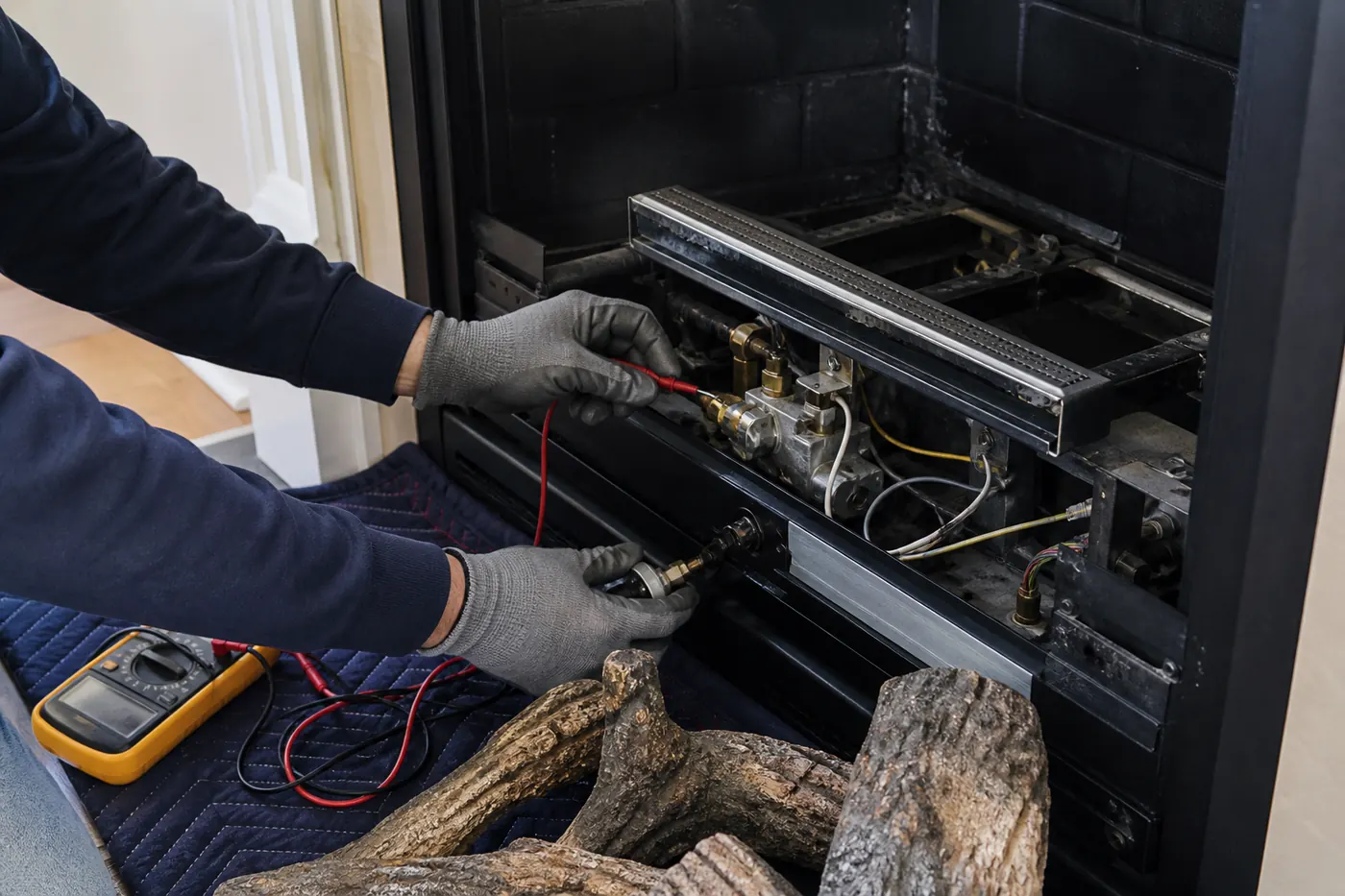
A gas fireplace repair in Dallas-Fort Worth costs $299 to $1,500 in 2026, depending on the failed component.

The whole promise of a gas fireplace is convenience: press a button, get a fire. So when it stops lighting, the frustration is different from a wood-burning problem, this thing has one job. Most gas fireplace repair in Dallas Fort Worth traces back to a handful of components: a tired thermocouple, a dusty pilot assembly, a failing gas valve, or an ignition module that's given up. All fixable, most in one visit.
Lowes Chimney Sweep services the complete system, pilot lights, gas valves, burners, log sets, ignition modules, blowers, and remotes, plus gas fireplace cleaning, inserts and conversions for homeowners upgrading from wood, and electric fireplace repair for the plug-in era. One trained crew, parts on the truck for the common manufacturers, and five-star reviews from homeowners across 98 DFW cities.
Fireplace won't light, or lighting wrong? Call (214) 225-8874, describe the symptom and we'll usually name the likely culprit on the phone.
Don't flip switches, don't light anything. Get everyone outside and call your gas utility's emergency line or 911 from outside the house. Once the utility confirms the home is safe, call us at (214) 225-8874 and we'll repair whatever caused it. Safety order matters: utility first, fireplace company second.
The pilot that won't light, or won't stay lit, is DFW's most common gas fireplace complaint. It's usually the thermocouple or thermopile doing its safety job with a worn-out sensor. Quick to diagnose, inexpensive to fix, satisfying to hear whoosh back to life.
Valves that stick, hiss, or half-open and burners that light unevenly get replaced with manufacturer-appropriate parts, the components where "close enough" is not an acceptable standard, so we don't treat it as one.
New vented or vent-free log sets, sized and arranged for your firebox. Full details, including vented versus vent-free and cost, are on our gas fireplace installation page.
Sealed inserts and wood-to-gas conversions for homeowners upgrading from wood. See gas fireplace installation for options, venting requirements, and pricing.
Texas dust and spider webs in the burner assembly cause a remarkable share of "broken" fireplaces. Annual cleaning clears the pilot and burner, repositions logs, cleans the glass, and verifies flame pattern, the cheapest insurance a gas unit can buy.
Heating elements, blowers, flame-effect motors, and control boards on electric units. When a sealed unit isn't economical to repair, we say so plainly and help you pick its replacement instead of billing hours on a lost cause.
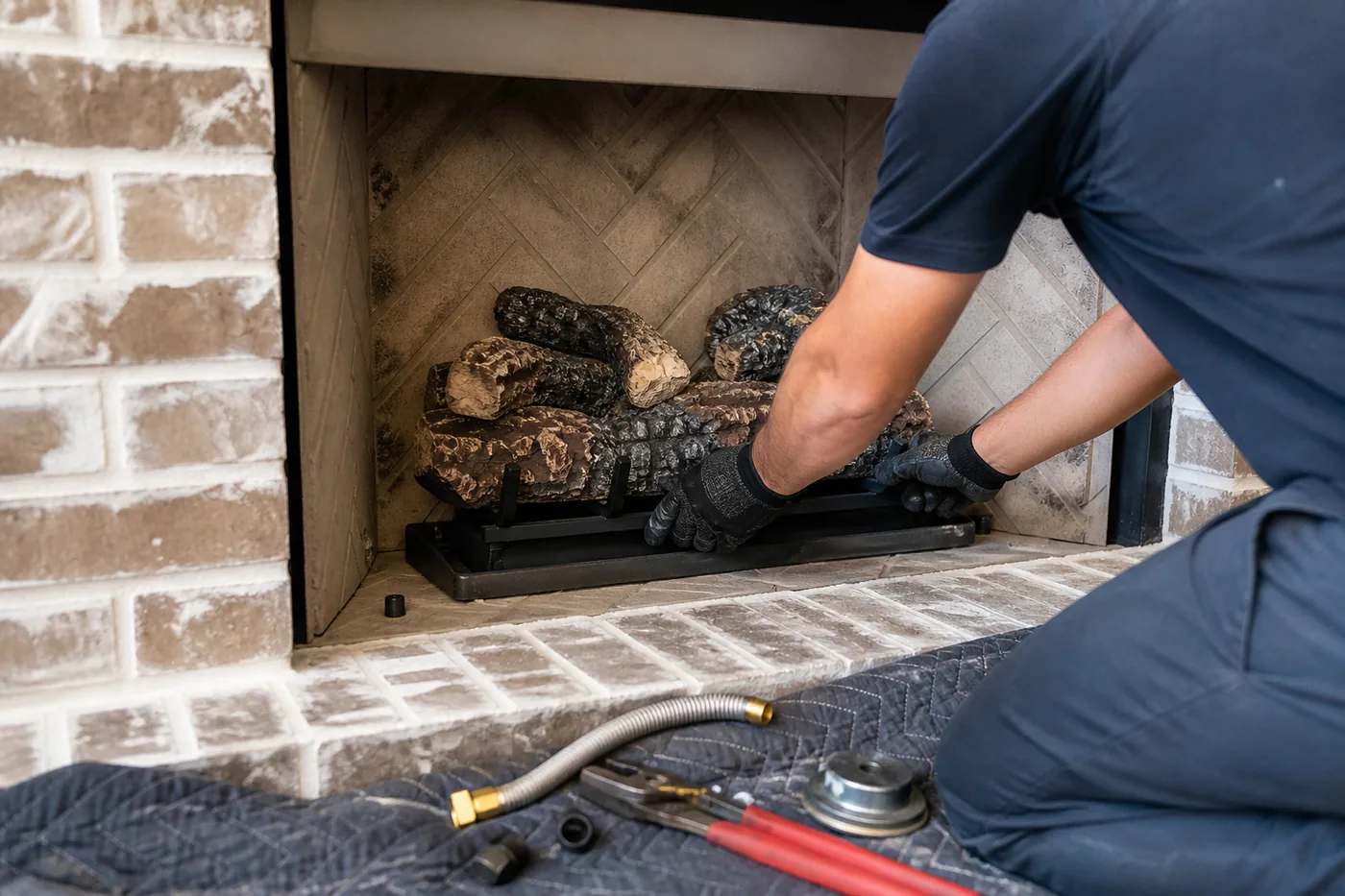
Gas work rewards method. Here's ours:
Won't light, won't stay lit, soot, smell, or silence, each points somewhere specific
Pilot, thermocouple, valve, burner, ignition, and venting tested in sequence
The failed part, the fix, and the price, approved before wrenches turn
Common parts ride on the truck; most repairs finish the same visit
Every gas connection we touch gets tested before the panel goes back on
Full ignition cycles, flame pattern verified, remote and blower confirmed
What failed, what fixed it, and how to keep it lighting, documented
Most gas fireplace repairs finish in a single visit, get on the schedule before the season rush.
(214) 225-8874Eight idle months in a Texas home is exactly how pilots and burners collect the dust and spider webs that block them. That's why "worked in March, dead in October" is our most common service call, and one of the fastest to fix.
If your unit has a standing pilot and the manufacturer's relight instructions on the panel, following them is reasonable. If it relights and then drops again, stop, that's the safety system telling you a component is failing, and repeated relighting won't change its mind. That's when to call.
A light haze that cleans off, occasionally. Black buildup that returns quickly, no, that's incomplete combustion from misplaced logs, a dirty burner, or an air-mixture problem, and it deserves attention because the same chemistry that makes soot makes carbon monoxide.
We verify combustion and venting on every visit, and we'll gladly advise on detector placement while we're there. Every home with gas appliances should have working CO detectors, that's true whether or not you ever call us.
Gas fireplaces sit in the gap between HVAC techs, plumbers, and handymen, everyone's adjacent, nobody's home. Hearth systems are literally our whole business, venting included.
Gas combustion quietly corrodes flues with moisture and acids. Because we're a chimney company first, the venting inspection other repair services skip is built into how we work.
When a fix makes sense, we fix. When a unit is obsolete or a repair won't hold, we say so with reasons, and our gallery shows plenty of upgrades that started with that honest conversation.
Leak checks after every connection, flame verification after every repair, CO awareness on every visit. Gas rewards discipline, and discipline is the product.
Gas fireplace restorations, log set installs, and conversions from Carrollton, Southlake, and Frisco are in the project gallery.
See Gas Fireplace Projects →Not every DFW hearth runs on gas alone, and not every repair call is about a pilot light. We also repair wood-burning fireplaces, including the gas starter lines that light many of them, and we routinely find issues that homeowners didn't know to look for until a sweep or inspection turned them up.
Firebox cracks matter because they're a direct path for heat and flame to reach combustible framing behind the brick. We check the depth and location of any crack before recommending a fix, since hairline mortar joint wear is a different repair than a split firebox panel. Damper repair is just as common: a damper stuck open wastes conditioned air and lets rain and animals in, while one stuck shut can trap smoke and carbon monoxide in the room. We service both traditional throat dampers and top-mount versions.
Most fireplace problems are legitimate repairs: a new gas starter valve, a releveled damper, patched mortar joints, or a resealed glass door. We only recommend full firebox rebuilding or fireplace replacement when the masonry has deteriorated structurally or the unit can no longer be brought up to a safe operating condition. You'll get a clear explanation of which category your fireplace falls into before any work begins.
The unit is one part of a system that runs to your rooftop. These companions turn up most often, and here's where each fix lives:
Gas units dominate DFW's newer construction, which keeps our routes busy from the northern suburbs to mid-cities, and everywhere else in the 98 cities we serve.
+ 78 more DFW cities! Find yours on the service areas page or call (214) 225-8874.
"Very pleased with the professionalism and promptness of service. The chimney sweep was done quickly and efficiently at significantly less cost than the first quote I got from another company. Happy to recommend Lowes Chimney Sweep to anyone in Plano!"
"Outstanding chimney sweep service from start to finish. They were punctual, courteous, and left our chimney spotless with no mess in our home. I won't use anyone else for chimney services in Dallas TX!"
More reviews from homeowners across the metroplex are on our reviews section, or learn more about our team before you book.
Typical Dallas Fort Worth ranges: pilot light and thermocouple repairs are priced with a clear, upfront quote after an on-site inspection, gas valve replacement a clear, upfront price, burner replacement a clear, upfront price, and new gas log sets a clear, upfront price installed depending on the set. Inserts and conversions are quoted individually. You get a written Free Online Quote before any part is ordered.
Nine times out of ten it's the thermocouple or thermopile, the small sensor the pilot flame heats to prove it's burning. When it weakens, the safety system shuts gas off exactly as designed. It's one of the most common and least expensive gas fireplace repairs we make.
Treat it as an emergency, not a repair booking: don't flip switches or light anything, get everyone out of the house, and call your gas utility's emergency line or 911 from outside. Once the utility has made the home safe, we handle the repair that caused it, but safety first, always.
Yes, gas burns cleaner than wood, but not clean. Annual service clears dust and spider webs from the burner and pilot assembly (a genuinely common failure cause in Texas), checks the ignition system, verifies proper flame pattern, and inspects venting. It's the difference between a fireplace that lights every October and one that doesn't.
In most cases, yes, either with a vented gas log set in the existing firebox or a full gas insert for higher efficiency. The conversion includes running the gas line connection, setting the logs or insert, and configuring the damper for safe operation. We'll walk you through which option fits your chimney and budget.
Gas logs are decorative burners set in your existing open firebox, beautiful, but most heat goes up the flue. An insert is a sealed high-efficiency unit installed into the firebox opening that actually heats the room. Logs cost less up front; inserts pay back in heating performance.
Yes, heating elements, blowers, flame-effect motors, and controls on plug-in and built-in electric units. When a repair isn't economical (some sealed units aren't built to be serviced), we'll say so and help you choose a replacement rather than billing hours on a dead end.
Vented decorative log sets are designed to burn yellow for realism, that's normal. But on a unit that used to burn blue, a shift to lazy yellow flames plus soot can signal incomplete combustion from dust, misaligned logs, or a burner problem. That combination deserves a service visit, incomplete combustion produces carbon monoxide.
Gas company for emergencies and anything on their side of the meter: leaks, no gas to the whole house, meter issues. Fireplace company for everything inside: pilots, valves, burners, logs, ignition, and cleaning. If you're unsure and there's no leak, call us, if it's the utility's problem, we'll tell you in one phone call.
Vented gas fireplaces still need their venting inspected, gas combustion produces moisture and acids that quietly corrode flues and liners, and birds don't check what fuel you burn before nesting. An annual inspection with a lighter-duty cleaning keeps the system safe; it's faster and cheaper than a wood-burning sweep.
Gas units live inside the same chimney system as everything else we service. The most common pairings:
Weighing logs against an insert, or repair against replacement? The chimney FAQ has more answers, or reach us through the contact page.
Free online quotes · Trained gas technicians · Leak-checked, flame-tested, documented · Open 7 days
(214) 225-8874📍 1008 Ridgefield Dr, Plano TX 75075 | 🕗 Open 7 days · 8AM-8PM
We check the burner and pilot assembly, thermocouple or thermopile output, gas connections, the venting for blockage, glass gasket seal, and the condition of logs and embers. The cleaning process is the same bottom-to-top flue check as a wood fireplace, because blockage does not care what fuel you burn.
Pilots that will not stay lit from weak thermocouples, dust-clogged burners making lazy orange flames, spider webs in pilot tubing, vent caps blocked by nests, failed wall switches, and gasket leaks fogging the glass.
Gas units fail quiet, not dramatic. A blocked vent or leaking gasket can push carbon monoxide into the room with no smoke and no smell. Annual service exists because the failure mode you cannot see is the one that matters. If you ever smell gas, leave first and call from outside.
Thermocouple and thermopile replacement, burner cleaning and adjustment, pilot assembly rebuilds, gasket replacement, valve and switch repairs, and full annual service. Because the process mirrors a wood fireplace cleaning, the price is typically the same. Ballpark by phone, confirmed on site.
Run the unit monthly even in warm months to keep the valve exercised, keep the area around the intake dust-free, and watch the flame color: crisp blue at the base with steady yellow tips is healthy, lazy orange is a service call.
Units with discontinued valves or cracked heat exchangers are replacement territory, and we say so instead of chasing parts that no longer exist. If a repair would cost half a new insert, you get both numbers and the honest recommendation.
Straight answers from our DFW chimney pros before you book.
Get an honest ballpark range for this service, no phone call needed. Built from real Dallas-Fort Worth pricing, then book when you’re ready.
Get My Instant Estimate →