I-35 splits in two at Hillsboro, and the town between the forks keeps a courthouse it famously brought back from fire. Restoration is the local religion here, our kind of square. Around the square and out to the forks, we handle chimney sweep and chimney cleaning in Hillsboro, inspections after a chimney fire, and chimney repair in Hillsboro on the town's senior masonry.
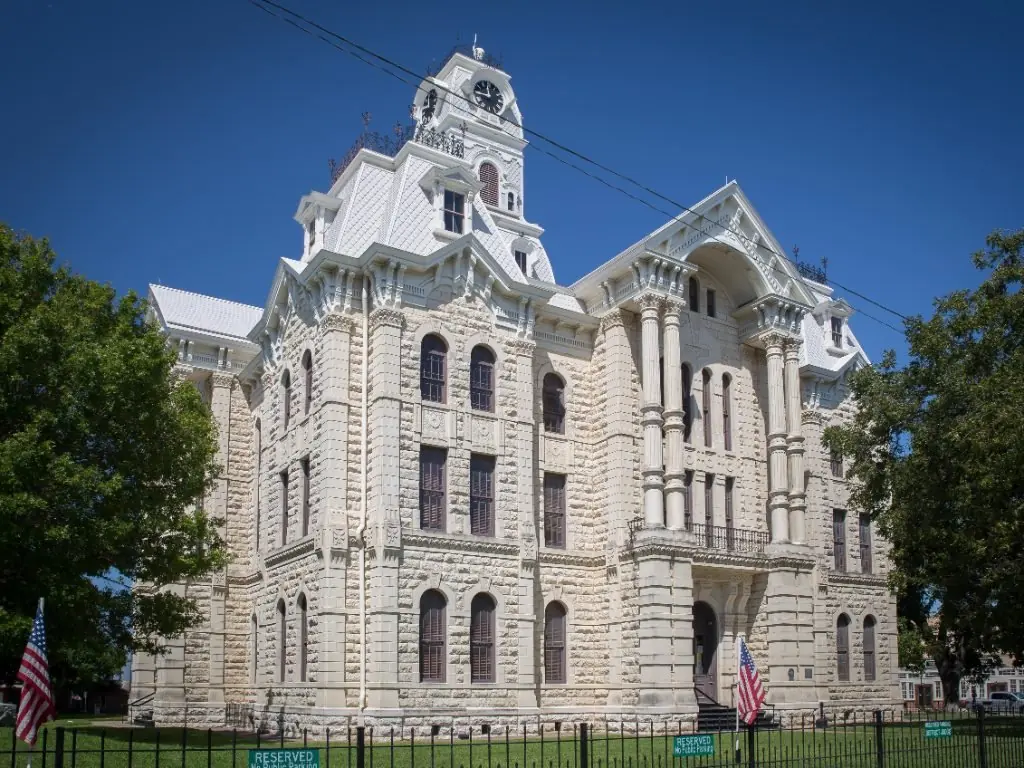
Every driver in Texas knows where Hillsboro is, it's where I-35 makes up its mind, splitting into the eastern and western forks that carry the state north. But the town between the forks is defined by a different landmark: the 1890 Hill County courthouse, which burned on New Year's Day 1993 and was brought back, genuinely restored, not replaced, because this town decided its centerpiece deserved nothing less. The antique district that thrives around it agrees.
A town with that story sets the bar for everyone who touches old masonry here, and we like it that way. The square orbit and antique blocks hold Hill County's senior file, lime mortar, tall early-1900s stacks, century commercial flues with layered biographies. The mid-century belt runs the standard renewal clock. And because fire is part of this town's vocabulary, so is ours: post-fire chimney assessment is a specialty we bring to every flue that's ever run too hot.
The Hillsboro toolkit honors the local standard: rebuild work that restoration must earn on camera first, full video inspections, including the post-fire assessments no one should ever skip, lime-matched tuckpointing for square-orbit joints, and careful sweeps that keep working flues from ever writing a fire story of their own.
The courthouse orbit holds the founding file, the restored landmark's residential neighbors, the senior brick of the southern forks. The antique-district blocks carry century commercial masonry with a hundred years of tenant history in their flues. The mid-century belt runs the postwar cohort on the renewal clock, and the interstate edges add the young file where the forks frame the town.
A landmark restored, a district preserved, and a standard we're held to on every roof in between.
Logistics: Hillsboro anchors the meeting of our southern forks, same-week standard, seven days, reachable down either interstate as the day's route runs.
The town that restored its courthouse doesn't guess about fire, call (214) 225-8874.
A Typical Hillsboro Project
A family near the square, one loud flue fire the winter before, fireplace unused since out of caution: the camera found what fear couldn't see, cracked tiles through the middle third of the flue, joints opened by the heat, smoke chamber intact. The reline restored the system properly, the documentation went to their insurer, and the after-video proved every foot sound. First fire since the scare burned that December, in a chimney that had been proven, not presumed.
Hillsboro takes the full southern menu, hail springs, wind fronts, blackland running its slow arithmetic under century footings and young slabs alike. Senior masonry answers with proof measured in generations; the only variable it can't argue with is neglect. In a town whose landmark burned once, the annual look isn't caution, it's culture.
The standard is written down: NFPA 211 calls for an annual inspection of every chimney and venting system, and a Level II inspection after any chimney fire, before the next burn, with homeowner guidance from the Chimney Safety Institute of America. Between the forks, the annual habit is the whole plan.
The courthouse-orbit file, the landmark's senior neighbors, century protocol always. The antique blocks, commercial-flue biographies, mapped passage by passage. The mid-century belt, the postwar cohort, renewal season now. The interstate edges, the young file, baseline years.
Restoration that matches the original, fire verdicts proven on video, and a bar set by the courthouse itself. The before-and-after gallery shows the craft, and our reviews ride both forks end to end.
Hillsboro sits where our two southern forks meet, 35E down through Waxahachie or 35W down through the Johnson County side, whichever the day's route favors. Same-week appointments are the standard, seven days a week, 8AM to 8PM.
A courthouse town's classic file: senior masonry around the square with lime-era mortar and original crowns, early-1900s streets with tall stacks, a mid-century belt at renewal age, and the antique-district blocks carrying century commercial flues. Mostly patient restoration work, cameras, matched mortar, staged plans.
It did, and we take the lesson personally. When the 1890 Hill County courthouse burned on New Year's Day 1993, Hillsboro didn't settle for a replacement, the town rebuilt its landmark properly, and by decade's end the limestone icon stood restored. That's the standard this square enforces on everyone who works near it: restore honestly, match the original, or don't bother. We work under that courthouse's gaze and act like it.
First: don't burn again until it's been inspected, not once, not 'just a small fire.' A chimney fire can crack flue tiles, open liner joints, and damage the smoke chamber in ways invisible from the hearth. The right response is a full camera inspection documenting every foot of the flue, a written assessment your insurance can use, and then the honest verdict: sometimes a cleaning and minor repair, sometimes a reline, occasionally more. What matters is that the next fire burns in a system that's been proven safe, not assumed safe.
The courthouse orbit and the antique-district blocks, the square that made Hillsboro a destination holds its senior masonry too. Age steps down through the early-1900s streets and the mid-century belt toward the newer edges by the interstate split.
Hill County blackland runs the region's standard wet-dry arithmetic: century footings settled long ago, mid-century slabs carry stable old lines, newer builds still finding posture. We measure and photograph so verdicts rest on trend data, not one afternoon's look.
The southern corridor takes its storms, and senior crowns chip long before young concrete does. Any storm year, photograph the chimney top inside the same claim window as the roof, dated evidence keeps claims short.
Gladly. The century commercial blocks carry their own flue biographies, heating stacks, retired boiler flues, apartment fireplaces added and abandoned across a hundred years of tenants. We survey mixed-use masonry the same way we survey the courthouse orbit: camera first, every passage mapped, active flues serviced and retired ones sealed weather-tight, with documentation the building's owner can keep on file.
Senior masonry: the annual look before the first fire, no exceptions. Anyone who's ever had a chimney fire: inspection before the next burn, full stop. Everyone else: fall for burners, spring for the storm check, and the southern forks book quickest once the first front lands.
The eastern fork runs up through Waxahachie and the routes cross to Midlothian between them, and all 98 DFW cities we serve are on the map.
Free online quotes · Post-fire expertise · Landmark-grade restoration · Open 7 days
(214) 225-8874📍 1008 Ridgefield Dr, Plano TX 75075 | 🕗 Open 7 days · 8AM-8PM
Our techs know Hillsboro from years of service runs, covering the 76645 ZIP code end to end. FAST Scheduling appointments reach here when the schedule allows, and the annual inspection keeps every fireplace in town code-ready.
"Very pleased with the professionalism and promptness of service. The chimney sweep was done quickly and efficiently at significantly less cost than the first quote I got from another company. Happy to recommend Lowes Chimney Sweep to anyone in Plano!"
"Outstanding chimney sweep service from start to finish. They were punctual, courteous, and left our chimney spotless with no mess in our home. I won't use anyone else for chimney services in Dallas TX!"
More reviews from homeowners across the metroplex are on our reviews section, or learn more about our team before you book.
Full-service chimney care across Hillsboro and the DFW metroplex.
Helpful guides: