Lancaster's square was doing business before Dallas had suburbs to name, and its chimneys span three centuries of building. Historic hands for the old work, straight answers for all of it. Older than the suburbs around it, Lancaster gets a chimney sweep in Lancaster that respects historic masonry: chimney cleaning first, chimney repair only when the photos show the need.
What do I actually get for $299 here?
Lancaster's chimneys span three centuries near its 1852 town square, each era needing real attention. Our $299 rate includes a full single-flue cleaning paired with a Level 1 inspection, done together. Many $99 ads cover only a base visit, with inspection fees appearing afterward. Why $299, not $99 →
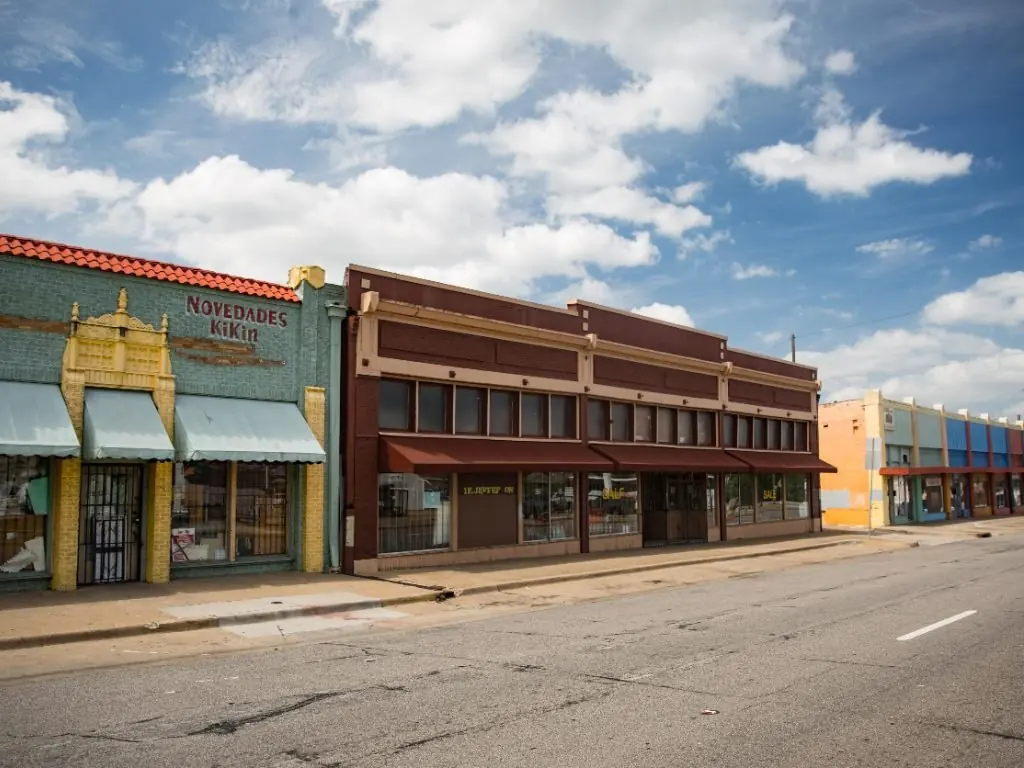
Lancaster was platted in 1852, a genuine nineteenth-century Texas town with a genuine town square, trading and building while the land around it was still open blackland. The square is still the city's heart, with historic commercial blocks restored and working. Neighborhoods radiate outward through every era since: square-orbit homes with the county's oldest residential masonry. There's also the broad '60s-'80s belt of brick family houses, plus newer phases filling in south and west.
A town this old carries every kind of chimney we know how to serve, and it has been tested harder than most. Lancaster has rebuilt from serious storms more than once and come back each time with its square intact, which tells you something about how this town was made. The masonry that has stood through all of it deserves two things: genuine restoration craft when it needs work, and honest verdicts about what it actually needs.
The Lancaster toolkit spans every era, from restoration-grade tuckpointing matched to mortar from any decade or century on the route. Camera-first inspections open every senior-masonry conversation, and stainless caps replace the mid-century belt's retiring originals. Honest rebuild work is reserved for cases the footage truly proves.
The square orbit holds the founding file, historic residential masonry within sight of the 1852 townsite, the oldest brick on our Best Southwest routes. The '60s-'80s belt carries Lancaster's big cohort, standard mid-life renewal territory. The Ten Mile Creek corridor threads the established middle of town, and the newer southern and western phases close the file with builder systems on their first maintenance clocks.
From the square to the newest street is a hundred and seventy years of construction, and the era of the brick decides the protocol, house by house.
Logistics: Lancaster anchors the eastern side of our Best Southwest loop, same-week standard, seven days, with historic-masonry visits booked long enough to do the slow parts right.
Old towns reward early answers, call (214) 225-8874 and we'll bring the camera.
A Typical Lancaster Project
A square-orbit home had brick laid generations ago. The camera found era mortar soft on the weather faces, plus an unlined flue with honest interior wear. A crown was patched across the decades, venerable, not fragile. The plan came staged: reline and repoint this season, crown restoration next, every finding on video, era-matched mortar throughout. The repairs disappeared into the original work, which around the Lancaster square is the entire point.
Lancaster's masonry has met everything North Texas issues, the hail springs, the drought summers, the clay's long seasonal arithmetic, and the rare violent afternoons the town has twice rebuilt from. Survival is the town's proven habit; margin is the maintenance question. The oldest stacks carry the least spare material between fine and not, which is why the annual look earns most around the square.
The standard holds for every era at once. NFPA 211 calls for an annual inspection of every chimney regardless of age or fuel. Homeowner guidance on that standard comes from the Chimney Safety Institute of America. In a town this old, the annual habit is the preservation plan.
The square-era file, the county's senior residential masonry, restoration protocol always. The '60s-'80s belt, the big cohort, mid-life renewal season. The creek-corridor middles, established streets on the standard plan. The new south and west, young systems, baseline years.
Era-matched mortar, video before verdicts, and restoration preferred wherever restoration is honest. The before-and-after gallery shows old brick brought back right, and our reviews run the length of the Best Southwest.
Lancaster rides our Best Southwest loop off I-35E and Highway 342. Same-week appointments are the standard, and morning callers often land FAST-scheduling. We run seven days a week, 8AM to 8PM.
The widest age spread on our southern routes. Around the historic square: genuinely old masonry with era mortar and pre-standard flues. Through the '60s-'80s belt: crowns, caps, and first repointing arriving on schedule. In the newer southern phases: builder metal and gas sets due their baselines. Three eras, three protocols, one truck.
Like the irreplaceable work it is. Square-era chimneys get the slowest protocol we run: full camera survey first, lime-appropriate and color-matched mortar, minimal intervention, and photographic documentation before and after every step. The goal is another century of service, not a modern-looking patch on a historic stack.
Assume nothing; document everything. Lancaster has rebuilt from serious storms more than once. Plenty of its masonry came through honorably. But wind events can leave hairline racking, shifted crowns, and loosened caps that read fine from the yard. A one-time thorough survey settles it with photos and video, and gives every future inspection a baseline to compare against.
The blocks around the historic town square, Lancaster has kept one of Dallas County's original squares, and the houses in its orbit carry masonry that predates every suburb around it. Age steps down through the mid-century belt and again toward the newer southern and western phases.
Across every era, in era-appropriate ways: the square's senior footings move in a long-settled rhythm, the mid-century belt shows decades-old stable cracking, and the newer phases are still finding posture. We measure and photograph every line so the verdict rests on trend data, not on how a crack looks in one afternoon's light.
The southern corridor sees its share of hail springs. Older crowns chip more easily. Any storm year, have the chimney top photographed in the same claim window as the roof. On square-era masonry, insist the photos happen before any contractor touches anything, so the record stays clean.
With evidence you can watch. Every rebuild conversation starts from the full video and photo record, a written scope splitting must-do from nice-to-do, and the ten-year math on staged repair versus rebuild. Historic stacks in particular almost always deserve restoration first, and when a rebuild truly is the answer, the footage will have made the case before we say the word.
Before the first fire, every year, and the older the flue, the less forgiving a skipped season becomes. Fall books fastest; late summer buys the same inspection with easier windows. Any new crack, leak, or smoke change on square-era masonry is a this-week call, not a someday one.
The Best Southwest loop links Lancaster with DeSoto next door and Dallas up 35E, and all 98 DFW cities we serve are on the map.
Free online quotes · Restoration-grade craft · Video-backed verdicts · Open 7 days
(214) 225-8874📍 1008 Ridgefield Dr, Plano TX 75075 | 🕗 Open 7 days · 8AM-8PM
"Very pleased with the professionalism and promptness of service. The chimney sweep was done quickly and efficiently at significantly less cost than the first quote I got from another company. Happy to recommend Lowes Chimney Sweep to anyone in Plano!"
"Outstanding chimney sweep service from start to finish. They were punctual, courteous, and left our chimney spotless with no mess in our home. I won't use anyone else for chimney services in Dallas TX!"
More reviews from homeowners across the metroplex are on our reviews section, or learn more about our team before you book.
Full-service chimney care across Lancaster and the DFW metroplex.
Helpful guides: