● Pricing reviewed & current for October 2026
When cold air and smoke push down your flue instead of drawing up and out, your fireplace stops working the way it should. Lowes Chimney Sweep diagnoses and repairs chimney downdraft across the Dallas-Fort Worth metroplex, so your fires burn clean and your home stays comfortable.
Quick answer: Chimney downdraft repair in Dallas-Fort Worth typically costs $200 to $800 in 2026, depending on the cause and the fix required.
A chimney is supposed to work like a one-way street. Hot air, smoke, and combustion gases rise up the flue and exit above your roofline, while the pressure difference between the warm flue and the cooler outside air pulls everything upward. This upward pull is called draft, and it's the invisible engine that makes a fireplace safe and pleasant to use.
A downdraft is the opposite. Instead of rising and leaving, air moves the wrong direction down the flue and spills into your living space. Sometimes it's just a cold column of outside air rolling into the room from an unused fireplace. Other times it's active smoke and combustion byproducts getting pushed back down and out through the firebox while you're trying to enjoy a fire. Either way, the flue has lost the pressure battle, and your home is on the losing end.
Downdraft is one of the most misunderstood chimney problems we see in Dallas-Fort Worth homes. Many homeowners assume the chimney is dirty or the wood is bad, when the real issue is a pressure and airflow problem that has a specific, fixable cause. Getting the diagnosis right is the whole game, and that's where an experienced, certified chimney professional earns their keep.
Downdraft rarely announces itself politely. The most obvious symptom is smoke rolling back into the room when you light a fire or while it's burning. If you find yourself opening windows or waving a towel at the smoke detector every time you use the fireplace, downdraft is a prime suspect.
But it isn't always about smoke. A cold, persistent draft flowing out of the fireplace even when there's no fire is a classic sign that outside air is pouring down the flue. Homeowners often describe a chilly spot near the hearth in winter, or notice their heating bills creeping up because conditioned air is being pulled out and cold air is sliding in.
Odors are another giveaway. When air moves down the flue instead of up, it drags the smell of creosote, soot, and old ash into the room. This is especially noticeable in humid weather or during the warmer months, when a downdraft carries that damp, smoky basement smell straight into your living area. If your fireplace smells worse when you're not using it, you almost certainly have air coming down the chimney. If your problem is primarily smoke entering the room during a fire, our smoking fireplace repair service addresses that specific issue in depth as well.
There is no single cause of downdraft, which is exactly why guesswork so often fails. In our experience across the metroplex, the problem usually traces back to one or more of these culprits.
A chimney that's too short. Building codes call for a flue to extend a minimum height above the roof and any nearby high point, often summarized as the "3-2-10" rule. A chimney that falls short of this doesn't develop enough draft and is far more vulnerable to wind-driven downdraft.
A missing, damaged, or wrong chimney cap. Without the right cap, wind can blow directly down the flue. Some caps are simply the wrong style or size for the chimney, and instead of protecting the draft they actually disrupt it.
Blockages inside the flue. Bird nests, leaves, debris, and heavy creosote buildup all narrow the passage air has to travel through. A restricted flue can't move enough air to maintain proper draft.
Negative pressure inside the house. This is the big one in modern DFW homes. Kitchen and bath exhaust fans, clothes dryers, HVAC systems, and tightly sealed construction can all pull the air pressure inside the home below the pressure outside. When that happens, the house looks for air anywhere it can get it, and an open chimney becomes the easiest place to suck it in, reversing the flue.
A cold flue. A flue full of dense, cold air resists the warm air trying to rise through it. Chimneys on exterior walls and those that have sat unused stay especially cold, making them prone to a stubborn downdraft until the flue warms up.
Damper problems. A damper that won't fully open restricts airflow, while one that won't seal lets cold air pour in when the fireplace isn't in use.
Nearby taller structures and trees. Two-story additions, neighboring rooftops, and mature trees can create wind eddies and pressure zones that push air down the flue under certain wind conditions.
Because downdraft has so many possible causes, we start every job with a thorough inspection rather than jumping to a fix. A guess at the counter costs you money and rarely solves the problem for good.
Our technicians examine the chimney from top to bottom. On the roof, we measure the chimney height relative to the roofline and surrounding structures, check the cap, and look for anything obstructing the flue opening. Inside, we inspect the firebox, damper, smoke chamber, and flue for blockages, creosote buildup, and sizing issues. We evaluate whether the flue is correctly proportioned to the fireplace opening, since an oversized opening relative to the flue is a frequent cause of poor draft.
Just as important, we look at your home as a whole system. We consider how exhaust fans, HVAC equipment, and the tightness of the construction affect indoor pressure. A downdraft that only shows up when the kitchen vent hood is running tells us something very different than one that happens on every cold, windy day. This whole-house perspective is what separates a lasting repair from a temporary band-aid.
Once we know the cause, we can match it to the right solution. In many cases the correct repair is a combination of a couple of these, because downdraft often has more than one contributing factor.
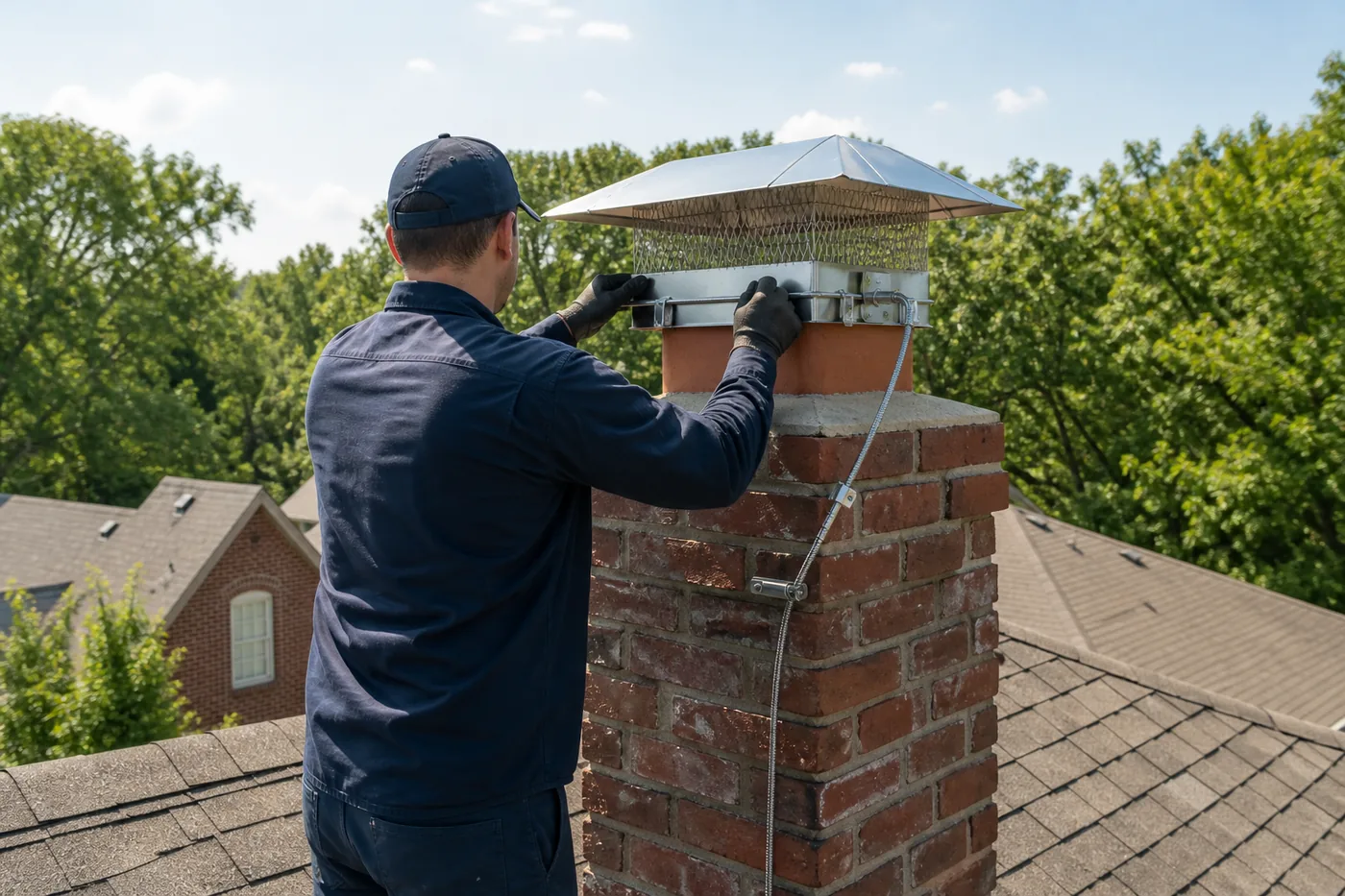
Draft-increasing and specialty caps. When wind is driving air down the flue, a properly sized draft-increasing cap can make a dramatic difference. These caps use their design to harness passing wind to boost draft rather than fight it, and they also keep out rain, animals, and debris.
Top-sealing dampers. For homes where cold air and odors pour in through an unused fireplace, a top-sealing damper mounted at the top of the flue creates a tight seal that a traditional throat damper simply can't match. It stops the cold-air waterfall and the smoky smell, and it saves energy year-round by sealing the flue when you're not burning.
Chimney height extension. If the flue is too short to develop proper draft, extending its height is often the most direct and permanent fix. Raising the chimney gets the opening up into cleaner air and away from the pressure zones created by the roof and nearby structures.
Makeup air solutions. When negative household pressure is starving the chimney, the answer is giving the house another source of air. Providing makeup air, whether through a dedicated vent or by adjusting how combustion air reaches the fireplace, relieves the pressure that's reversing your flue.
Clearing blockages and cleaning. Sometimes the fix is straightforward. Removing a nest, clearing debris, or performing a proper sweep to eliminate creosote buildup restores the full diameter of the flue and lets it breathe again.
A downdraft is more than an inconvenience. When combustion gases can't rise up the flue and leave your home, they have nowhere to go but back into your living space. Those gases include carbon monoxide, an odorless, colorless gas that is dangerous at elevated levels.
This is why we treat downdraft as a safety issue, not just a comfort complaint. Any fireplace or appliance that vents into a chimney relies on that chimney working correctly to carry byproducts safely outside. A reversed or sluggish flue undermines that entire system. We strongly recommend working carbon monoxide detectors in any home with a fireplace or fuel-burning appliance, and we encourage homeowners to stop using a fireplace that consistently pushes smoke back into the room until it has been inspected. Correcting the underlying airflow problem is what makes the fireplace safe to enjoy again.
We keep the experience simple and transparent from the first call to the final test burn. When you reach out, we gather the details about what you're seeing and when the problem happens, which helps our technician arrive prepared.
On site, we perform the full top-to-bottom inspection described above and explain what we find in plain language. You'll get a clear picture of the cause and the recommended fix, along with straightforward pricing before any work begins. We don't believe in surprises or pressure.
Once you approve the work, our certified technicians complete the repair, whether that's installing a new cap, mounting a top-sealing damper, extending the flue, clearing a blockage, or addressing a makeup air issue. Before we leave, we verify the results so you know the problem is genuinely solved and not just patched over.
Homeowners always want to know what a repair will run, and the honest answer is that it depends on the cause. A downdraft solved by clearing a blockage or installing a well-chosen cap sits at the affordable end. A repair that involves extending the chimney's masonry height, installing a top-sealing damper system, or engineering a makeup air solution involves more labor and materials.
Other factors include the height and accessibility of your roof, the construction of your chimney, and whether more than one cause needs to be addressed to fully resolve the problem. Because we diagnose before we quote, the price we give you reflects the actual work your chimney needs, not a padded estimate. We'll walk you through the options when more than one path exists, so you can make an informed decision about your home.
North Texas presents a particular combination of conditions that make downdraft a frequent complaint across the metroplex. Our fast-moving cold fronts are a big part of the story. A blue norther can drop temperatures and kick up strong, gusty winds in a matter of hours, and those sudden pressure swings are exactly the conditions that drive air down a vulnerable flue. Many homeowners only notice their downdraft problem when the first real cold front of the season rolls through.
The other factor is how homes are built here. Newer DFW construction is tight and energy-efficient, which is great for utility bills but tough on fireplaces. A well-sealed home doesn't leak air the way older houses did, so when exhaust fans and HVAC systems run, they can easily pull the interior into negative pressure and reverse the chimney. We see this constantly in newer neighborhoods across Plano, Frisco, McKinney, and the surrounding suburbs.
Lowes Chimney Sweep serves 98 cities throughout the Dallas-Fort Worth area, and our technicians understand these regional conditions firsthand. We're certified and insured, five-star rated, and we offer same-day and even Sunday service because a fireplace that fills your home with smoke shouldn't have to wait. If you're fighting a downdraft, call us at (214) 225-8874 and we'll get your chimney drawing the right direction again.
"Very pleased with the professionalism and promptness of service. The chimney sweep was done quickly and efficiently at significantly less cost than the first quote I got from another company. Happy to recommend Lowes Chimney Sweep to anyone in Plano!"
"Outstanding chimney sweep service from start to finish. They were punctual, courteous, and left our chimney spotless with no mess in our home. I won't use anyone else for chimney services in Dallas TX!"
More reviews from homeowners across the metroplex are on our reviews section, or learn more about our team before you book.
Chimney downdraft repair in Dallas-Fort Worth typically costs $200 to $800 in 2026. The price depends on the cause, a draft-correcting cap is inexpensive, while flue-height or air-pressure corrections cost more. We diagnose the real cause before quoting a fix.
That's the hallmark of a chimney downdraft, where air is moving down the flue instead of up. It can be caused by a short chimney, a poor or missing cap, a blockage, a cold flue, or negative air pressure inside your home. A proper inspection pinpoints which one, or which combination, is affecting your fireplace.
When air flows down the flue rather than up, it carries the odor of creosote and old ash into your room. This is a common downdraft symptom, especially in humid or warm weather. A top-sealing damper usually solves both the smell and the cold air that comes with it.
In many cases, yes. When wind is driving air down the flue, a correctly sized draft-increasing cap can dramatically improve draft while also keeping out rain, animals, and debris. The key is choosing the right cap for your specific chimney, which is why we diagnose before recommending one.
Modern, tightly sealed homes can develop lower air pressure inside than outside, especially when exhaust fans, dryers, or HVAC systems run. The house then pulls air in through the easiest opening, often your chimney, reversing the flue. Adding makeup air relieves that pressure and restores proper draft.
It can be. A downdraft means combustion gases, including carbon monoxide, may enter your home instead of venting outside. We treat downdraft as a safety issue, recommend working carbon monoxide detectors, and advise against using a fireplace that consistently smokes until it has been inspected and repaired.
Yes. Lowes Chimney Sweep serves 98 cities throughout DFW, with certified, insured technicians and same-day and Sunday availability. Whether you're in Plano, Frisco, McKinney, Dallas, or the surrounding suburbs, call (214) 225-8874 and we'll diagnose and fix your downdraft problem.
Straight answers from our DFW chimney pros before you book.
Get an honest ballpark range for this service, no phone call needed. Built from real Dallas-Fort Worth pricing, then book when you’re ready.
Get My Instant Estimate →