The railroad made Palestine a headquarters town, the Texas State Railroad keeps its steam alive, and the historic districts keep some of the finest Victorian brick in East Texas. It's the farthest flag on our map, and it's served like the closest.
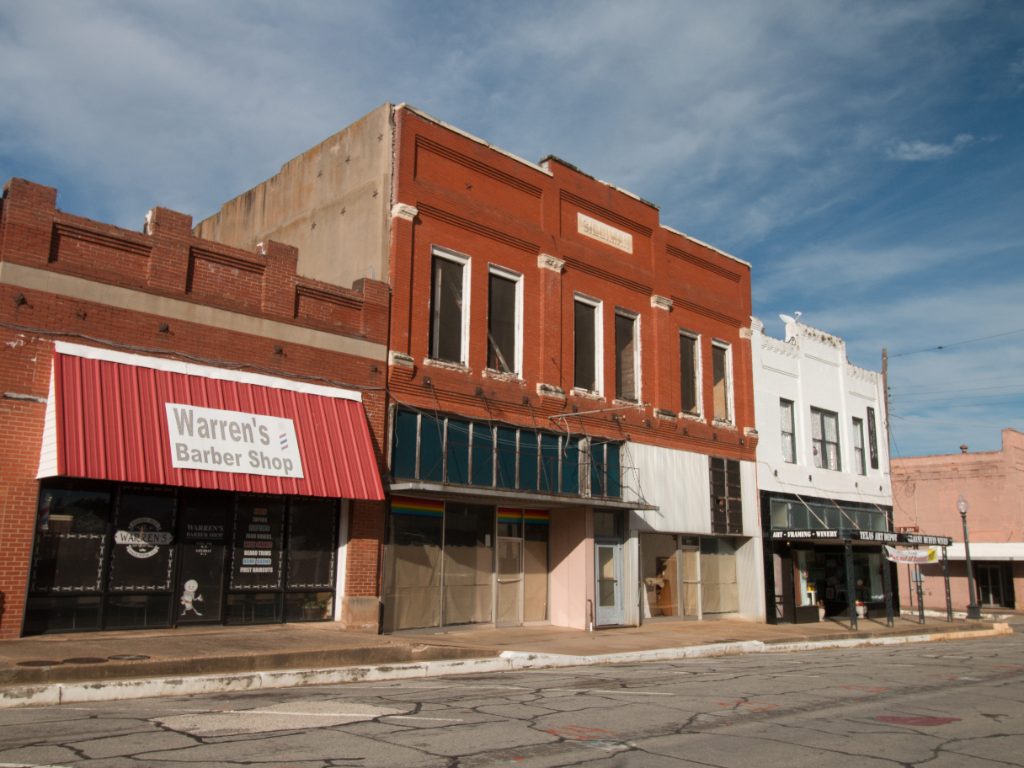
When the International-Great Northern made Palestine a division point, it didn't just bring jobs, it brought headquarters money, and headquarters money built beautifully. The historic districts here hold block after block of Victorian and early-1900s homes whose chimneys were laid by craftsmen the railroad could afford, and downtown's brick storefronts still carry the confidence of a town that ran the line. Add the dogwoods, the pines, and the steam whistle of the Texas State Railroad, and Palestine remains exactly what it was built to be: a place worth the trip.
We make that trip on purpose. Palestine anchors our far-southeast route days, batched, scheduled, honest about the distance, because division-era masonry deserves specialists, not whoever's nearest. The historic districts get restoration craft; the craftsman streets and mid-century belt get their era protocols; and the piney rural county gets working-flue service that respects real wood heat and East Texas damp.
The Palestine toolkit rides the route: era-tuned tuckpointing for district joints that must disappear, rebuild verdicts earned on camera before a single brick moves, honest sweeps for the county's working stoves, and fireplace repair for hearths that have anchored parlors since the railroad's golden years.
The historic districts hold the division-era file, Victorian and early-1900s masonry, the finest period work on the far routes. The craftsman streets carry the next generation on its own renewal clock. The mid-century belt rounds out the town file, and the piney county works real flues under real timber in every direction.
Headquarters brick to homestead stove is one county, and one route day covers it end to end.
Logistics: Palestine anchors the far-southeast route days, batched runs, booked ahead, same crew and standard as any metro address, seven days a week.
Distance doesn't dilute the standard, call (214) 225-8874 and get on the route.
A Typical Palestine Project
A district home from the division era, three chimneys on the roofline, two capped shut since anyone could remember: the one-visit survey rated all three on camera. The parlor flue proved soundest and was restored to service with a fresh liner and matched repointing; the two retired stacks were properly weather-sealed, crowns renewed, moisture staining documented. Three question marks became one working fireplace and two protected ornaments, with paperwork the next owner will thank them for.
East Texas trades the metro's hail-and-drought drama for a quieter adversary: moisture that never quite leaves. Shade keeps brick damp, humidity keeps mortar working, and the tall timber occasionally sends a limb to test a crown. Division-era masonry answers with craftsmanship a century deep, but even headquarters brick needs its joints breathing and its crowns shedding, and that's annual work.
The standard rides the whole line: NFPA 211 calls for an annual inspection of every chimney and venting system regardless of age or distance from the metro, and the Chimney Safety Institute of America keeps the homeowner guidance current. In a town that maintains steam locomotives, annual maintenance needs no selling.
The district file, division-era craftsmanship, restoration protocol always. The craftsman streets, the next cohort, era-true renewal. The mid-century belt, standard clock, standard care. The piney county, working flues, working schedule.
Materials matched to headquarters-era work, moisture read like a maintenance log, and route days that deliver the full standard to the far edge of the map. The before-and-after gallery shows the craft, and our reviews ride every route we run.
Really and reliably. Palestine is the farthest flag on our map, and we're honest about what that means: we batch the far-southeast into dedicated route days rather than promising next-morning arrivals, and once you're on a route day, you get the same crew, the same standard, and the same documentation as any address in Plano. The drive is our problem, not yours.
A division-point town's deep file: Victorian and early-1900s brick through the historic districts, era mortar, original crowns, chimneys built when the railroad paid for craftsmanship, plus craftsman-era stock, working wood heat in the piney rural county, and East Texas moisture working everything green and damp. Restoration craft and humidity discipline carry the calendar down here.
One worthy of the neighbors. A town that keeps historic locomotives running understands the difference between preserving something and merely patching it, and we work to that local standard: original materials matched, era mortar tuned by hand, repairs that disappear rather than announce themselves. If the Texas State Railroad can keep steam alive, we can keep a division-era chimney honest.
The historic districts around downtown, the neighborhoods the railroad built when Palestine was a division headquarters hold some of the finest period masonry on our entire map. Age steps outward from there through the craftsman streets to the mid-century belt and the rural county beyond.
Constantly, and differently than the metro's dry-cycle clay. Piney-woods shade and moisture keep brick damp longer, which invites moss, algae, and mortar that never fully dries between rains. The answers are drainage-minded crowns, breathable repointing, and trimming the shade where a chimney never gets sun, plus an annual look that reads the green before it reads as damage.
Noticeably, Anderson County runs East Texas sandy loams and mixed clays rather than pure blackland, draining faster and moving less violently. Division-era footings settled a century ago and mostly hold their lines; what the ground gives up in drama, the humidity takes back in moisture work. We measure and photograph either way.
They bring their own version: less hail than the metro corridors, more wind through tall timber, and falling limbs are the local hazard the insurance adjusters know well. A limb strike can crack a crown or shear a cap without touching the roof. After any storm that drops wood, photograph the chimney top with the rest of the damage, same claim window.
Triage them like the assets they are. Victorian-era homes often carry more chimneys than any modern household needs, and the smart move is a one-visit survey that rates all of them: which flue is soundest to restore to service, which should be properly weather-sealed and retired with dignity, and whether any is quietly taking water. You get a documented plan instead of three question marks on the roofline.
Working wood heat: before every season. Historic-district masonry: the annual look before the first fire. And because the far-southeast runs on batched route days, book early, late summer reserves your spot on the fall runs, and dogwood season books the spring ones faster than you'd think.
The far-southeast route runs home through Kaufman on 175 and Terrell beyond it, and all 98 DFW cities we serve are on the map.
Free online quotes · Restoration craft · Honest route days · Open 7 days
(214) 225-8874📍 1008 Ridgefield Dr, Plano TX 75075 | 🕗 Open 7 days · 8AM-8PM
Palestine chimney calls take us all over the area, across ZIP codes 75801 and 75803. Every home here gets the same crew, the same photo documentation, and the same pricing that starts with a straight answer on the phone.
"Very pleased with the professionalism and promptness of service. The chimney sweep was done quickly and efficiently at significantly less cost than the first quote I got from another company. Happy to recommend Lowes Chimney Sweep to anyone in Plano!"
"Outstanding chimney sweep service from start to finish. They were punctual, courteous, and left our chimney spotless with no mess in our home. I won't use anyone else for chimney services in Dallas TX!"
More reviews from homeowners across the metroplex are on our reviews section, or learn more about our team before you book.
Full-service chimney care across Palestine and the DFW metroplex.
Helpful guides: