An 1886 rail Main Street at the center, brand-new commuter rooftops in every direction, and city limits that touch three counties. Royse City rides our eastern loop on one standard.
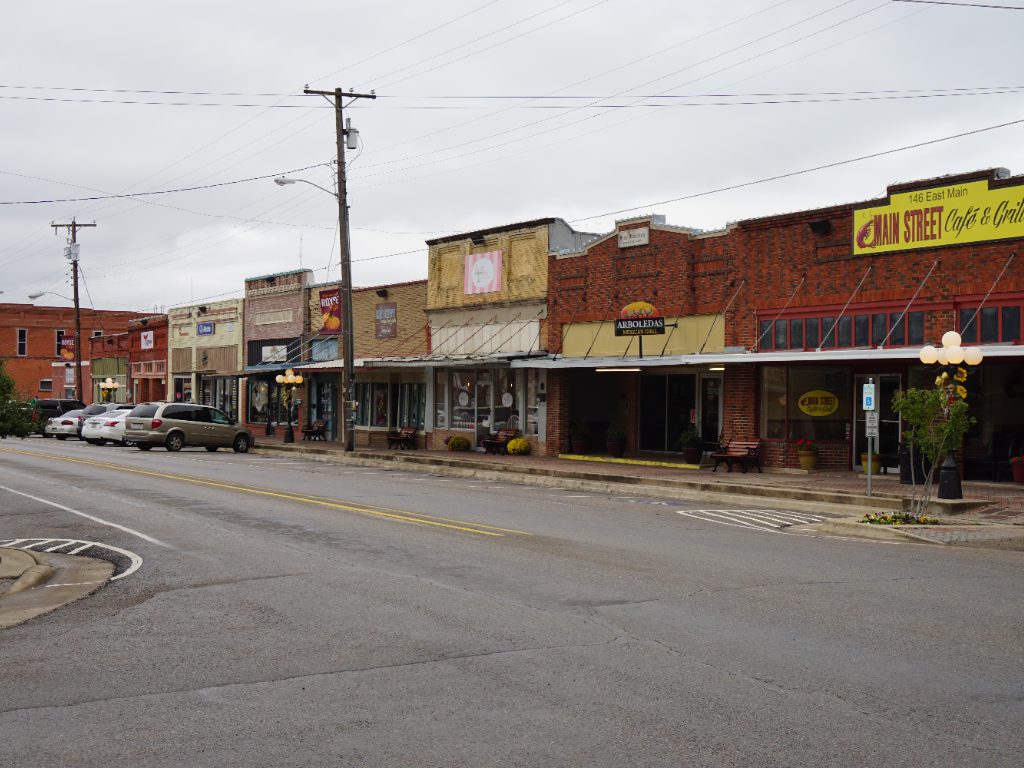
Royse City started the way the best east-line towns did, a rail stop platted in 1886, a Main Street of brick storefronts facing the tracks, blackland farms in every direction. The storefronts are still there, still handsome, still the town's birth certificate. What changed is everything around them: the I-30 corridor turned Royse City into one of the east side's fastest-growing commuter towns, with master-planned communities like Verandah filling the prairie and the city limits stretching until they touched three counties at once, Rockwall, Hunt, and Collin.
A seam town gets seam-town service: two building eras and three county lines, one route sheet. The Main Street orbit carries genuine 1880s-onward masonry that earns the century protocol, cameras first, matched mortar, patience. The commuter rings carry the youngest metal on the east line, where the work is documentation: baselines while builder warranties still pay, gas systems opened for the first time since the walkthrough, and chase tops photographed before the blackland finishes teaching the slabs.
The Royse City toolkit rides the seam: camera inspections that serve an 1886 stack and a 2024 chase with equal rigor, stainless cap upgrades before prairie weather streaks the builder galvanized, gas fireplace service for the rings' untouched log sets, and crown repair for every generation of top between Main Street and the newest phase.
The Main Street orbit holds the founding file, the 1886 storefront blocks and the senior houses that grew up around the rail line. The Verandah side leads the master-planned boom south of the interstate. The I-30 corridor phases keep opening east and west along the frontage, and the FM 548 and FM 2642 edges run the route out to where Royse City addresses cross into Hunt and Collin county ground.
Three counties, two centuries, one town, and the seam never once decides who gets served.
Logistics: Royse City anchors the far side of our eastern loop off I-30, same-week standard, seven days, with all three counties on the same route sheet.
Whichever county your street lands in, call (214) 225-8874 and the eastern route covers it.
A Typical Royse City Project
A three-year-old two-story on the Verandah side, booked for a baseline before the warranty mark: gas system clean, but the chase cover held a skim of water after every rain and one flashing run was caulk doing a metal's job. Photos went to the builder; both corrections landed on the builder's bill. The same loop, a Main Street-orbit senior brick got its staged repointing plan, era-matched mortar and all. Two centuries, one afternoon, that's the seam town.
The prairie east of the lake doesn't read deeds or county lines: hail springs cross 1886 crowns and last year's shingles alike, wind works era brick and builder caps with the same patience, and the blackland flexes every foundation, settling commuter slabs and Main Street's long-settled footings, through each wet-dry cycle. The new file's advantage is a clean starting record; the old file's advantage is fourteen decades of proof.
The standard rides the whole seam: NFPA 211 calls for an annual inspection of every chimney and venting system, gas included, a rule most of the commuter rings haven't met yet, with homeowner guidance from the Chimney Safety Institute of America. Boom side or brick side, the annual habit is the plan.
The Main Street founding file, 1886 rail-town brick, century protocol always. The Verandah waves, the boom's leading cohort, warranty clocks running. The I-30 corridor phases, the big young file, baseline-and-annual territory. The county-line edges, same route, same standard, any seam.
Baselines before problems on the new side, era-matched patience on the old, and photos before prices in all three counties. The before-and-after gallery shows the range, and our reviews run the eastern loop end to end.
Royse City rides our eastern loop out I-30, same-week appointments are the standard, seven days a week, 8AM to 8PM, and we batch the east-side stops together so the interstate miles never push your window.
Two files, a century apart. The Main Street orbit brings 1886-era rail-town brick, soft era mortar, patched crowns, pre-standard flues. The commuter rings bring the opposite: framed chases, builder metal learning to pond, and gas log sets untouched since the walkthrough. Most Royse City work orders are baselines on the new side, careful renewal on the old.
Covered, and this is the town where that question comes up most: Royse City spreads across Rockwall, Hunt, and Collin counties, and our route sheet doesn't care which side of the seam your street lands on. City limits, ETJ, or county road off FM 2642, if Royse City is the mailing address, the truck comes.
For the record, not the rescue. Boom-speed construction means installed-right and installed-fast look identical from the curb, and only a documented look tells them apart. A baseline inside your builder-warranty window photographs the chase, cover, cap, flashing, and gas system, proof if it's clean, dated evidence at the builder's expense if it isn't.
The blocks around Main Street, where the town grew up along the 1886 rail line, the brick storefronts still standing are the town's birth certificate, and the houses in their orbit carry the senior masonry. Everything outside that core skews decades younger, dropping to nearly new in the I-30 corridor's latest phases.
On both clocks at once. The blackland east of the lake moves with every wet-dry cycle: new slabs in the commuter rings spend their first years finding posture and printing hairlines through fresh veneer, while Main Street's century footings sway in a long-settled rhythm. We measure and photograph everything so verdicts rest on trend lines, not one afternoon's look.
The I-30 corridor catches its hail springs honestly, and the two files take it differently, era crowns chip where young metal dents. Either way the habit is the same: photograph the chimney top inside the same claim window as the roof, and let the dated record keep the insurance conversation short.
With the century protocol: full camera survey before conclusions, mortar matched to the original hand, minimal intervention, and photographic records before and after. Rail-town brick that has stood since the 1880s deserves another century, not a modern-looking patch.
New builds: a baseline inside the warranty window, then annually each fall before first use. Gas households: beat the October rush. Main Street-era masonry: the yearly look before the first fire, no exceptions, and remember the eastern loop fills fast once the first front crosses the corridor.
The east line pairs Royse City with Rockwall over toward the lake and Forney down the corridor, and all 98 DFW cities we serve are on the map.
Free online quotes · Warranty-window baselines · Century-brick craft · Open 7 days
(214) 225-8874📍 1008 Ridgefield Dr, Plano TX 75075 | 🕗 Open 7 days · 8AM-8PM
Our techs know Royse City and the Rockwall County back roads from years of service runs, covering the 75189 ZIP code end to end. FAST Scheduling appointments reach here when the schedule allows, and the annual inspection keeps every fireplace in town code-ready.
"Very pleased with the professionalism and promptness of service. The chimney sweep was done quickly and efficiently at significantly less cost than the first quote I got from another company. Happy to recommend Lowes Chimney Sweep to anyone in Plano!"
"Outstanding chimney sweep service from start to finish. They were punctual, courteous, and left our chimney spotless with no mess in our home. I won't use anyone else for chimney services in Dallas TX!"
More reviews from homeowners across the metroplex are on our reviews section, or learn more about our team before you book.
Full-service chimney care across Royse City and the DFW metroplex.
Helpful guides: