● Pricing reviewed & current for October 2026
Leaning stacks, crumbling courses, brick you can pull out by hand, some chimneys are past patching, and pretending otherwise wastes your money. We rebuild them properly: engineered, brick-matched, and built to outlast the roof beside them.
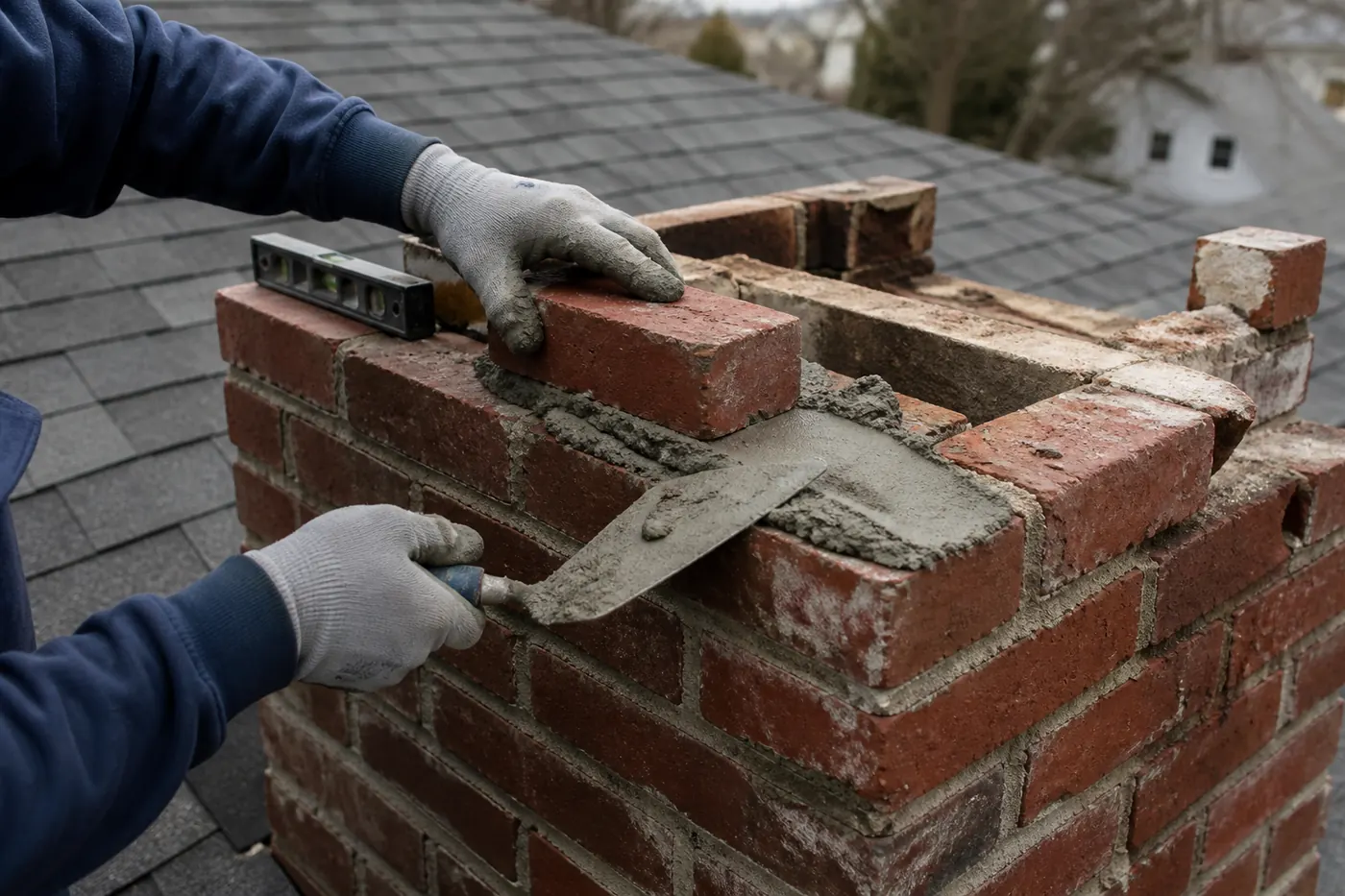
Quick answer: A chimney rebuild in Dallas-Fort Worth costs $2,000 to $10,000 in 2026, with a free written quote before any work begins.
No homeowner googles chimney rebuild in Dallas Fort Worth for fun. You're here because someone said the word "rebuild", an inspector, a roofer, maybe your own eyes looking at a stack that visibly leans. The good news buried in that bad news: a rebuild is the one chimney project that permanently ends the repair cycle. Done right, the new stack outlives everything that was wrong with the old one.
Lowes Chimney Sweep handles the full range: partial rebuilds of the top courses, roofline-up stack rebuilds, complete ground-up reconstruction, chimney restoration for older homes, brick replacement, and new chimney construction where none existed. Every project starts the same way, an honest inspection that tells you whether you actually need a rebuild at all. Sometimes the answer is tuckpointing and a crown repair, and if it is, that's what we'll quote.
Someone told you "rebuild"? Get the second opinion in writing: (214) 225-8874.
Not every damaged chimney needs to come down to the roofline. Before any work begins, a qualified mason should walk you through three possible paths so you understand exactly what you're paying for and why.
Several factors drive which path makes sense and what the project will ultimately cost:
A thorough inspection is the only reliable way to know which category your chimney falls into. Pulling a few bricks or probing suspect mortar joints often reveals whether the damage is cosmetic or structural before any demolition begins.
North Texas weather kills chimneys from the top down: the crown cracks, water soaks the upper courses, and freeze-thaw cycles turn brick to gravel. A partial rebuild removes the damaged top courses, rebuilds them with matched brick, and finishes with a reinforced crown, solving the problem where it actually started.
When deterioration runs below the top but the base is sound, we rebuild from the roofline up. The stack above the roof takes the full force of Texas weather, so it fails decades before the protected masonry below, and can be rebuilt without touching it.
For stacks that are leaning, separating from the house, or failing at the foundation, complete reconstruction is the honest answer. We take the structure down safely, address the footing if needed, and rebuild to modern standards, new liner, reinforced crown, proper flashing, and a cap from day one.
Older DFW homes deserve masonry that respects the original. Restoration blends structural rebuilding with preservation: reclaimed or matched brick, historically appropriate mortar, and profiles that keep the character while quietly upgrading everything inside.
Scattered spalled or cracked bricks don't always demand a rebuild. We cut out individual failed units and set matched replacements, a surgical fix that stops water entry and keeps a small problem small.
Adding a fireplace where none exists, or replacing a demolished stack entirely, designed, footed, flued, and finished as one engineered system.
A leaning stack is urgent, keep people and cars out of the fall zone and call (214) 225-8874 promptly.
Masonry rewards planning. Here's the sequence from first call to final photo:
The full stack assessed and photographed, including whether a rebuild is truly needed
Partial, roofline-up, or full, itemized, with brick and mortar matching planned
Handled for your specific city so the work is documented and inspection-ready
Roof and landscaping shielded; failed masonry removed and hauled off
Matched brick, proper flue alignment, and cure times respected between stages
Reinforced crown, sealed flashing, and a cap, the failures that killed the original, engineered out
Complete documentation of the finished structure, for your records and your insurer's
A rebuild quote costs nothing, and a leaning stack never improves on its own.
(214) 225-8874Maybe, and maybe not. "Rebuild" is sometimes the lazy quote when repointing, crown work, and brick replacement would genuinely solve it. Our inspection reports what the masonry actually shows, with photos, and we quote the smallest scope that truly fixes the structure. If that's a rebuild, you'll see exactly why.
Not on our jobs. Brick is sourced to match size, color, and texture; mortar is tinted to blend with the weathered original. On a good partial rebuild, visitors can't find the seam, and our gallery has the proof.
A documented rebuild is a selling point; a leaning chimney is an inspection report nightmare. Buyers' inspectors flag chimney structure aggressively in DFW, and "rebuilt in writing, with photos and permits" turns your biggest red flag into a closed item.
Sometimes, sound brick from the demolition can be cleaned and relaid, which also solves the matching problem completely. Brick that's spalled or saturated goes in the dumpster, because rebuilding with failed material rebuilds the failure. We'll tell you what's salvageable after teardown.
The rebuild conversation starts with evidence, a documented structural inspection, not a glance from the driveway and a round number.
A chimney is a flue system wearing a brick jacket. We rebuild both correctly, draft, liner, and clearances engineered along with the masonry that shows.
Every rebuild ships with the reinforced crown, sealed flashing, and cap the original probably never had. The reasons it failed don't ride along into the new stack.
Demolition is dusty by nature; our job sites aren't. Roof and landscaping protected, debris contained and hauled, site swept at the end of each day, rebuild-scale work with service-call manners.
Leaning stacks made plumb, crumbling chimneys reborn in matched brick, rebuild and restoration projects from across the metroplex are in the gallery.
See Rebuild Transformations →Opening a failed stack reveals the rest of the system. These companions come up most, and here's where each lives:
From 1920s Fort Worth brick to hail-battered stacks in the northern suburbs, our masonry crews rebuild across all 98 DFW cities we serve.
+ 78 more DFW cities! Find yours on the service areas page or call (214) 225-8874.
"Very pleased with the professionalism and promptness of service. The chimney sweep was done quickly and efficiently at significantly less cost than the first quote I got from another company. Happy to recommend Lowes Chimney Sweep to anyone in Plano!"
"Outstanding chimney sweep service from start to finish. They were punctual, courteous, and left our chimney spotless with no mess in our home. I won't use anyone else for chimney services in Dallas TX!"
More reviews from homeowners across the metroplex are on our reviews section, or learn more about our team before you book.
Dallas Fort Worth ranges by scope: a partial rebuild of the top few courses typically is priced with a clear, upfront quote after an on-site inspection, a roofline-up stack rebuild a clear, upfront price, and a full ground-up rebuild a clear, upfront price or more depending on height, brick, and access. Every project starts with an inspection, photos, and a written Free Online Quote, one number, itemized.
Repair handles surfaces and joints; rebuilding is for structure. A lean you can see, bricks you can lift out by hand, spalling across whole faces rather than scattered spots, deep cracks that reopen after tuckpointing, or a stack separating from the house all point to rebuild. Our inspection maps the damage and tells you honestly which side of the line you're on.
Treat it as urgent. A visibly leaning stack is carrying loads it wasn't designed for, and failure sends brick onto roofs, driveways, and anything beneath. Stop using the fireplace, keep people and cars out of the fall zone, and get it evaluated promptly, stabilization options exist, but time matters.
Matching is a core part of the craft. We source brick to match size, color, and texture, including reclaimed brick for older homes when needed, and tint mortar to blend with the weathered original. On partial rebuilds, the goal is a repair you have to hunt for, not a stripe you can see from the street.
A partial top-end rebuild usually finishes in one to two days. Roofline-up rebuilds run two to four days, and full rebuilds one to two weeks depending on height, weather, and curing time between stages. You'll get a schedule with the quote, and masonry never gets rushed past its cure times on our jobs.
Structural rebuilds commonly do, and requirements vary by city across the metroplex. We handle the permitting question as part of the project scope for your specific city, so the work is documented and inspection-ready, protection for you now and at resale.
When the cause is a covered event, a storm, lightning strike, fallen tree, or vehicle impact, rebuilds are frequently claimable, while slow deterioration from age usually isn't. We document existing damage with dated photos and provide the itemized scope adjusters ask for. Confirm specifics with your policy.
Almost always, yes. The work happens outside at the stack; noise and staging are the main disruptions, not access to your home. We protect roofing and landscaping in the work zone, contain debris, and leave the site clean at the end of each day.
The fireplace stays out of service during the project and until the new masonry has cured. If the firebox or flue needs attention, the rebuild is the ideal moment, the system is already open, so liner replacement or firebox repair adds days, not a second project.
Built with proper materials, flashing, a reinforced crown, and a cap from day one, a rebuilt chimney should serve 50 years or more, routinely outlasting the roof beside it. The failures that killed the original get engineered out, which is the entire point of doing it right once.
A rebuild touches every part of the system. These are the services most often bundled with, or ruled in instead of, reconstruction:
Weighing a big decision? The chimney FAQ covers the fundamentals, or talk it through via the contact page.
Free online quotes · Honest repair-vs-rebuild verdicts · Brick-matched craftsmanship · Open 7 days
(214) 225-8874📍 1008 Ridgefield Dr, Plano TX 75075 | 🕗 Open 7 days · 8AM-8PM
This is the inspection where we slow down: full masonry survey, crown and liner condition, lean measurement, and a look at the firebox and smoke chamber from inside. A rebuild is the biggest ticket in chimney work, so the evidence has to be overwhelming and photographed.
Chimneys leaning off plumb, brick spalled through multiple courses, crowns and liners failed together, storm and lightning damage, and stacks built undersized or unlined decades ago. Usually it is water, given twenty years of freeze-thaw with no maintenance.
A structurally failing chimney is heavy masonry standing over your roof and your family. Partial collapses happen in storms, and a compromised flue can vent combustion gases into the attic. When we call something unsafe to use, that is a measured statement, not a sales line.
Partial rebuilds from the roofline up handle most cases, since weather kills the top of the stack first. Full rebuilds, firebox reconstruction, and stack rebuilds with new liners cover the rest. Every option comes with a written scope, and the price is confirmed by on-site inspection, never guessed.
A rebuilt stack gets a cast crown with a drip edge, a stainless cap, and proper flashing on day one, which removes the reasons the old one died. After that, the annual inspection keeps the warranty conversation honest and the small stuff small.
If the damage is confined to the crown, the top three courses, or the joints, you need that repair, not a rebuild. We quote the smallest scope that genuinely fixes the problem, because a customer who trusted us on a a clear, upfront price job calls us for the a clear, upfront price one.
Straight answers from our DFW chimney pros before you book.
Get an honest ballpark range for this service, no phone call needed. Built from real Dallas-Fort Worth pricing, then book when you’re ready.
Get My Instant Estimate →