● Pricing reviewed & current for October 2026
A Level 1 chimney inspection is the routine, once-a-year checkup your fireplace and venting system are supposed to get when nothing about how you use them has changed. At Lowes Chimney Sweep, our certified technicians perform code-accurate Level 1 inspections across the Dallas-Fort Worth metroplex, same-day and even on Sundays.
A Level 1 chimney inspection in Dallas-Fort Worth costs $99 to $199 in 2026 for a system in continued use with no changes.
A Level 1 chimney inspection is the most basic and most common inspection defined by NFPA 211, the national standard for chimneys, fireplaces, and vents. It is the right inspection when your chimney and heating appliance are being kept in continued service under the same conditions, and when you have not made any changes to the system. In plain terms: you have used your fireplace before, you plan to keep using it the same way, and nothing about it has changed since the last time it was checked.
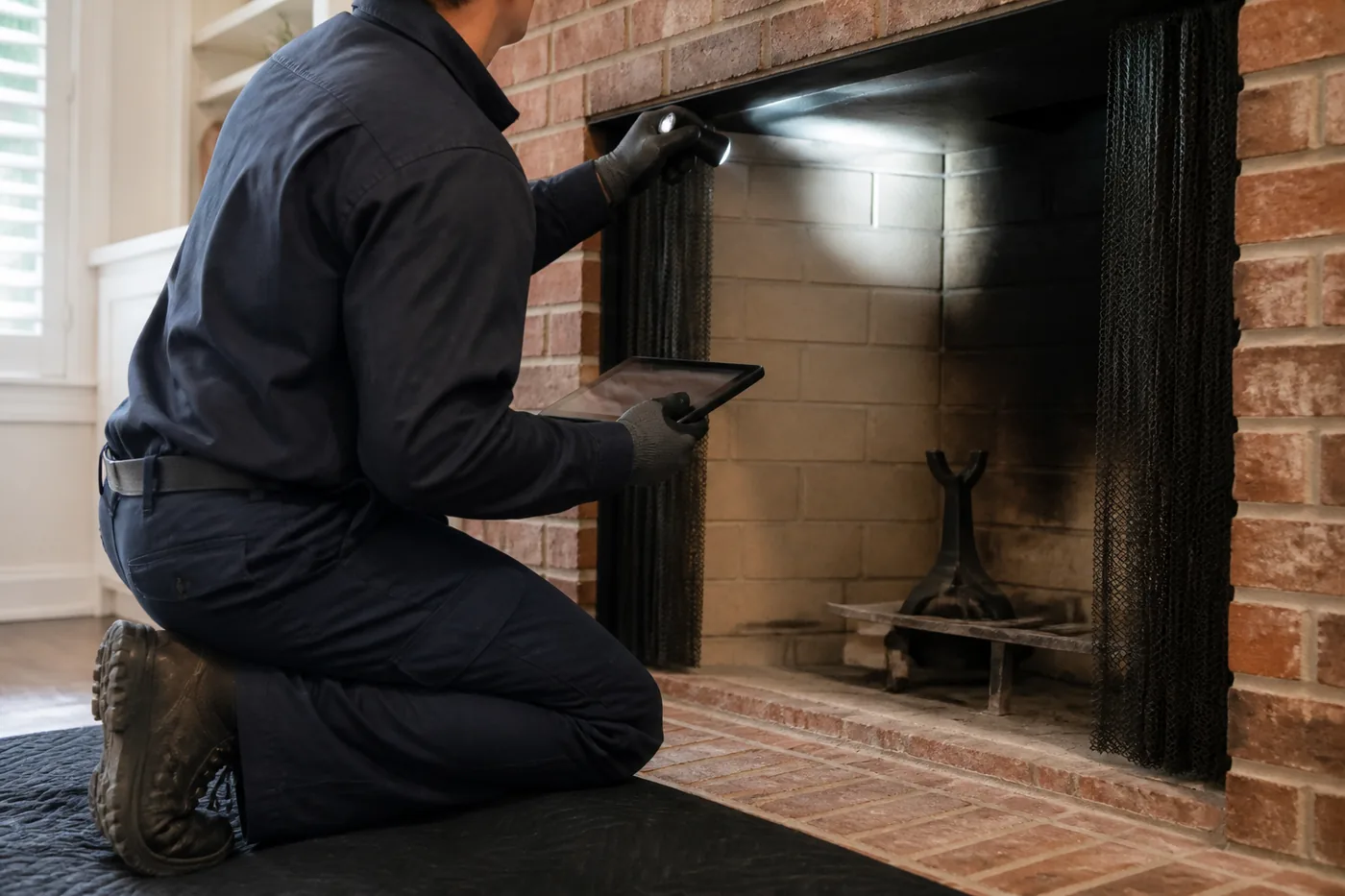
During a Level 1 inspection, our technician examines the readily accessible portions of the chimney exterior and interior, plus the accessible portions of the connected appliance and the chimney connector. "Readily accessible" is the key phrase. It means the areas we can reach and see without tools, without climbing into crawlspaces or tearing into walls, and without removing permanently attached parts of the building or the chimney. This is a visual inspection supported by a flashlight and, where appropriate, basic tools, but it does not involve opening up construction or running specialized cameras through hidden flue sections.
The goal of a Level 1 is to confirm two things: that the chimney structure is sound, and that the chimney and venting are free of obstruction and free of combustible deposits like creosote. If those two conditions are met and nothing else raises a flag, your system is verified safe to continue operating as it has been. That is exactly what most Dallas-Fort Worth homeowners need year in and year out.
NFPA 211 is specific about when a Level 1 is appropriate, and we follow that standard rather than upselling homeowners into inspections they do not need. A Level 1 is the correct choice when your system is staying in service under the same conditions and you are not making any changes to it. The most common trigger is simple: it is your annual inspection, you burn the same fuel the same way you always have, and everything about the chimney and appliance is unchanged from last season.
This makes the Level 1 the natural fit for routine seasonal maintenance. If you had your chimney swept and inspected last year, nothing has been altered, and you just want the yearly verification that your fireplace is safe to light again, a Level 1 is what the code calls for. It is also the inspection that typically accompanies a standard chimney sweep, since checking the flue for soundness and obstruction is a logical companion to cleaning it.
Just as important is knowing when a Level 1 does NOT apply. If you have changed something about the system, added a new appliance, switched fuels, changed the flue's shape or material, or relined the chimney, the routine inspection no longer covers you and a more detailed inspection is required. The same is true after an event that could have damaged the chimney, or when a property is being sold or transferred. We cover those situations in the next section, because matching the right inspection level to your circumstances is the whole point of doing this correctly.
A Level 1 inspection is visual, but it is not casual. Our certified technicians work through a consistent checklist so nothing accessible gets skipped. From the firebox and hearth outward, we look at the parts of your system you can reach and see.
On the interior and at the appliance, we check the firebox for cracks, deteriorated firebrick, and failing mortar joints. We examine the damper to confirm it opens, closes, and seals properly. We inspect the accessible portion of the flue for creosote buildup, soot glazing, blockages such as nesting animals or leaves, and any visible signs of cracking or deterioration in the flue lining. We look over the chimney connector and the accessible portions of the connected appliance to confirm they are intact and properly joined.
On the exterior and structure, we assess the readily accessible parts of the chimney: the masonry or siding, the crown or wash at the top, the visible condition of the flue tiles from what can be seen, the chimney cap, and the flashing where the chimney meets the roofline, to the extent it is visible from an accessible vantage point. We are looking for spalling brick, cracked crowns, missing or damaged caps, and staining that hints at water intrusion.
Throughout, we are verifying the two core code requirements: structural soundness and freedom from obstruction and combustible deposits. When we finish, you get a clear, plain-spoken account of what we found, whether the system is safe to keep using as-is, and whether anything warrants a closer look. No jargon, no scare tactics.
Being honest about the limits of a Level 1 inspection is part of doing the job right. Because it is confined to readily accessible areas and relies on visual examination, a Level 1 will not reach concealed portions of the chimney, interior flue surfaces hidden behind walls, or areas that require tools, cameras, or the removal of building components to access. If your circumstances call for that deeper look, you need a Level 2 or Level 3 inspection instead.
A Level 2 inspection is required whenever you make a change to the system, such as relining the flue, changing the fuel type, adding or replacing an appliance, or altering the flue's size or material. It is also required after an operating malfunction or an event likely to have caused damage, such as a chimney fire, a lightning strike, an earthquake, or a severe storm, and it is the standard inspection during the sale or transfer of a property. A Level 2 includes everything in a Level 1 plus accessible attics, basements, and crawlspaces, and it typically uses a video camera to inspect the internal surfaces and joints of the flue lining that a Level 1 cannot see.
A Level 3 inspection goes further still, and it is reserved for cases where a serious hazard is suspected that cannot be evaluated any other way. It may involve removing or opening up parts of the chimney or building, such as a chimney crown or an interior wall, to reach concealed areas. To understand how all three levels fit together and which one your situation calls for, see our overview of chimney inspection. If our Level 1 technician spots something that needs a more thorough evaluation, we will tell you plainly and explain exactly why, so you can decide with full information.
NFPA 211 recommends that chimneys, fireplaces, and vents be inspected at least once a year. That yearly cadence is not arbitrary. Chimneys work in a punishing environment: intense heat on the inside, weather on the outside, and combustion byproducts moving through them every time you light a fire. Small problems that are cheap and easy to address early tend to become expensive and dangerous when left alone for a few seasons.
Two hazards drive the annual recommendation. The first is creosote. Every wood fire deposits creosote on the flue walls, and once it builds up it becomes highly flammable, the leading contributor to chimney fires. A Level 1 inspection catches accumulation before it reaches a dangerous level. The second is carbon monoxide. A cracked flue, a blocked chimney, or a failing connector can allow this odorless, invisible gas to spill back into your living space instead of venting safely outdoors. A routine inspection confirms the path for those gases is clear and intact.
Beyond safety, an annual inspection protects the investment your chimney represents. Water intrusion through a cracked crown or a missing cap quietly destroys masonry from within, and catching it early can save you from a full rebuild later. Even if you rarely use your fireplace, the structure is still exposed to the weather all year, which is why the yearly checkup is worthwhile for the light user and the daily burner alike.
When you schedule a Level 1 inspection with Lowes Chimney Sweep, the visit is straightforward and respectful of your home and your time. Our technician arrives on schedule, lays down protection around the work area, and keeps things clean from start to finish. There is no mess left behind and no surprise on the invoice.
We begin at the fireplace and firebox, work through the damper and the accessible flue, and then assess the exterior and structural elements we can reach. As we go, we document what we see. If everything checks out, we tell you the system is safe to continue using under the same conditions, which is the outcome for most homeowners keeping up with regular maintenance. If we find something, we show you, explain what it means in practical terms, and lay out your options without pressure.
Because we also handle sweeping, repairs, caps, crowns, flashing, and relining, we can address minor issues on the spot or schedule the right follow-up, whether that is a simple cap replacement or a Level 2 inspection to look deeper. You deal with one trusted local company from inspection through resolution, rather than being handed off. Every technician who comes to your door is certified and insured, and we treat your home the way we would want ours treated.
Homeowners understandably want to know what a Level 1 inspection will cost, and the honest answer is that it depends on a few factors specific to your home. We give a clear price before we begin, so there are no surprises. Rather than quote a number that may not fit your situation, it is more useful to understand what moves the price.
The main factors are the type and configuration of your chimney and appliance, how accessible the components are, and whether the inspection is being performed on its own or bundled with a chimney sweep. A standard masonry fireplace with an easily accessible flue is more straightforward than a complex multi-flue chimney or a system with difficult roof access. Bundling the inspection with a sweep is often the most economical route, since the technician is already examining the flue as part of cleaning it.
The condition of the chimney can also play a role: if we uncover an issue that calls for a more detailed Level 2 inspection, that is a separate, more involved service, and we will explain the difference and the cost before doing any additional work. For an accurate price tailored to your home anywhere in Dallas-Fort Worth, call us at (214) 225-8874 and we will walk you through it.
Lowes Chimney Sweep is based in Plano and serves roughly 98 cities across the Dallas-Fort Worth area, from Dallas and Fort Worth proper to Plano, Frisco, McKinney, Allen, Arlington, Irving, Garland, Richardson, Denton, and the many communities in between. Being local matters for chimney work. Our technicians know how North Texas conditions affect masonry and venting: the freeze-thaw swings that crack crowns and spall brick, the sudden hailstorms that dent and dislodge caps, and the humidity and hard-driving rain that push water into any gap in the flashing.
That local knowledge shapes what we look for during a Level 1 inspection. We know the common failure points on the brick chimneys and prefab fireplaces typical of DFW homes, and we know which small issues tend to escalate in this climate if they are ignored. When you call us, you get a company that works these neighborhoods every week, not a crew passing through. We offer same-day service and we work Sundays, because a fireplace question does not always wait for a weekday. Whether you are lining up your routine annual inspection before the first cold snap or you just want peace of mind that your system is safe to use, we can usually get to you fast. Call (214) 225-8874 to schedule your Level 1 chimney inspection anywhere in the metroplex.
"Very pleased with the professionalism and promptness of service. The chimney sweep was done quickly and efficiently at significantly less cost than the first quote I got from another company. Happy to recommend Lowes Chimney Sweep to anyone in Plano!"
"Outstanding chimney sweep service from start to finish. They were punctual, courteous, and left our chimney spotless with no mess in our home. I won't use anyone else for chimney services in Dallas TX!"
More reviews from homeowners across the metroplex are on our reviews section, or learn more about our team before you book.
A Level 1 chimney inspection in Dallas-Fort Worth costs $99 to $199 in 2026. That covers the readily accessible portions of the chimney and flue for a system in continued use, and every finding is photographed for you.
NFPA 211 recommends inspecting your chimney at least once a year. A Level 1 is the right annual inspection when you keep using the system the same way and have not changed anything about it.
A Level 1 is a visual check of readily accessible areas for a system in continued service under the same conditions. A Level 2 is more detailed, adding attic and crawlspace access and a flue camera, and is required after changes, damage, or a property sale.
No, but they pair well together. A sweep cleans creosote and debris from the flue, while a Level 1 inspection verifies the system is sound and unobstructed. Bundling them is often the most economical option.
Most Level 1 inspections take under an hour, depending on the chimney's configuration and accessibility. We keep the work area clean and give you clear findings before we leave.
Yes. Even a lightly used chimney is exposed to weather year-round, which can crack crowns, damage caps, and let water into the masonry. An annual inspection catches these issues early regardless of how often you burn.
Yes. We offer same-day service and work Sundays across the Dallas-Fort Worth metroplex. Call (214) 225-8874 and we will do our best to fit your schedule.
Straight answers from our DFW chimney pros before you book.