Hood, Johnson, and Parker counties corner at Cresson, where the rails once crossed and the 1931 school still stands landmark watch. Junction towns collect eras, and our 377 run knows every one of them.
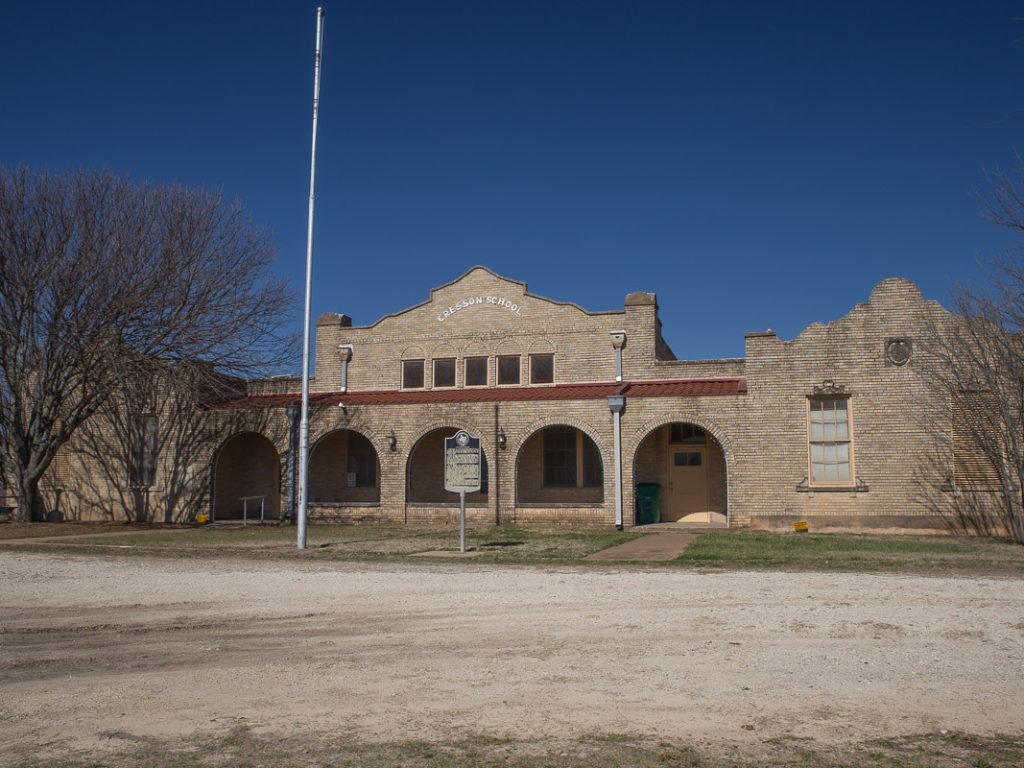
Cresson exists because things cross here: the old rail lines met at this junction, US 377 and 171 still do, and the county lines of Hood, Johnson, and Parker corner in town like three neighbors sharing a fence post. The 1931 school, a Recorded Texas Historic Landmark, anchors the memory of the junction's busiest era, and the limestone ranch country rolls away from the crossing in every direction.
Junction towns collect building eras the way depots collected freight, and Cresson's prize is its Depression generation. The 1930s stock here is transition-era masonry, machine brick harder than its ancestors, mortars caught between lime tradition and early portland, and it rewards technicians who can read the period instead of guessing at it. Around that core: working ranch flues on their honest schedules, and a 377 commuter edge growing toward Fort Worth with builder systems in tow.
The Cresson toolkit reads every era at the crossing: period-identified tuckpointing that matches transition mortars by hardness, crown repair for tops weathering the open western sky, stainless caps rated for limestone-country wind, and working-flue sweeps for the ranches that never stopped heating with wood.
The junction core holds the founding file, the blocks around the old crossing and the landmark school, Depression-era masonry at its best. The ranch country runs working homestead flues across the limestone in all three counties. The 377 edge adds the commuter file as Fort Worth's reach extends southwest, and the highway crossroads keeps the whole map ten minutes wide.
Three counties, one crossing, and a single standard rolling through on every route day.
Logistics: Cresson rides the 377 southwest run between Benbrook and Granbury, same-week standard, seven days, all three counties on one dispatch.
Whichever county corner you're on, call (214) 225-8874 and the 377 run answers.
A Typical Cresson Project
A junction-core home from the school's own era, repointed badly once in the wrong decade: the failed patch was cut out, the original blend identified, a lime-forward transition mortar, softer than the previous repair assumed, and the new joints went in matched by hardness so brick and mortar could wear together again. The crown was rebuilt for the western exposure, and the ranch stove out back got its seasonal sweep in the same stop. One visit, one report, three counties' worth of crossroads pride intact.
The junction meets weather with limestone-country honesty: early hail off the western alley, fronts crossing open ranchland at full strength, and shallow rock ground that holds footings steady while the exposure does its work up top. Depression-era masonry answers with the hardness of its machine brick, but transition mortars wear on their own timetable, and crowns face the sky alone. The annual look keeps every era's timetable on record.
The standard crosses all three lines: NFPA 211 calls for an annual inspection of every chimney and venting system, and the Chimney Safety Institute of America keeps the homeowner guidance current. At a junction, the annual habit is just keeping the schedule, something this town has done since the rails.
The junction core, Depression-era transition masonry, period protocol always. The ranch country, working flues, working schedule. The 377 edge, the newest file, baseline years. The crossroads itself, every era within ten minutes.
Mortars identified before they're matched, ranch flues respected as heating equipment, and three counties served as one town. The before-and-after gallery shows the craft, and our reviews ride the 377 run end to end.
Cresson sits right on our 377 southwest run between Benbrook and Granbury, same-week appointments are the standard, seven days a week, 8AM to 8PM, and the junction town is a natural stop on every western rotation.
A crossroads file: Depression-era masonry from the town's school-and-rail heyday, working ranch flues on the limestone country around it, and a growing 377 commuter edge adding builder systems. The 1930s stock has its own personality, transition-era materials that reward a technician who actually knows the period.
They're the transition generation, and it matters. The 1930s sat between eras, machine-made brick harder than its ancestors, mortars shifting from lime-rich to early portland blends, so a Depression-era chimney can carry materials from both worlds in the same stack. Repointing it correctly means identifying which blend you actually have, then matching hardness so new mortar wears with the wall instead of against it. Guess wrong and the repair damages the brick it was meant to save; we don't guess.
The old junction core, the blocks that grew around the rail crossing and the 1931 school hold Cresson's founding file. Ranch and homestead stacks scatter their own generations across the limestone country beyond, and the newest edge follows 377 toward Fort Worth.
Not for us, the whole point of a junction is that everything meets here. Hood, Johnson, and Parker corner at Cresson, and our dispatch treats the crossroads as exactly that: one town, one route stop, one standard, whichever county records your deed. The three-corner geography is trivia, not a service boundary.
Limestone country, shallow soils over rock, stable footings, sharp drainage. Chimneys here rarely lean; they weather instead, mostly at mortar joints and crowns where the western exposure does its work. We measure and photograph so the record shows exactly which.
The western corridor meets hail early and honestly, and the junction takes its share, Depression-era crowns chip, ranch caps dent, commuter-edge covers ding. Any storm year, photograph the chimney top inside the same claim window as the roof.
The trucks bring dust, not damage, road vibration at residential distance doesn't crack sound masonry, though limestone-country dust film can make chimney tops look rougher than they are. The ranches bring the real calendar: working stove flues that heat through actual winters and earn their sweep before every season. The camera separates cosmetic dust from true wear in one look.
Working ranch flues: before every season. Junction-era masonry: the annual look before the first fire, with the transition-mortar check on any stack that's never been properly identified. And the 377 run books quickest once the first front crosses, late summer buys the easy windows.
The southwest run links Cresson with Benbrook toward Fort Worth and Granbury down the highway, and all 98 DFW cities we serve are on the map.
Free online quotes · Period-correct mortar · Ranch-route reliability · Open 7 days
(214) 225-8874📍 1008 Ridgefield Dr, Plano TX 75075 | 🕗 Open 7 days · 8AM-8PM
Cresson chimney calls take us all over the area, across the 76035 ZIP code. Every home here gets the same crew, the same photo documentation, and the same pricing that starts with a straight answer on the phone.
"Very pleased with the professionalism and promptness of service. The chimney sweep was done quickly and efficiently at significantly less cost than the first quote I got from another company. Happy to recommend Lowes Chimney Sweep to anyone in Plano!"
"Outstanding chimney sweep service from start to finish. They were punctual, courteous, and left our chimney spotless with no mess in our home. I won't use anyone else for chimney services in Dallas TX!"
More reviews from homeowners across the metroplex are on our reviews section, or learn more about our team before you book.
Full-service chimney care across Cresson and the DFW metroplex.
Helpful guides: