● Pricing reviewed & current for October 2026
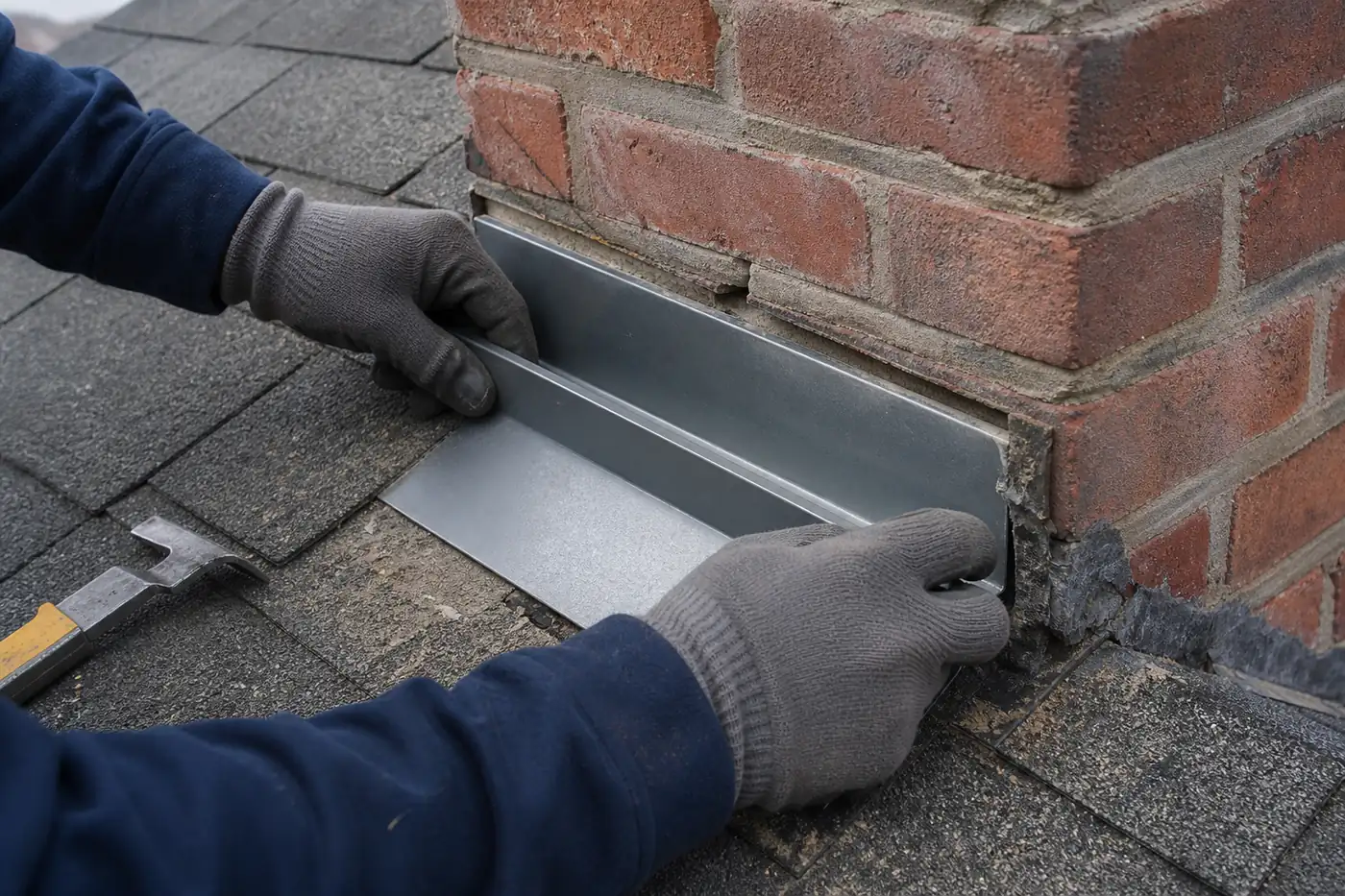
That ceiling stain near the fireplace? Nine times out of ten it starts where your chimney meets the roof. We repair and replace step and counter flashing the right way, metal set into mortar, not tar smeared over the problem.
Quick answer: Chimney flashing repair in Dallas-Fort Worth typically costs $200 to $2,500 in 2026, depending on whether the flashing is resealed or fully replaced.
Here's a pattern we see weekly across DFW: a homeowner spots a water stain near the fireplace, calls a roofer, pays for a patch, and the stain comes back with the next storm. The roof was never the problem. Chimney flashing, the layered metal system sealing the joint where your chimney passes through the roof, sits between two trades, and it fails when each assumes the other handled it.
Lowes Chimney Sweep treats that joint as what it is: chimney work. When you search for chimney flashing repair in Fort Worth or Dallas TX, you're looking at the one seam on your roof that moves, the chimney and the roof deck expand and contract at different rates every Texas day, which is why it demands a two-part system: step flashing woven into the shingle courses, and counter flashing cut into the chimney's mortar joints to cap it. Get either half wrong and water finds the gap. Our crews rebuild both halves properly, which is why our repairs outlast the tar-patch cycle, and why homeowners across 98 DFW cities keep rating us five stars.
Seeing stains, drips, or damp attic wood near the chimney? Call (214) 225-8874, the sooner the joint is sealed, the less the water costs you.
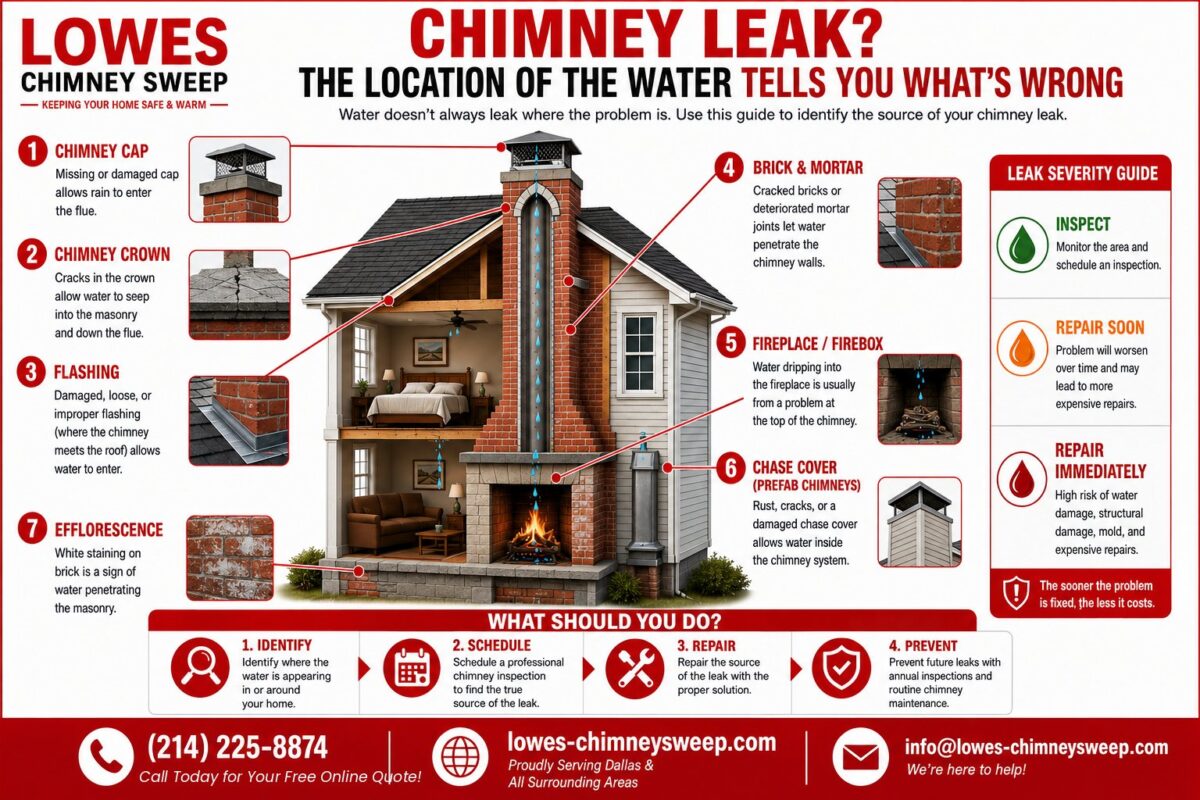
Flashing has three natural enemies here, and every DFW roofline faces all of them:
A single spring hailstorm can dent, lift, or puncture flashing that had a decade of life left. The damage is often invisible from the ground while water works through it with every rain that follows.
North Texas swings from freezing nights to triple-digit afternoons. Masonry and roof decking expand at different rates, flexing the flashing joint thousands of times a year until sealants crack and nails back out.
The failure we inherit most: counter flashing that was never cut into the mortar, just surface-caulked or tarred against the brick. It looks finished from the street and fails within a few seasons. Layers of old roofing cement on a chimney are the fingerprint of this shortcut, repeated.
Water damage compounds daily. Call (214) 225-8874 for a roofline evaluation, often FAST scheduling.
A flashing job done right is mostly preparation and precision. Here's the sequence our trained DFW crews follow:
We confirm flashing is the culprit, not the crown, cap, or masonry, before quoting
Reseal or replace, with photos showing why
Failed metal, tar layers, and degraded sealant stripped clean
New metal woven course-by-course into the shingles
Reglets cut into the joints, metal embedded and locked, not surface-glued
Professional-grade sealant on prepared surfaces, then a water test of the joint
Before-and-after images for your records, and your insurance if storm damage caused it
Roofline leaks never heal on their own, get the joint sealed before the next front rolls through DFW.
(214) 225-8874Because we diagnose before we quote. If the water test and inspection show your leak is actually a cracked crown or saturated mortar joints rather than flashing, that's what we'll tell you, with photos, and quote the correct repair instead. Fixing the wrong thing helps nobody.
No. Flashing replacement works within the immediate courses of shingles around the chimney, they're lifted, the new step flashing is woven in, and they lay back down. Your roof stays intact, and the work area is confined to the chimney's perimeter.
Resealing sound flashing typically is priced with a clear, upfront quote after an on-site inspection; full replacement with new step and counter flashing is priced with a clear, upfront quote after an on-site inspection depending on chimney size and roof type. Your Free Online Quote is written, itemized, and final.
It's the one repair where waiting costs the most, every rain adds water to your framing, insulation, and drywall. And if hail caused the damage, delayed repairs can complicate an insurance claim. During DFW storm season, flashing calls get priority routing.
The defining detail. We grind a clean reglet into the mortar joint, embed the counter flashing, and lock it, the method that lasts decades. Surface-caulking metal against brick is faster and cheaper, which is exactly why so much of it fails across DFW.
Our technicians work chimneys and rooflines every day, so the shingle side and the masonry side of the joint get equal competence. No finger-pointing between a roofer and a mason, one accountable team.
Hail claims live or die on evidence. We photograph the damage before touching it and the completed repair after, timestamped, the paper trail that turns "storm damage" from your word into your file.
Flashing rarely fails alone in a hailstorm. While we're up there, the cap, crown, and chase cover get looked at too, because finding the second problem now beats a second service call in October.
Our project gallery includes roofline transformations from across the metroplex, failed flashing, rusted covers, and the clean metalwork that replaced them.
See Roofline Repairs in the Gallery →Water that enters at the roofline doesn't stay there. These are the companion repairs a flashing leak most often creates, and the pages that explain each fix:
From Fort Worth's established neighborhoods to the newest builds north of Dallas, our flashing crews cover 98 DFW cities, and after major hail events, we route storm-hit areas first.
+ 78 more DFW cities! Find yours on the service areas page or call (214) 225-8874.
"Very pleased with the professionalism and promptness of service. The chimney sweep was done quickly and efficiently at significantly less cost than the first quote I got from another company. Happy to recommend Lowes Chimney Sweep to anyone in Plano!"
"Outstanding chimney sweep service from start to finish. They were punctual, courteous, and left our chimney spotless with no mess in our home. I won't use anyone else for chimney services in Dallas TX!"
More reviews from homeowners across the metroplex are on our reviews section, or learn more about our team before you book.
Flashing resealing typically is priced with a clear, upfront quote after an on-site inspection in the Dallas Fort Worth area, while full flashing replacement with new step and counter flashing generally is priced with a clear, upfront quote after an on-site inspection depending on chimney size and roof type. You'll receive a written Free Online Quote before any work is scheduled.
Location is the biggest clue: stains on the ceiling or walls near the chimney, damp attic framing beside the stack, or water appearing during wind-driven rain all point to flashing. We confirm the source before repairing anything, fixing the wrong component leaves the real leak running.
Flashing is the joint between the two trades, and it fails when either side treats it as the other's job. A chimney company that works rooflines daily handles both halves: the step flashing woven into the shingles and the counter flashing set into the chimney's mortar joints.
If the metal is sound and only the seal has failed, resealing works and costs far less. If the flashing is rusted through, lifted, improperly installed, or smeared over with layers of old tar, replacement is the honest answer, more sealant on failed metal just delays the same leak.
Quality flashing properly installed lasts 20 to 30 years, but DFW hail can end that early, a single spring storm can dent, lift, or puncture flashing that was fine the week before. After any significant hail event, a roofline check is worth the peace of mind.
Hail and wind damage to flashing is commonly covered under homeowners policies, while age-related wear typically isn't. We photograph the damage and the completed repair, giving your adjuster the documentation a claim needs. Check your specific policy for terms.
Water stains on ceilings or walls near the chimney, rust streaks on the flashing metal, visible gaps or lifted edges where metal meets masonry, cracked or peeling tar patches from previous quick fixes, and damp insulation or framing in the attic beside the chimney.
Not necessarily. Some re-roofs reuse existing chimney flashing or bend the old counter flashing back into place, and some crews seal the joint with caulk rather than cutting new counter flashing into the mortar. If leaks near the chimney appeared after a re-roof, the flashing detail is the first thing to check.
Possibly not, condensation, a cracked crown holding trapped moisture, or a plumbing issue can all mimic a flashing leak. That's exactly why we diagnose before we repair. If the source is the crown or masonry rather than flashing, we'll tell you and quote the right fix instead.
Surface caulk over flashing is the most common failed repair we encounter. Sealant applied over dirt, rust, or moving joints peels within seasons, and each layer makes the eventual proper repair harder. If the flashing genuinely just needs resealing, professional-grade sealant on prepared metal is inexpensive, and done once.
Flashing guards one seam of a system with many. These are the services DFW homeowners most often pair with a flashing repair, each one a piece of the same water-defense puzzle:
Curious about anything else? The chimney FAQ answers the questions we hear daily, or reach us directly through the contact page.
Free online quotes · Storm damage documented for insurance · Priority routing after hail · Open 7 days
(214) 225-8874📍 1008 Ridgefield Dr, Plano TX 75075 | 🕗 Open 7 days · 8AM-8PM
We check the step flashing under the shingles, the counter flashing cut into the mortar joints, and every visible seal line. Then we look inside the attic when access allows, because flashing leaks show on the framing before they show on your ceiling.
Sealant slathered over old flashing instead of proper metal work, counter flashing pulled out of its mortar groove, rusted-through galvanized steel, and roofers who replaced the shingles but reused thirty-year-old flashing. That last one is half our flashing calls.
Flashing leaks are slow and quiet. Water tracks down the chimney into framing, insulation, and drywall, and by the time a stain appears the wood has been wet for months. Rot and mold cost far more than metal ever does.
Resealing sound flashing, re-bedding counter flashing into the mortar joint, or full replacement with new step and counter flashing in galvanized or stainless steel. Photos first, ballpark by phone, final price confirmed on the roof.
Have it looked at during the annual inspection and after any roof work. If a roofing crew touches the house, make sure chimney flashing was replaced, not just painted with tar. Ask for photos, or send us theirs and we will read them for you.
Flashing that has been tarred over three times has nothing left to seal to. Rusted, layered, patched metal gets replaced, not resealed. And if the leak already rotted the decking, the roof repair comes first or the new flashing has nothing solid to fasten to.
Straight answers from our DFW chimney pros before you book.
Get an honest ballpark range for this service, no phone call needed. Built from real Dallas-Fort Worth pricing, then book when you’re ready.
Get My Instant Estimate →