● Pricing reviewed & current for October 2026
Ten feet above your roofline sits a concrete slab you've probably never seen, and when it cracks, water starts a slow demolition of everything below it. We seal, coat, and rebuild crowns so the leak ends where it started.
Quick answer: Chimney crown repair in Dallas-Fort Worth typically costs $300 to $900 in 2026, depending on the size of the crown and the extent of the cracking.
Ask a DFW homeowner where their chimney leak comes from and they'll point at the roof, the bricks, maybe the fireplace. The real answer, most of the time, is the chimney crown, the sloped concrete slab topping the stack. It takes every hailstone, every 105-degree afternoon, every freeze-thaw night, with no shade and no mercy. And because nobody can see it from the yard, chimney crown repair in Dallas Fort Worth usually gets called only after the water has already reached a ceiling.
Here's the frustrating part: builders routinely pour crowns from leftover mortar instead of real concrete, flat instead of sloped, tight against the flue with no expansion gap. Texas weather finds every one of those shortcuts. Lowes Chimney Sweep fixes them for good, crack sealing and flexible waterproof coatings for crowns caught early, structural crown repair for the middle cases, and full crown rebuilds with proper concrete, slope, overhang, and expansion joints when the original is past saving. Every visit is photo-documented, because you deserve to see the thing you're paying to fix.
Ceiling stain near the chimney? Damp firebox after rain? Call (214) 225-8874, the crown is suspect number one.
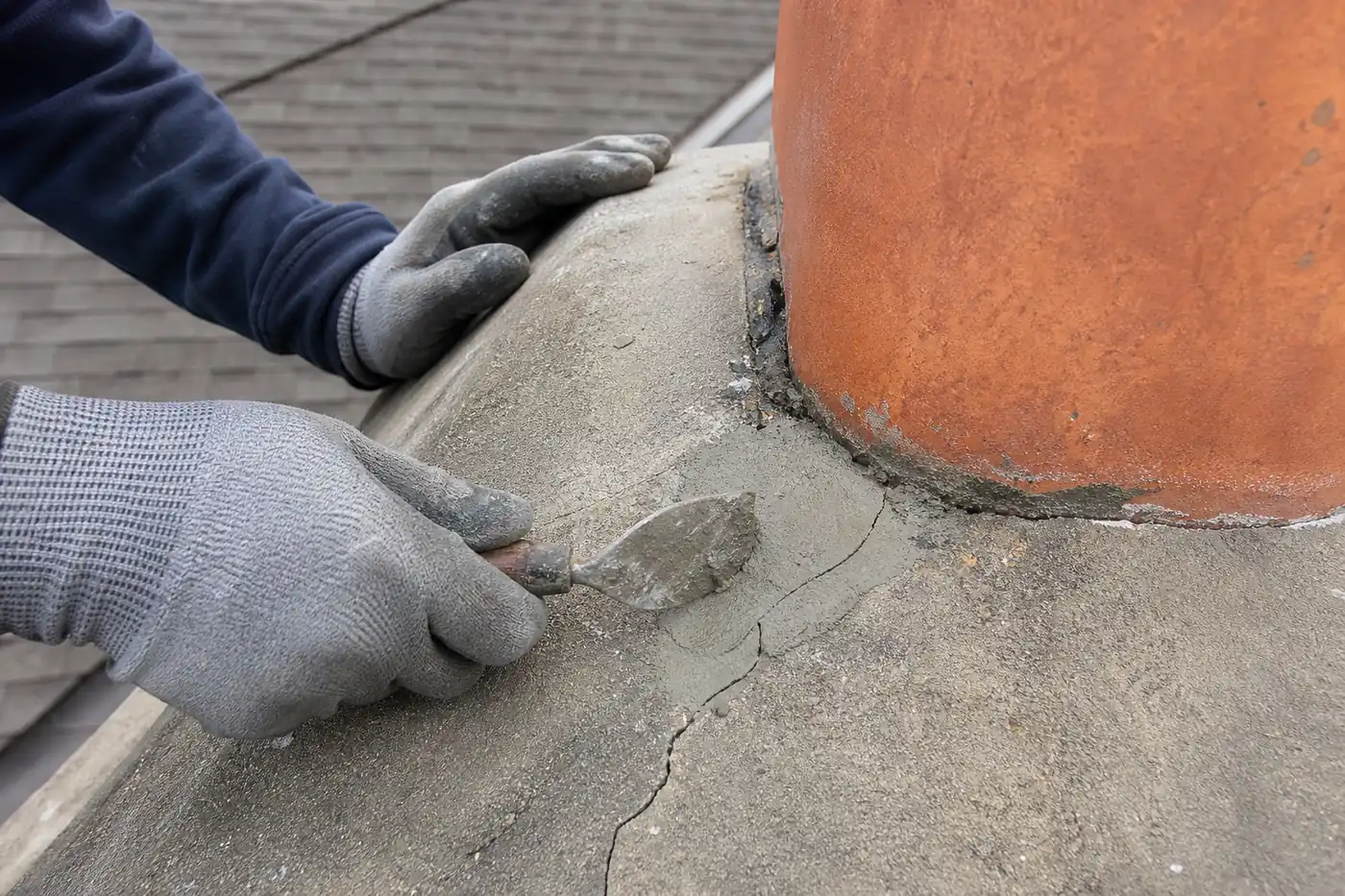
For structurally sound crowns with hairlines and surface weathering: cracks filled, then the whole crown coated in flexible elastomeric membrane that moves with the temperature swings instead of cracking against them. Ten-to-fifteen-year manufacturer warranties, often outlived.
Deeper cracks and crumbling edges rebuilt with bonded patching mortar, then coated. The middle path, more than sealant, less than demolition, for crowns that are damaged but not doomed.
When the crown is too thin, too flat, too far gone, or was never really concrete to begin with: tear-off and a new crown formed the right way, proper thickness, drainage slope, drip-edge overhang past the brick, and an expansion gap around the flue so the two can move without cracking each other.
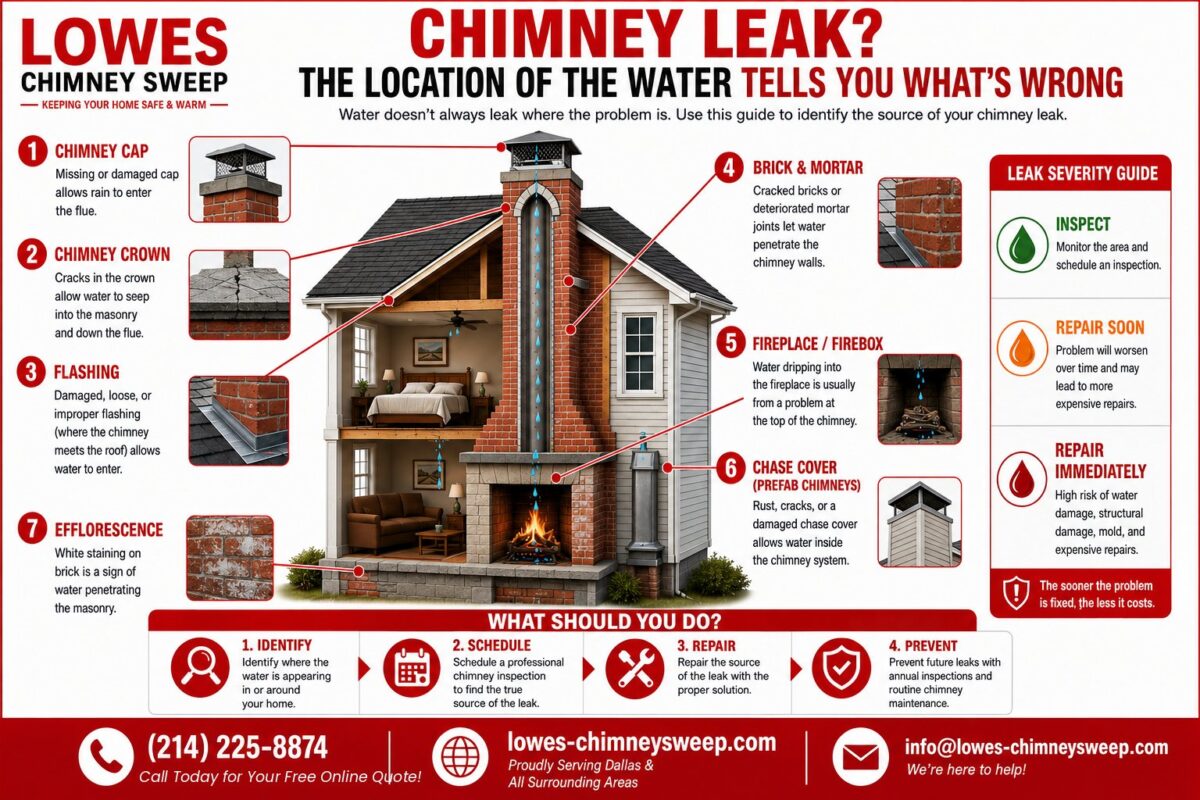
Confusion here costs homeowners real money. The crown is the concrete top of a masonry chimney. The cap is the metal cover over the flue opening above it. Prefab chimneys have neither, they have a chase cover, a full metal lid. Leaks get blamed on the wrong one constantly; our photos settle it before any money moves.
Each rain widens the cracks. Call (214) 225-8874 and we'll photograph what's actually up there.
The crown is invisible from the yard, so evidence leads every step:
The crown photographed in detail, most homeowners see theirs for the first time here
Hairline, structural, or rebuild-grade, the photos decide, not the sales pitch
The least expensive fix that permanently ends the problem, priced in writing
Cleaning, crack routing, and bonding prep, the unglamorous step that makes coatings last
Flexible sealant systems or new formed concrete, matched to the classification
Expansion joint around the tile and drip edge past the brick, the details builders skipped
The finished crown documented, with coating warranty terms in your inbox
Crown repairs caught at the hairline stage cost a fraction of the water damage they prevent.
(214) 225-8874That's the classic crown story, the roof IS fine, because the water is entering ten feet higher. Roofers stop at shingles and flashing; the crown is chimney territory. If the stain persists after roof work, the crown moves to the top of the suspect list.
Tar is the crown repair that isn't. It bakes brittle in one Texas summer, cracks by the second winter, and traps moisture underneath while it fails. We remove the tar, assess what it was hiding, and fix the crown with materials engineered for rooftop movement.
On a driveway, harmless. On a crown, it's a funnel: DFW freeze-thaw cycles pump every hairline wider all winter, and the water it admits soaks downward into brick, mortar, and eventually your ceiling. The crack itself is cheap to fix, the years of water behind it are not.
The photos keep everyone honest. Sealing is quoted when sealing solves it, a rebuild only when the pictures show full-depth failure you can verify yourself. Most crown calls end in the coating tier, not the demolition tier, and our quote reflects that.
You can't see your crown; we make sure you do. Every diagnosis arrives as pictures of your actual chimney top, the same evidence standard as our camera inspections.
Elastomeric coatings that flex through hundred-degree swings, bonding mortars made for concrete repair, and formed crowns with real slope, no tar, no leftover mortar, no shortcuts to redo.
Crown work naturally pairs with the cap above it, fix one and ignore the other, and the water just changes doors. We quote the top as a system.
Before-and-after photos and coating warranty paperwork on every job, the kind of file that closes buyer-inspection questions before they open.
Failed crowns resealed and rebuilt with proper slope and clean edges, crown projects from Rockwall, Rowlett, and Wylie are in the gallery.
See Crown Repairs →Crown water doesn't stay at the top. Here's the damage chain we trace most often, and the page that solves each link:
Hail alley runs right through DFW, and crowns take the first hit, we repair them across all 98 cities we serve.
+ 78 more DFW cities! Find yours on the service areas page or call (214) 225-8874.
"Very pleased with the professionalism and promptness of service. The chimney sweep was done quickly and efficiently at significantly less cost than the first quote I got from another company. Happy to recommend Lowes Chimney Sweep to anyone in Plano!"
"Outstanding chimney sweep service from start to finish. They were punctual, courteous, and left our chimney spotless with no mess in our home. I won't use anyone else for chimney services in Dallas TX!"
More reviews from homeowners across the metroplex are on our reviews section, or learn more about our team before you book.
Dallas Fort Worth pricing by scope: sealing hairline cracks with a flexible crown coating typically is priced with a clear, upfront quote after an on-site inspection, structural crown repairs a clear, upfront price, and a full crown rebuild, tear-off and new properly formed concrete, a clear, upfront price depending on chimney size and access. Every job starts with photos of your actual crown and a written Free Online Quote.
The crown is the concrete slab that tops the chimney, sloping away from the flue like a tiny roof. Its job is to shed rain off the top of the stack. It's not the cap, the cap is the metal cover over the flue opening; the crown is the masonry surface the cap sits above. When the crown cracks, water enters the top of the chimney structure itself.
Masonry chimneys have a crown (concrete top) and a cap (metal cover over the flue). Prefab chimneys have a chase cover (a full metal lid) instead of a crown. Crown protects the masonry, cap protects the flue opening, chase cover protects a framed chase. Leaks get misdiagnosed constantly because these three get confused, we photograph yours and show you exactly which piece failed.
Yes, in North Texas especially. Water enters the hairline, then our freeze-thaw winters expand it a little every cycle, while summer heat opens and closes the crack daily. Hairlines caught early are the cheap fix: flexible crown sealant handles them permanently. Ignored, they widen until chunks of crown lift out and the repair becomes a rebuild.
A quality flexible crown coating carries manufacturer warranties of 10 to 15 years and often outlives them. A properly formed crown rebuild, correct thickness, slope, overhang, and expansion gap around the flue, is a decades-scale fix. What doesn't last is the roofing-tar smear some handymen call crown repair; that's a one-to-two-winter patch.
The materials matter more than the effort. Roofing tar and hardware caulk become brittle on a surface that bakes at rooftop temperatures and flexes with every temperature swing, they crack within a couple of seasons and trap moisture underneath. Purpose-made elastomeric crown coatings stay flexible for a decade-plus. If you DIY anything, use the right product; better yet, let us photograph the crown first, because coating a structurally failed crown wastes the coating.
Three reasons: many builders pour crowns from leftover mortar instead of proper concrete, most crowns lack an expansion gap around the flue tile so the flue's movement cracks them from the inside, and DFW weather delivers brutal daily temperature swings plus freeze-thaw winters. A bad recipe meeting hard weather, which is why crown work is one of our most common calls.
From the ground: water stains on the ceiling near the chimney, dampness in the firebox after rain, white mineral staining (efflorescence) on upper bricks, or pieces of concrete on the roof. From above: visible cracks, crumbling edges, or gaps around the flue tile. Since the crown is invisible from the yard, every service visit we make includes crown photos, most owners see theirs for the first time in our report.
Sealing works when the crown is structurally intact, hairlines and surface weathering. Rebuilding is the honest answer when cracks go through the full thickness, chunks are loose or missing, the crown was poured flat or too thin to begin with, or previous patches have layered into a mess. We show you photos and quote the least expensive option that actually ends the problem.
Sudden events, hail strikes, falling limbs, lightning, are frequently covered; slow weathering usually isn't. DFW hail is a genuine crown killer, and we document hail-damaged crowns with dated photos and itemized scopes your adjuster can work with. Confirm specifics with your policy.
The crown is the first domino, these services handle the rest of the row:
Still not sure whether it's the crown, the cap, or the flashing leaking? The chimney FAQ walks the diagnosis, or send photos through the contact page.
Free online quotes · Photo-documented diagnosis · Flexible coatings & formed rebuilds · Open 7 days
(214) 225-8874📍 1008 Ridgefield Dr, Plano TX 75075 | 🕗 Open 7 days · 8AM-8PM
We get on the roof and look at the whole slab: hairline cracks versus structural splits, whether the crown has a proper overhang and drip edge, how it meets the flue tile, and whether water already got underneath. Photos come down with us so you never take our word blind.
Most crowns in DFW were troweled from mortar instead of cast from concrete, so they crack early. Add our freeze-thaw cycles and hairlines become channels. Water follows them into the masonry and shows up as spalled brick and stained ceilings two rooms away.
The crown is the chimney's umbrella. Once water passes it, every freeze expands the cracks, brick faces pop off, and the structure weakens from the inside. What starts as a surface crack ends as loose masonry above your roof line.
Hairline cracks take a flexible crown sealant. Wider cracking gets resurfaced with a proper crown coat. A crumbling or badly built crown gets removed and recast in concrete with the overhang and drip edge it should have had originally. We match the fix to the stage, not to the biggest ticket.
After a repair, a breathable water repellent on the crown and upper masonry buys years. Then it is simply the annual inspection, which catches new movement while it is still a sealant job instead of a rebuild.
If more than a third of the crown is deteriorated, or it was built wrong from day one, sealing it wastes your money on a surface that keeps failing underneath. We say so plainly and quote the recast, because two patches cost more than one proper crown.
Straight answers from our DFW chimney pros before you book.
Get an honest ballpark range for this service, no phone call needed. Built from real Dallas-Fort Worth pricing, then book when you’re ready.
Get My Instant Estimate →