● Pricing reviewed & current for October 2026
A damaged chimney liner is one of the most serious safety issues a fireplace can have, quietly letting heat and carbon monoxide reach the wood framing inside your walls. Lowes Chimney Sweep repairs and restores liners across 98 DFW cities, with certified, insured technicians available same-day and even on Sundays.
Quick answer: A chimney liner repair in Dallas-Fort Worth costs $1,200 to $2,500 in 2026, with a free written quote before any work begins.
The liner is the hardest-working part of your chimney, and it's also the part almost nobody sees. It's the vertical channel running up the inside of the masonry that carries smoke, heat, and combustion gases safely from your firebox out above the roofline. In most Dallas-area homes built before the 1990s, that liner is made of clay tile: stacked rectangular flue tiles mortared end to end. Newer and retrofitted systems often use a stainless steel liner instead.
The liner does three critical jobs at once. First, it contains the extreme heat of a fire so that heat doesn't transfer into the surrounding brick and the combustible wood framing behind it. Second, it protects the masonry itself from the corrosive, acidic byproducts of combustion, which slowly eat away at mortar and brick. Third, it provides a smooth, correctly sized passage so the chimney drafts properly and pulls smoke and carbon monoxide up and out instead of letting them spill back into your living space. When the liner is intact, all of this happens invisibly. When it's cracked or deteriorated, every one of those protections is compromised at the same time.
Clay tile liners are durable, but they have a real weakness: they don't handle sudden temperature change well. When you light a hot fire in a cold flue, the clay heats and expands rapidly on the inside surface while the outside stays cool. That uneven expansion is called thermal shock, and over many years of heating cycles it produces hairline cracks and, eventually, full breaks and spalling where chunks of tile flake away.
The fastest way to destroy a clay liner is a chimney fire. When creosote built up inside the flue ignites, temperatures can spike past 2,000 degrees in seconds. Clay tile simply cannot survive that kind of instant heat load, and it often cracks, shatters, or shifts out of alignment during a single event, sometimes without the homeowner even realizing a fire occurred. We regularly find liners with clean vertical cracks and displaced tiles that trace directly back to a past flue fire.
Moisture is the other major culprit. Water that gets into the chimney, often from a failed crown, missing cap, or bad flashing, works its way into cracks and mortar joints. Through repeated freeze-thaw cycles, that water expands as it freezes and pries the tile and mortar apart. Combined with the acidic condensation that combustion produces, moisture steadily degrades both the tiles and the joints between them.
Liner damage hides where you can't see it, so the warning signs are usually indirect. One of the most common is finding thin flakes or small chips of clay in the firebox or on the smoke shelf. Those pieces of tile falling down the flue are a strong indication the liner is spalling. You may also notice a stronger smoke smell, a fireplace that suddenly drafts poorly and pushes smoke into the room, or white staining and dampness on the chimney's exterior brick where combustion gases are escaping through cracks.
Other homeowners come to us after a professional inspection turns up the problem. A proper Level 2 inspection uses a specialized chimney camera to travel the full length of the flue and document cracked tiles, gaps in the mortar joints, or a liner that has shifted out of position. Because so much liner damage is invisible from the firebox, a camera inspection is the only reliable way to know the true condition of your flue. If you've had a chimney fire, bought an older home, or simply haven't had the chimney looked at in years, that inspection is where liner repair almost always begins.
Not every damaged liner needs to be torn out and replaced, and we don't push a full reline when a targeted repair will do the job safely. The right call depends on how much of the liner is compromised and what kind of damage we find.
When the damage is limited, such as a few deteriorated mortar joints, isolated cracks, or one or two spalled tiles in an otherwise sound flue, a repair is often the appropriate and more affordable route. Joint repair systems and specialized sealants applied from inside the flue can restore the integrity of the mortar between tiles. In some cases, individual sections can be addressed without disturbing the rest of the system.
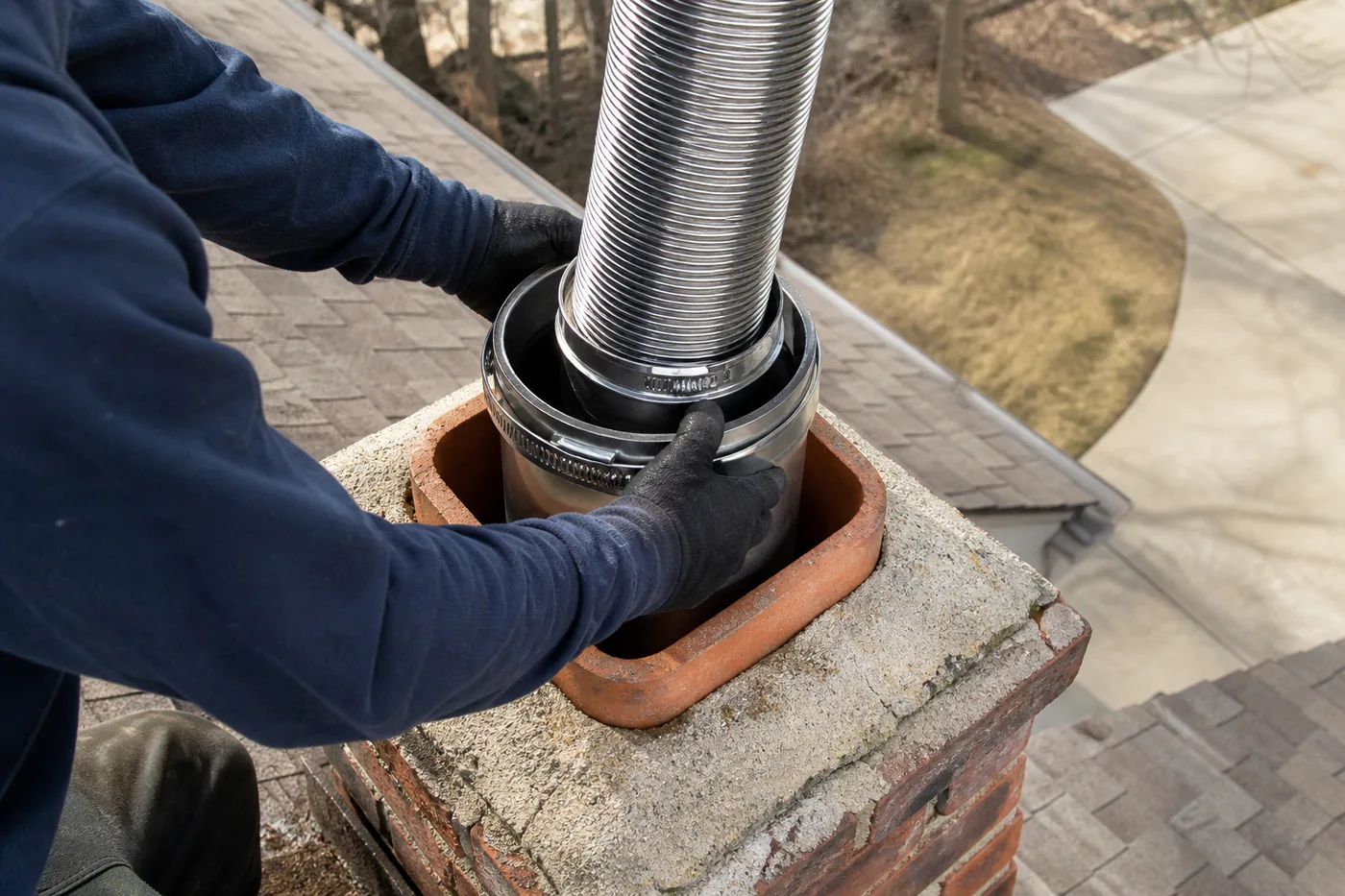
When the damage is widespread, when multiple tiles are cracked or missing, when the flue is the wrong size for a new appliance, or when a chimney fire has broken up the liner along its length, repair is no longer enough. At that point the safe and lasting solution is relining, typically with a stainless steel liner installed inside the existing masonry. If your situation calls for a completely new system rather than a repair, our chimney liner installation service covers full relining from sizing through final inspection. The difference is straightforward: repair restores a liner that's mostly sound, while installation replaces one that's past saving.
The two materials we work with most are clay tile and stainless steel, and each behaves differently. Clay tile is the original liner in most older DFW homes. It's inexpensive and handles heat well when intact, but it's brittle, slow to warm up, and vulnerable to the thermal shock and moisture problems described above. Clay liner repair focuses on restoring joints and sealing cracks so the tile can keep doing its job.
Stainless steel liners are what we most often install when a clay flue can't be saved. Steel is flexible, seamless along its length, and far more forgiving of temperature swings. The grade matters, though. Type 304 stainless steel is well suited to open wood-burning fireplaces and many standard applications. Type 316 stainless steel offers greater resistance to corrosion and is the better choice for gas appliances and high-efficiency setups, where acidic condensation is more aggressive, as well as for anyone burning coal or certain manufactured logs. Choosing the correct grade isn't a small detail. Put the wrong alloy in the wrong application and corrosion can shorten the life of the liner dramatically. We match the material and grade to how you actually use your chimney, not to whatever is cheapest to install.
It's easy to treat a cracked liner as a maintenance item that can wait. It can't. The liner is the barrier between a fire burning at several hundred degrees and the wood framing inside your walls. When that barrier cracks, heat transfers directly into the masonry and, over repeated fires, into the surrounding combustibles. Studies of chimney fires have long shown that a gap as small as a fraction of an inch in a flue can allow enough heat transfer to ignite adjacent woodwork. A cracked liner turns your chimney into a slow-building fire risk that gives almost no warning.
The second danger is invisible and just as serious: carbon monoxide. A properly lined chimney carries combustion gases, including CO, safely up and out. When the liner is breached, those gases can leak through the cracks into the attic, wall cavities, and living space instead of venting outside. Carbon monoxide has no color and no smell, and at high enough concentrations it's deadly. This is exactly why we treat liner damage as urgent rather than optional, and why we won't tell you a compromised flue is safe to burn just to close a sale.
Every repair starts with knowing exactly what we're dealing with. We begin with a thorough inspection of the flue, using a chimney camera to travel its full length and document the condition of every tile and joint. That footage tells us whether you're looking at a handful of bad joints, a section of spalled tile, or damage extensive enough to warrant relining, and we walk you through what the camera shows so you can see the problem for yourself.
From there, we lay out your options honestly, including the cost difference between a targeted repair and a full reline, and we don't move forward until you understand and approve the plan. For joint and crack repairs, we clean the flue first, because sealants and joint compounds won't bond properly over creosote and debris. We then apply the appropriate repair system to restore the damaged areas, and we re-inspect afterward to confirm the flue is sound. If the situation calls for relining instead, we size and install a stainless steel liner matched to your appliance and usage. In every case, the goal is the same: a chimney that vents safely and passes a follow-up inspection.
Homeowners understandably want a number, but liner repair pricing depends on real variables, and any honest company will tell you that upfront. The biggest factor is the extent of the damage: sealing a few mortar joints is a very different job from addressing spalled tile throughout a two-story flue. The height and accessibility of the chimney matter too, since a tall or difficult-to-reach flue takes more time and equipment.
The type of repair drives cost as well. Joint and crack restoration is generally more affordable than a full stainless steel reline, which is one reason we're careful to recommend the least invasive fix that will genuinely make your chimney safe. If relining is required, material and grade, 304 versus 316 stainless, factor into the price. We provide a clear, itemized estimate after the inspection so you know exactly what you're paying for and why. What we won't do is quote a repair sight unseen or pad the job with work your chimney doesn't need.
The Dallas-Fort Worth area has its own particular challenges when it comes to chimney liners, and local experience matters. North Texas sits on expansive clay soil that swells when it's wet and shrinks in our long, dry summers. That constant ground movement shifts foundations and, along with them, the masonry chimneys attached to those homes. We routinely see cracked flue tiles and separated mortar joints in DFW chimneys that trace directly back to soil-driven settling, not to any fire at all.
Age is the other local factor. A large share of homes across Plano, Dallas, and the surrounding suburbs were built before 1990, which means their original clay tile liners have now been through decades of heating cycles, freeze-thaw swings, and foundation movement. Many were never inspected with a camera and are quietly overdue for attention. We serve 98 cities across the metroplex, our technicians are certified and fully insured, and we offer same-day and even Sunday appointments because a compromised flue shouldn't have to wait until it's convenient. If you've noticed any of the warning signs, or you simply own an older DFW home and want to know the real condition of your chimney, call us at (214) 225-8874 and we'll take a look.
"Very pleased with the professionalism and promptness of service. The chimney sweep was done quickly and efficiently at significantly less cost than the first quote I got from another company. Happy to recommend Lowes Chimney Sweep to anyone in Plano!"
"Outstanding chimney sweep service from start to finish. They were punctual, courteous, and left our chimney spotless with no mess in our home. I won't use anyone else for chimney services in Dallas TX!"
More reviews from homeowners across the metroplex are on our reviews section, or learn more about our team before you book.
A chimney liner repair in Dallas-Fort Worth costs $1,200 to $2,500 in 2026. You get a free written estimate before any work begins, and the price you’re quoted is the price you pay.
It comes down to how much of the liner is damaged. A few cracked mortar joints or an isolated spalled tile in an otherwise sound flue can usually be repaired. Widespread cracking, multiple broken tiles, or damage from a chimney fire generally calls for relining. A camera inspection is the only way to know for sure, and we'll show you exactly what we find before recommending anything.
No. A cracked liner lets intense heat transfer into the wood framing behind your masonry and can allow carbon monoxide to leak into your home instead of venting outside. Both are serious, potentially life-threatening hazards. We recommend not burning until the liner has been inspected and repaired.
The most common causes are thermal shock from rapid heating, chimney fires that spike temperatures past what clay can handle, and moisture that gets in and expands through freeze-thaw cycles. In DFW specifically, our expansive clay soil causes foundation and chimney movement that cracks tiles and separates mortar joints over time.
Type 304 stainless is well suited to standard open wood-burning fireplaces. Type 316 offers stronger corrosion resistance and is the better choice for gas appliances, high-efficiency systems, and fuels that produce more acidic condensation. Matching the correct grade to how you use your chimney is important for the liner's lifespan.
Yes. We offer same-day appointments and are available on Sundays, because a damaged liner is a safety issue that often shouldn't wait. Call (214) 225-8874 and we'll get a certified technician out to inspect and address the problem as quickly as possible.
It's worth checking. Pre-1990 homes across DFW have original clay tile liners that have been through decades of heating cycles, weather swings, and soil-driven foundation movement. Much of that wear is invisible from the firebox, so a camera inspection is the best way to catch liner damage before it becomes a safety problem.
Straight answers from our DFW chimney pros before you book.
Get an honest ballpark range for this service, no phone call needed. Built from real Dallas-Fort Worth pricing, then book when you’re ready.
Get My Instant Estimate →