Decatur's 1896 courthouse announces Wise County in pink granite, and the county answers in Victorian brick, ranch stoves, and county roads we drive every week. The northwest line ends here, at full standard.
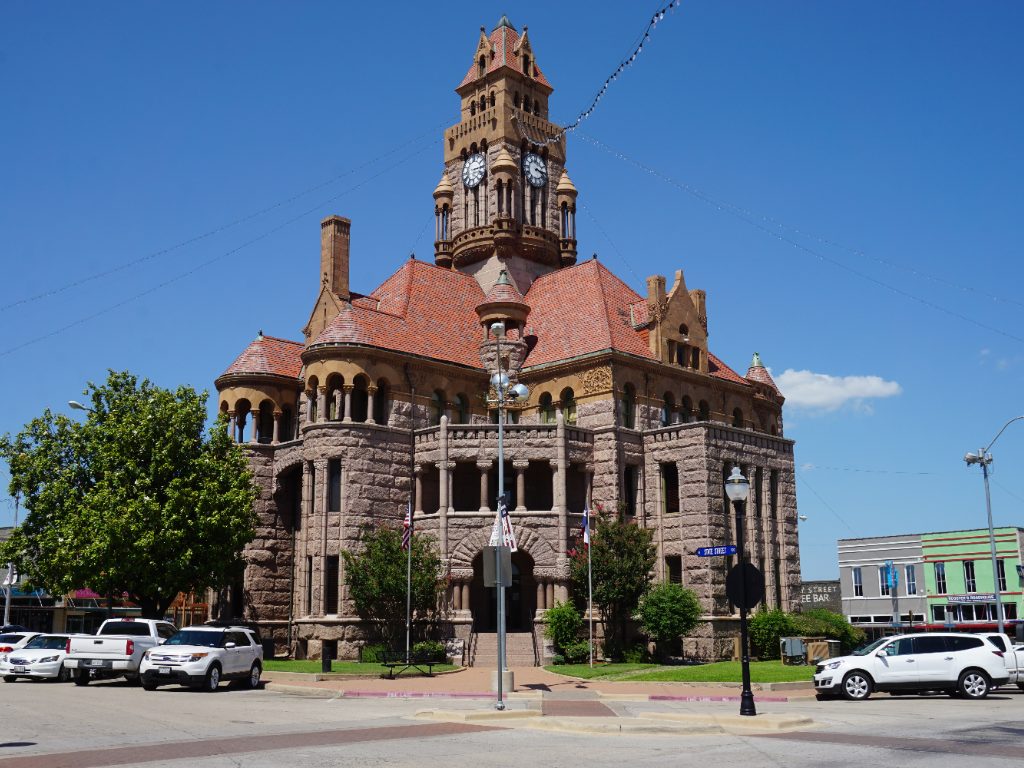
Decatur is the last courthouse before the country truly opens: the 1896 Wise County seat in pink granite and Romanesque swagger, one of the most photographed courthouses in Texas, presiding over a square of Victorian streets, and beyond them, ranch country running to the horizon in every direction. US 287 brings the metroplex up from Fort Worth through Saginaw; past Decatur, it just keeps going into the wide part of the map.
A ranch-country county seat keeps two kinds of fires, and we service both. In town, the square orbit holds heritage Victorian masonry that has stood since the granite was quarried, lime mortar, generous fireboxes, stacks proud enough for their address. Out the county roads, chimneys work for a living: stoves heating ranch houses through winters that arrive earlier up here, flues stacking creosote on a heating schedule, and old farmhouse chimneys carrying two or three flues apiece from generations of changing needs.
The Decatur toolkit rides both: lime-matched tuckpointing for square-orbit joints renewed to disappear, working-flue sweeps on the schedule heavy burners demand, camera inspections that map century stacks and multi-flue farmhouse chimneys alike, and crown repair for every top the northwest weather has worn.
The square orbit holds the founding file, Victorian streets under the granite dome, the heritage heart of the northwest line. The historic edges add the grand early stock, mansion-era masonry included. The mid-century belt runs the compact postwar cohort on the standard renewal clock, and the county roads carry the working file, ranch flues, farmstead stacks, and stove thimbles from here to every corner of Wise County.
Granite square to gravel road is fifteen minutes, and the protocol changes at the cattle guard, not the standard.
Logistics: Decatur caps the northwest run up 287, same-week standard, seven days, with county-road stops routed together so distance never dilutes the visit.
Town brick or ranch stove, call (214) 225-8874 and the northwest run answers.
A Typical Decatur Project
A farmhouse down a Wise County road, one chimney and three mysteries: the camera mapped a fireplace flue, a stove thimble run, and an old kitchen-range passage abandoned sometime last century. Each got its right answer, the stove flue relined and swept for the winter it actually works, the fireplace serviced, the retired passage sealed weather-tight and labeled. The whole stack left documented top to bottom, so the house finally knows what it's carrying.
Wise County meets the season first and hardest: the northwest hail alley runs over these ridges, fronts drop out of the Panhandle with their full credentials, and the Cross Timbers ground, sandy, rocky, ridge-and-draw, varies foundation behavior more than any clay flat ever does. Heritage brick answers with a century of proof; working stoves answer with deposits that don't wait; both answer best with the annual look.
The standard covers square and section line alike: NFPA 211 calls for annual inspection of every chimney and venting system, heavy-use flues cleaned as often as buildup demands, and the Chimney Safety Institute of America carries the homeowner guidance. At the end of the northwest line, the annual habit is the whole plan.
The square-orbit Victorians, heritage brick under the dome, century protocol always. The historic edges, the grand early file, camera-first care. The mid-century belt, the compact cohort, renewal season now. The county-road file, working flues, working schedule.
Lime where the century demands it, stove-flue seriousness where the woodpile does, and photos before prices from the square to the last cattle guard. The before-and-after gallery shows the range, and our reviews ride the northwest run end to end.
Decatur caps the northwest run of our routes up US 287, batched with Saginaw and the western loop, same-week appointments are the standard, seven days a week, 8AM to 8PM, and Wise County rides a dedicated leg instead of waiting on metro traffic.
The northwest's honest spread: square-orbit Victorians with lime-era mortar under the famous pink granite dome, a compact mid-century belt at crown-and-cap age, and the ranch country's working flues, wood burned as real heat across Wise County, building creosote on a heating schedule. Heritage craft in town, working-flue discipline on the county roads.
With the care a square this photographed enforces. Decatur's 1896 pink-granite courthouse presides over some of the finest Victorian residential masonry on our northwest line, and it gets the century protocol: full camera survey first, lime-appropriate matched mortar, minimal intervention, and photo records before and after. Repairs vanish into the original hand or they aren't finished.
We really do. Wise County's backroads are a scheduled part of the northwest run, not an exception to it, ranch houses, farmsteads, and stove flues at the end of long gravel drives are some of our most regular calls up here. Distance sets the routing, never the standard: the same cameras, the same documentation, the same photo-backed verdicts arrive whether the mailbox is in town or three cattle guards past it.
The square orbit, the Victorian streets that grew up around the courthouse, plus the grand early stock on the town's historic edges. Age steps down through the mid-century belt, and the rural file runs its own gamut from century farmhouses to brand-new ranch builds.
Yes, Wise County is Cross Timbers country, sandier and rockier than blackland, with foundation behavior that varies sharply lot to lot and drains differently ridge to draw. Century footings settled long ago; newer builds find their posture on local schedules. Either way we measure and photograph, so verdicts rest on trend data.
Wise County practically headlines the hail season, the northwest alley runs right over these ridges, and storms arrive with their full western energy. Heritage crowns chip and ranch-metal dents, so the habit holds everywhere: photograph the chimney top inside the same claim window as the roof, every storm spring.
Completely normal, and worth mapping properly. Farmhouses of a certain age often stacked multiple flues in a single chimney, the fireplace, a wood stove thimble, sometimes an old kitchen-range flue, and decades of changes leave some active, some abandoned, some improperly sealed. A camera survey maps every passage, then each gets the right treatment: active flues relined and swept, retired ones sealed weather-tight, and the whole stack documented so the next owner inherits answers instead of mysteries.
Wood burners: before the season, every season, and mid-winter if the stove runs daily. Square-orbit masonry: the annual look before the first fire, no exceptions. Everyone: the northwest run books quickest once the first front drops out of the Panhandle, so late summer buys the easiest windows of the year.
The northwest run drops from Decatur through Saginaw and into Fort Worth, and all 98 DFW cities we serve are on the map.
Free online quotes · Victorian restoration craft · County-road routes · Open 7 days
(214) 225-8874📍 1008 Ridgefield Dr, Plano TX 75075 | 🕗 Open 7 days · 8AM-8PM
From older masonry to new construction, Decatur homes across the 76234 ZIP code get the full service catalog: sweeps , Level 1 annual inspections, and repairs quoted from photos with the final price confirmed on site.
"Very pleased with the professionalism and promptness of service. The chimney sweep was done quickly and efficiently at significantly less cost than the first quote I got from another company. Happy to recommend Lowes Chimney Sweep to anyone in Plano!"
"Outstanding chimney sweep service from start to finish. They were punctual, courteous, and left our chimney spotless with no mess in our home. I won't use anyone else for chimney services in Dallas TX!"
More reviews from homeowners across the metroplex are on our reviews section, or learn more about our team before you book.
Full-service chimney care across Decatur and the DFW metroplex.
Helpful guides: