● Pricing reviewed & current for October 2026
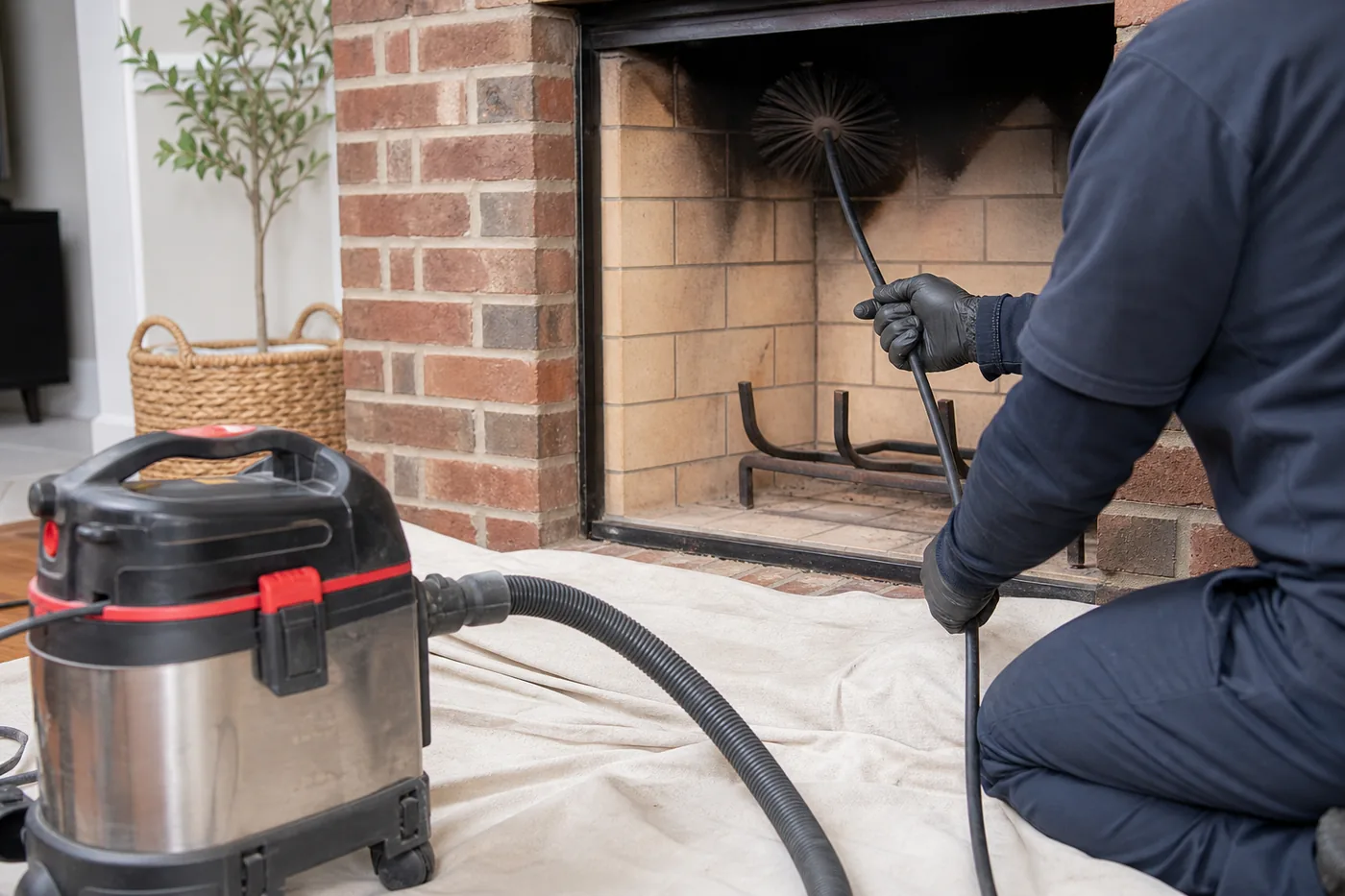
Soot, creosote and debris build up every time you burn. Our technicians clean the full system, flue, firebox, damper and smoke chamber, with HEPA dust containment and floor protection, so nothing dirty is left behind in your home.
Quick answer: A standard chimney cleaning in Dallas-Fort Worth is $299 in 2026 (single-flue cleaning plus a Level 1 inspection); heavy or glazed creosote may need additional treatment.
If you burn wood, soot and creosote collect on your flue walls a little more with every fire. Chimney cleaning is the job of removing that buildup, along with ash, debris and any animal nesting, from the parts of the system that get dirty: the flue, firebox, damper and smoke chamber. Lowes Chimney Sweep provides thorough chimney cleaning to homeowners across 98 Dallas-Fort Worth cities, backed by hundreds of verified 5-star Google reviews.
A clean chimney is a safer chimney. The National Fire Protection Association points to creosote buildup in unmaintained chimneys as the leading cause of home heating fires. Cleaning removes that fuel so your fireplace draws properly and burns safely. Ready to book? Call (214) 225-8874, FAST scheduling is available, and we work Sundays.
A real cleaning is a complete service, not a quick brush at the bottom of the flue. Here's what's covered in the price you're quoted, with nothing added later:
The flue is the vertical passage that carries smoke out of your home, and it's where the most dangerous buildup forms. As smoke cools on its way up, it leaves behind creosote, a tar-like, highly flammable residue. We clean the full length of the flue with brushes and rotary tools sized to your liner, clearing the residue that a stray spark could otherwise ignite. Flue cleaning is the core of every chimney cleaning we do.
Not all buildup is the same, and the removal method depends on the stage. Stage 1 is dry and flaky and brushes away easily. Stage 2 is a crunchy, tar-like layer that needs rotary tools. Stage 3 is hard, shiny glaze that has to be broken down with a professional chemical treatment before it can be removed. We identify the stage first, then clean it the right way, because scrubbing glazed creosote with a standard brush accomplishes nothing.
Cleaning doesn't stop at the flue. The firebox, the chamber where the fire burns, collects ash and soot that we clear out completely. The damper often gets stuck or won't seal because of soot and rust, so we clean it until it operates freely. The smoke chamber, the funnel-shaped area just above the firebox, traps creosote and is one of the most overlooked spots in the system. We clean all of it, so the whole fireplace works as it should.
The number-one worry homeowners tell us about is soot in the living room. We take that seriously. Before any brush moves, we lay protective coverings over your hearth and floor, seal the fireplace opening, and run a HEPA-filtered vacuum at the source the entire time we work. The result is a clean chimney and a clean room, we leave your home the way we found it, minus the buildup.
An honest cleaning price depends on a few things: how much creosote has built up and what stage it's in, whether the system has been maintained recently, the height and access of the chimney, and whether we find an animal or nest that needs removal. A routine cleaning on a well-kept fireplace is straightforward; a chimney with heavy glazed creosote takes more time and specialized treatment. We tell you the price before we start, no surprises added at the end.
People use these terms loosely, but they describe different work. Chimney cleaning focuses on the venting system, the flue, smoke chamber and damper, where creosote and safety risks live. Fireplace cleaning is more about the firebox, glass, doors and surround that you see and use. Most homeowners want both, and a full chimney cleaning already includes the firebox and damper. If you're not sure which you need, just ask, we'll tell you honestly.
We clean chimneys throughout the Dallas-Fort Worth metroplex, from Dallas and Fort Worth to Plano, Frisco, McKinney and all 98 DFW cities we serve. Same trained technicians, same complete cleaning, wherever you are in the metroplex.
Chimney cleaning is also commonly called chimney sweeping, but many homeowners search specifically for a chimney cleaning company. If you were looking for the traditional term, see our chimney sweep service, it's the same careful work.
"Very pleased with the professionalism and promptness of service. The chimney sweep was done quickly and efficiently at significantly less cost than the first quote I got from another company. Happy to recommend Lowes Chimney Sweep to anyone in Plano!"
"Outstanding chimney sweep service from start to finish. They were punctual, courteous, and left our chimney spotless with no mess in our home. I won't use anyone else for chimney services in Dallas TX!"
More reviews from homeowners across the metroplex are on our reviews section, or learn more about our team before you book.
Cost depends on how much buildup there is and what stage the creosote is in, how the chimney is accessed, and whether an animal or nest needs to be removed. A routine cleaning on a well-maintained fireplace is straightforward and affordable; heavy glazed creosote takes more time and treatment. We always quote the price before we begin, so there are no surprises.
They describe the same job. "Chimney sweep" is the older, traditional term for the trade, and "chimney cleaning" is how many homeowners describe the result they want. Either way, the work is the same: removing creosote, soot and debris from the flue, firebox, damper and smoke chamber. You can read more on our chimney sweep page.
A chimney should be inspected at least once a year, and cleaned whenever buildup calls for it. Households that burn frequently, or burn unseasoned wood, may need cleaning every season; lighter users may go longer. The safe rule is an annual inspection so cleaning happens exactly when it's needed, not too often, not too late.
No. We cover your hearth and floor, seal the fireplace opening, and run a HEPA-filtered vacuum at the source the entire time. Dust containment is a core part of how we work, you get a clean chimney and a clean room.
Creosote and soot from the flue walls, ash and debris from the firebox, buildup on the damper and smoke shelf, and any blockages such as leaves or animal nests. Removing this buildup is what restores a safe draft and lowers the risk of a chimney fire.
Yes. Gas systems produce far less creosote than wood, but their venting still needs periodic inspection and cleaning to stay clear and safe. If you have a gas fireplace, tell us when you call and we'll bring the right approach.
Every wood fire sends smoke up the flue, and as that smoke cools it leaves creosote and soot on the walls. The firebox collects ash, the damper gathers grime that keeps it from sealing, and the smoke chamber above the firebox quietly builds a layer most people never see. Cleaning addresses all of it, not just the easy-to-reach parts.
Stage 1 creosote is powdery and brushes off. Stage 2 is a hard, crunchy layer that needs rotary tools. Stage 3 is a shiny glaze that has to be chemically treated before it will release. Using the wrong method for the stage is why some "cleanings" leave the real buildup behind, we identify the stage first.
Creosote is fuel sitting inside your exhaust path. A spark can ignite it, and a chimney fire burns well above 2,000°F, hot enough to crack the liner and reach the home's framing. A blocked flue can also push carbon monoxide back indoors. Cleaning removes the fuel and clears the path.
Burn only seasoned hardwood, keep fires hot rather than smoldering, and open the damper fully every time. Dry, hot fires leave far less creosote than slow, smoky ones, which stretches the time between cleanings and keeps the system healthier.
If we find a cracked liner, a failing crown or damage from a past chimney fire, cleaning a broken system only makes a broken system cleaner. We stop, show you photos, and quote the repair honestly, because a clean flue is not automatically a safe one.
Straight answers from our DFW chimney pros before you book.
Get an honest ballpark range for this service, no phone call needed. Built from real Dallas-Fort Worth pricing, then book when you’re ready.
Get My Instant Estimate →