● Pricing reviewed & current for October 2026
A damaged flue quietly puts your home at risk every time you light a fire. Lowes Chimney restores safe, code-compliant venting across the Dallas-Fort Worth metroplex, with certified technicians who fix the problem right the first time.
Quick answer: A chimney flue repair in Dallas-Fort Worth costs $300 to $2,500 in 2026, with a free written quote before any work begins.
The flue is the interior passage that carries smoke, heat, and combustion gases up and out of your home. In most DFW homes it is a vertical channel lined with clay tiles, a metal liner, or cast-in-place material that shields the surrounding masonry and framing from the intense heat and corrosive byproducts of a fire. When that lining is intact, everything that comes off a burning log, smoke, water vapor, carbon monoxide, and acidic condensate, travels straight up and exits above the roofline.
When the flue is damaged, that clean path breaks down. Heat can reach combustible framing it was never meant to touch. Carbon monoxide can seep into living space. Draft weakens, so smoke rolls back into the room instead of rising. A working flue is not a luxury feature of your fireplace, it is the single component standing between a controlled fire and a house fire. That is why flue repair is one of the most safety-critical services we perform, and why we never treat it as cosmetic.
Clay tile liners are the most common type in North Texas homes, and they are durable but brittle. The number one enemy is a chimney fire, even a small one you never noticed can crack tiles from the sudden thermal shock, leaving them fractured top to bottom. Over years of normal use, the expansion and contraction of heating and cooling works mortar joints loose and opens gaps between tiles.
Moisture is the other major culprit, and it matters a great deal here. When rain and humidity soak into masonry and then temperatures swing, which happens constantly during a DFW winter, where a 70-degree afternoon can drop below freezing overnight, trapped water freezes, expands, and pops the surface off the tile. That flaking and pitting is called spalling, and it steadily eats away at the liner. Acidic condensate from modern high-efficiency appliances and from wood smoke also attacks clay and mortar from the inside. Add in settling of the home's foundation, which is a well-known issue on the expansive clay soils around Dallas, and you get shifting that cracks a rigid tile liner over time.
Most flue damage hides inside the chimney where you cannot see it, but the symptoms show up where you live. Watch for smoke or a smoky smell pushing back into the room when you have a fire going, which often signals a draft problem tied to the flue. Look for pieces of clay or thin shards of tile in the firebox or on the smoke shelf, those are literally chunks of your liner breaking off.
Other red flags include a persistent damp or musty odor, white staining (efflorescence) on the exterior masonry, rust on the damper or firebox, and deterioration of drywall or wallpaper on walls adjacent to the chimney. A carbon monoxide detector that trips near the fireplace should always be taken seriously. Many homeowners first learn of flue damage during a routine inspection, because a certified technician runs a camera up the flue and sees the cracked tiles and open joints directly. If you have noticed any of these signs, it is worth having the flue looked at before the next burning season, a small crack is far cheaper to address than the damage a compromised flue can cause.
There is no single fix for every flue, and any company that quotes you a repair without inspecting the chimney first is guessing. The right method depends on what is actually wrong, how far the damage extends, and what type of liner you have. Our job is to match the repair to the problem so you are not overpaying for work you do not need, or, worse, getting a patch that fails in a season.
For flues where the tiles are largely sound but joints have opened up, a targeted joint repair restores the seal. Where the surface of the liner has degraded but the structure is intact, a specialized sealing or resurfacing product can rebuild a continuous, gas-tight interior surface. And where the liner is cracked through, heavily spalled, or missing sections, relining is the durable long-term answer. Below we walk through each approach.
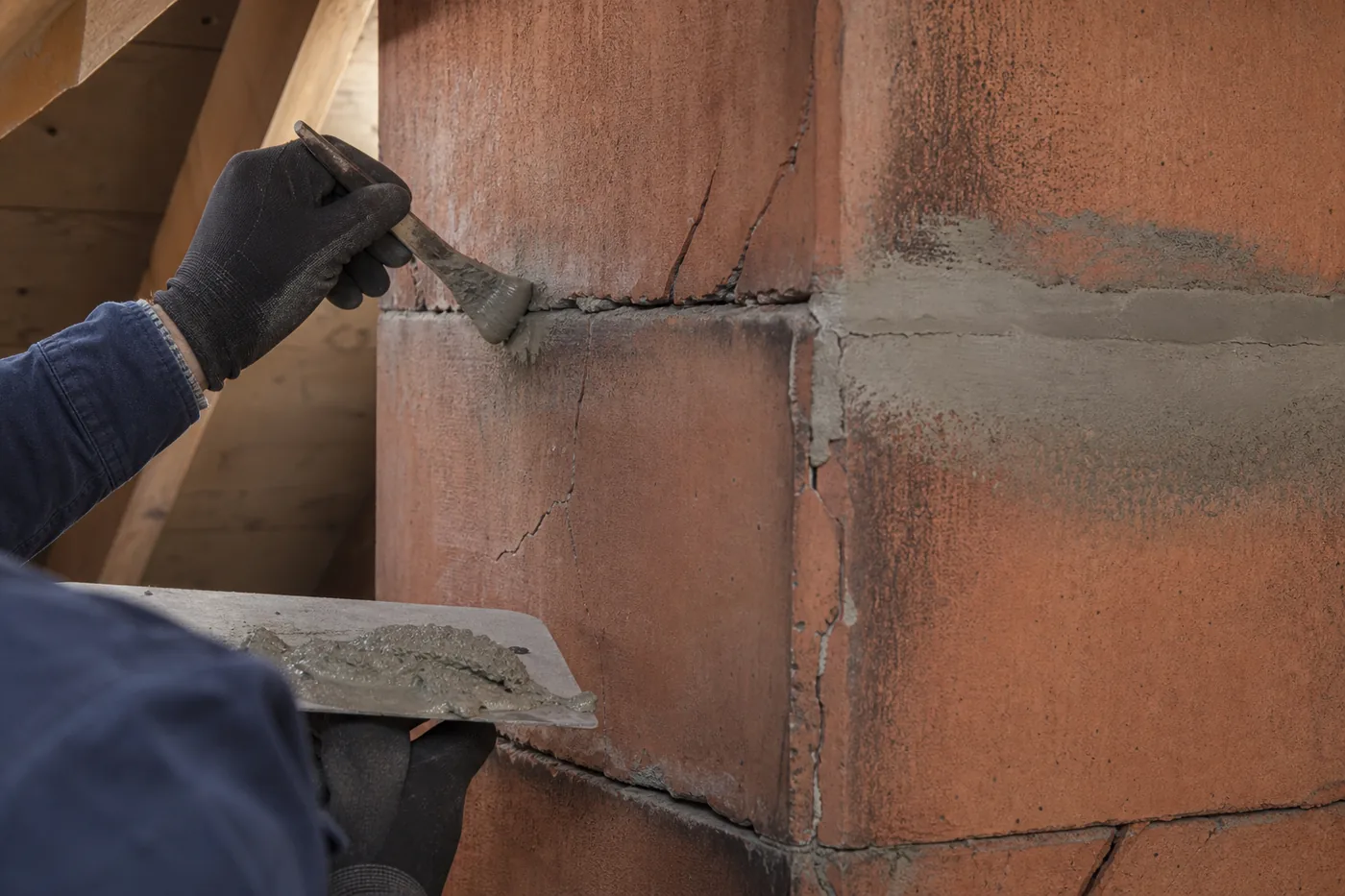
When an inspection shows that the individual tiles are still solid but the mortar joints between them have cracked or washed out, we can rebuild those joints from the inside. Using specialized tools that pull a refractory sealant material through the flue and pack it into the open joints, we restore a continuous, sealed interior surface without tearing the chimney apart. This joint repair approach preserves the original liner while closing the gaps that let heat and gases escape.
Flue sealing and resurfacing goes a step further for liners with surface deterioration, pitting, minor spalling, or hairline cracking spread across many tiles. A ceramic or refractory coating is applied to the interior to create a smooth, uniform, code-compliant surface that also improves draft. These methods are excellent, less invasive options when the damage is caught early, which is one more reason regular inspections pay for themselves. The key is honest assessment: sealing only works when the underlying liner still has integrity, and we will tell you straight if it does not.
When a flue is cracked through, has missing or collapsed tiles, or is too far gone for sealing to help, relining is the correct repair. Relining installs a new, continuous liner, most often stainless steel sized precisely to your appliance, inside the existing chimney. A properly installed liner gives you a brand-new, code-compliant venting path rated for the fuel you burn, and quality stainless liners are built to last for decades. Relining is also what we recommend when a flue was never lined to begin with, which we still occasionally find in older DFW housing stock.
Because relining is a bigger scope of work, we treat it as its own service and size the material to your specific fireplace or appliance. If your inspection points toward a full liner, you can read more about that work on our chimney liner installation page. Whether the answer is a spot repair or a complete reline, the goal is the same: a flue that safely contains and vents everything your fire produces.
It is worth being blunt about the stakes, because flue damage is not just a maintenance item. A cracked tile or open joint creates two serious hazards. First, it lets high heat pass through to the wood framing and structure surrounding the chimney, and repeated exposure can ignite those materials, this is a leading cause of house fires that trace back to the chimney. Second, a compromised flue can leak carbon monoxide, an odorless, colorless gas, into your living space instead of venting it safely outside.
There is also a performance dimension. The flue is what creates draft, the upward pull that keeps smoke moving out of your home. Cracks and gaps disrupt that column of rising air, so a damaged flue often smokes into the room, burns inefficiently, and deposits creosote faster. Fixing the flue frequently solves a "my fireplace always smokes" complaint that no amount of damper adjustment could. So a flue repair is not only protecting your family's safety; it is also what makes your fireplace pleasant to use again.
Every job starts with a thorough inspection. We run a camera up the flue so we, and you, can see the actual condition of the liner from top to bottom. That footage takes the guesswork out of the diagnosis and lets us show you exactly what we are recommending and why. From there we give you a clear, itemized explanation of your options, whether that is joint repair, sealing, or a full reline, along with honest guidance on which makes sense for your chimney and budget.
Once you approve the work, our certified, insured technicians complete the repair with the right materials for your flue type and fuel, protecting your home with drop cloths and keeping the work area clean. We finish by verifying draft and confirming the repaired flue vents properly. If your chimney needs additional attention beyond the flue itself, we can handle it as part of broader chimney repair so you are dealing with one crew and one point of accountability rather than juggling multiple contractors.
Homeowners always want a number, and the honest answer is that flue repair costs vary because the work varies. A localized joint repair on an otherwise healthy liner is a very different scope than relining a tall, multi-story chimney, and pricing should reflect that. The biggest factors are the extent of the damage, the repair method required, the height and accessibility of your chimney, the type of liner you have now, and the fuel you burn.
What we can promise is transparency. Because our recommendation is grounded in camera inspection footage, you are paying for the repair your chimney actually needs, not an upsell and not a guess. We explain the options, give you a straightforward quote before any work begins, and let you make the call. Catching flue problems early almost always keeps costs down, since a minor crack addressed now can head off a full reline later. That is the practical case for not putting off an inspection when you have seen warning signs.
Lowes Chimney is based in Plano and serves 98 cities across the Dallas-Fort Worth metroplex, from Dallas and Fort Worth to Frisco, McKinney, Arlington, Irving, Denton, and communities throughout the region. We know North Texas chimneys and the specific ways they fail here, the freeze-thaw swings that drive spalling, the expansive clay soils that shift foundations and crack rigid liners, and the mix of older and newer housing stock across the metroplex. That local knowledge means we know what to look for and how to fix it for the long haul.
We are a certified, insured, 5-star-rated company, and we offer same-day service and Sunday appointments because a chimney problem does not wait for a weekday and neither should you. If you have noticed smoke pushing into the room, tile shards in the firebox, or a musty smell near the fireplace, call us at (214) 225-8874 to schedule an inspection. We will show you exactly what is going on inside your flue and give you a clear, honest path to a chimney that is safe to use again.
"Very pleased with the professionalism and promptness of service. The chimney sweep was done quickly and efficiently at significantly less cost than the first quote I got from another company. Happy to recommend Lowes Chimney Sweep to anyone in Plano!"
"Outstanding chimney sweep service from start to finish. They were punctual, courteous, and left our chimney spotless with no mess in our home. I won't use anyone else for chimney services in Dallas TX!"
More reviews from homeowners across the metroplex are on our reviews section, or learn more about our team before you book.
Common signs include smoke pushing back into the room, pieces of clay tile in the firebox, a musty or damp smell, staining on the masonry, or a carbon monoxide detector tripping near the fireplace. Most flue damage hides inside the chimney, so the surest way to know is a camera inspection, which we run top to bottom so you can see the condition yourself.
It depends on the extent of the damage. If the tiles are largely sound and only the joints have failed, we can often do a targeted joint repair or sealing without major reconstruction. If tiles are cracked through, spalled, or missing, relining is the durable answer. We only recommend a full reline when the liner truly needs it.
No. A damaged flue can let heat reach the wood framing around your chimney and can leak carbon monoxide into your home. We recommend not burning until the flue has been inspected and repaired. If you have seen warning signs, hold off on fires and call us to take a look.
Flue repair is a broad term that covers restoring joints, sealing surface damage, and relining. Relining specifically means installing a new continuous liner inside the chimney, usually stainless steel, and is used when the existing liner is too damaged to save. Which one you need depends entirely on what the inspection shows.
Smoking is often a draft problem, and a cracked or gapped flue is a frequent cause. Damage disrupts the column of rising air that pulls smoke up and out, so it rolls back into the room instead. Repairing the flue frequently resolves smoking issues that damper adjustments never could.
It varies with the extent of damage, the repair method, and the height and type of your chimney, so we do not quote blind. After a camera inspection we give you a clear, itemized estimate before any work starts, so you know exactly what you are paying for. Catching problems early almost always keeps the cost lower.
Straight answers from our DFW chimney pros before you book.
Get an honest ballpark range for this service, no phone call needed. Built from real Dallas-Fort Worth pricing, then book when you’re ready.
Get My Instant Estimate →