● Pricing reviewed & current for October 2026
Mortar is your chimney's sacrificial armor, designed to weather so the brick doesn't. When joints crack, crumble, and powder out, we grind them back and repack them with color-matched mortar, restoring decades of strength for a fraction of rebuild cost.
Quick answer: A chimney tuckpointing in Dallas-Fort Worth costs $300 to $2,500 in 2026, with a free written quote before any work begins.
Here's a secret of masonry: brick lasts a century, but the mortar between bricks is engineered to be the weaker partner, it sacrifices itself to protect the brick. That deal only works if someone renews the mortar when its time comes. Skip it, and water pours through the failed joints into the wall until the bricks themselves start dying. That's why chimney tuckpointing in Dallas Fort Worth is the highest-leverage masonry repair there is: a few thousand dollars of joint work today routinely prevents the five-figure rebuild.
Lowes Chimney Sweep does it the way masons are supposed to: failed mortar ground out to proper depth, never smeared over, joints cleaned, then packed with mortar matched in color, profile, and chemistry to your chimney. Modern hard mortar on a 1950s chimney destroys old brick; our mixes respect what your wall is made of. The result is repointing that disappears into the original masonry and holds for 25 to 30 years, across all 98 DFW cities we serve.
Scratch a joint with your key, if it powders, it's time. Call (214) 225-8874.
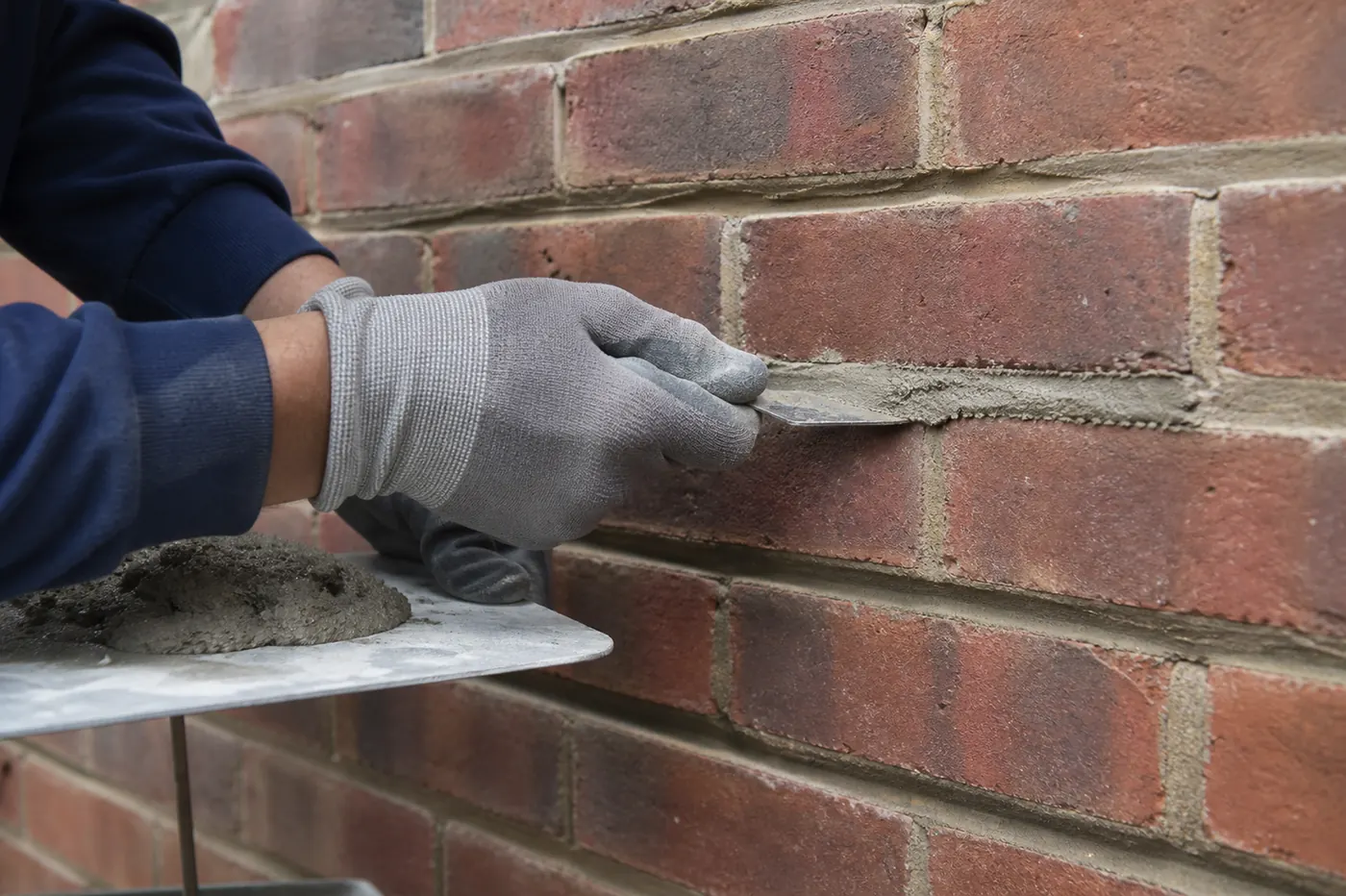
The core service: deteriorated joints ground out, cleaned, repacked, and tooled to match the original profile. (The two words mean the same repair in everyday use, what matters is grind-out depth and mortar quality, not the label.)
Tinted to your weathered original so the repair vanishes, and mixed to the right hardness, older DFW homes often need softer lime-based mortar, because too-hard modern mix makes century brick spall around it.
When failure is localized, a weather-facing side, the top few feet, a settling crack line, we repoint what failed and leave sound joints alone. Honest scope, smaller bill.
Scattered spalled bricks get cut out and replaced with matched units during the same job, so the finished wall is uniform in both brick and joint.
Once joints are renewed, a breathable masonry water repellent seals the whole face against wind-driven Texas rain, without trapping moisture inside the wall the way paint-on sealers do.
Failed joints let water in with every rain. Call (214) 225-8874 before the bricks start paying the price.
Good repointing is method, not mystery:
Every face of the stack checked and photographed, failed zones mapped, sound zones left alone
Color, joint profile, and mortar hardness matched to your chimney's era and brick
Spot repoint or full repoint, the honest scope, priced in writing
Joints cut back to sound material at proper depth, the step smear-over patches skip
Fresh matched mortar packed in lifts, not buttered on, full, solid joints
Joints struck to match the original profile so the repair reads as original work
Dust controlled, site swept, and the finished faces documented for your records
Repointing done right lasts 25-30 years, and costs a fraction of the rebuild it prevents.
(214) 225-8874Almost always the grinding. Smearing new mortar over failed joints is quick, cheap, and cosmetic. It can't bond to powdering mortar, so it peels within a few seasons while water keeps working behind it. Grinding to sound depth is slower and dustier, and it's the entire difference between a 3-year patch and a 30-year repair.
Not from our scaffolding. Bright-gray stripes on old brick are what happens when mortar goes in unmatched. We tint to the weathered original and tool to the existing profile, on most jobs, the compliment we get is that the owner can't find where we worked. The gallery has the proof.
Genuinely structural. Mortar joints carry and distribute the stack's load and keep water out of the wall's core. Failed joints mean a chimney that's both weaker and wetter every month, repointing restores the strength and closes the water paths in one repair.
The whole water path. Joints rarely fail alone, the crown above and flashing below usually shared the same years of weather. You'll get photos of all three, so one trip up the ladder answers every question.
Every joint cut to sound depth before new mortar goes in. We've removed too many failed shortcuts to ever quote one.
Lime-based mixes for older masonry, modern mixes for modern, because the wrong hardness doesn't just look wrong, it destroys the brick around it.
Color-matched, profile-matched, and photographed before and after, craftsmanship you can't spot, paperwork you can.
Masons who also know flues, crowns, caps, and inspections, so the repoint fits into the health of the whole system, not just the wall.
Powdering mortar ground out and restored to seamless faces, tuckpointing projects from Denton, Lewisville, and Keller are in the gallery.
See Tuckpointing Projects →Mortar rarely fails in isolation. The usual companions, and the page that handles each:
From mid-century brick in Denton to newer stacks losing their first joints in Keller, our masonry crews repoint across all 98 DFW cities we serve.
+ 78 more DFW cities! Find yours on the service areas page or call (214) 225-8874.
"Very pleased with the professionalism and promptness of service. The chimney sweep was done quickly and efficiently at significantly less cost than the first quote I got from another company. Happy to recommend Lowes Chimney Sweep to anyone in Plano!"
"Outstanding chimney sweep service from start to finish. They were punctual, courteous, and left our chimney spotless with no mess in our home. I won't use anyone else for chimney services in Dallas TX!"
More reviews from homeowners across the metroplex are on our reviews section, or learn more about our team before you book.
Dallas Fort Worth chimney tuckpointing typically is priced with a clear, upfront quote after an on-site inspection depending on how much of the stack needs repointing, chimney height, and roof access. Spot repointing of a small failed area costs less; a full chimney repoint on a tall two-story stack sits at the upper end. Compare that to a clear, upfront price-plus for the rebuild that neglected joints eventually require, and you'll have the exact number in writing as a Free Online Quote first.
Tuckpointing is the renewal of the mortar joints between bricks: the damaged mortar is ground out to a proper depth, the joints are cleaned, and fresh mortar is packed and tooled in. The bricks stay; the failing material between them is replaced. Done right, it restores both the structure and the water resistance of the wall.
In everyday DFW usage they mean the same repair, renewing mortar joints, and we treat the words interchangeably. Strictly speaking, repointing is the repair itself, while traditional tuckpointing is a decorative version using two mortar colors to create fine lines. What matters is the workmanship: proper grind-out depth, matched mortar, and well-tooled joints.
Run a key across a joint: if mortar powders out or flakes away, it's done protecting your chimney. Other signs are visible cracks in the joints, gaps or missing chunks of mortar, sandy residue collecting at the chimney's base, and joints recessed noticeably deeper than the brick face. Any of those means water is already getting in.
Properly done, correct grind-out depth, compatible mortar mix, joints packed and tooled rather than smeared, repointing lasts 25 to 30 years or more. That's the difference between a mortar job and a masonry job; smear-over patches that skip the grinding fail in a few seasons because new mortar can't bond to failed mortar.
Matching is half the craft. We match three things: color (tinted to your weathered original, not bright gray stripes), joint profile (concave, flush, or raked to match the existing tooling), and mortar type, older DFW homes often need softer lime-based mixes, because modern hard mortar against old brick makes the brick itself spall. The goal is repair you have to hunt for.
Ground-level garden wall, maybe. A chimney, we'd advise against: it's grinder work on a ladder or roof, the mortar chemistry has to match or you damage the brick, and bad joints trap water instead of shedding it. The most expensive tuckpointing jobs we do are the ones where we first remove a failed DIY or handyman smear-over.
Mortar is the sacrificial part of a brick wall by design, it's meant to weather so the brick doesn't. North Texas accelerates it: blazing summers, freeze-thaw winters, wind-driven rain, and expansive clay soil that keeps masonry under slight constant movement. The chimney gets it worst of all because it's the most exposed masonry on the house, hit from all four sides.
If the water is entering through failed joints, yes, repointing closes those paths. But chimney leaks often have multiple doors: a cracked crown, rusted flashing, a missing cap. We check the whole water path while we're up there, so you fix the actual sources instead of repointing a chimney that keeps leaking through its crown.
Tuckpointing saves chimneys whose bricks are still sound. When bricks themselves are spalled and crumbling across whole faces, the stack leans, or sections have gone loose and structural, repointing the joints around failing brick wastes money, that's rebuild territory. Our inspection tells you honestly which side of that line your chimney is on, with photos.
Repointing is one link in the masonry chain, these services cover the rest:
Wondering whether your chimney needs joints, a crown, or the full rebuild conversation? The chimney FAQ covers the basics, or reach us through the contact page.
Free online quotes · Color-matched mortar · Grind-out standard · 25-30 year repairs · Open 7 days
(214) 225-8874📍 1008 Ridgefield Dr, Plano TX 75075 | 🕗 Open 7 days · 8AM-8PM
We probe the joints, not just look at them. Sound mortar resists a blade; failed mortar powders out. We map which walls take the weather, check for spalled brick faces, and photograph the worst runs so you can see exactly what stage the masonry is in.
South and west faces cook in the sun and take the driven rain, so their joints fail first. We see eroded joints deep enough to lose a finger, previous repairs done with the wrong mortar that popped back out, and hairline paths that feed water behind the brick.
Mortar is what holds the stack together. Joints eroded past a half inch stop being cosmetic: bricks loosen, and a chimney above the roofline is the last structure in the house you want shedding weight. Water through open joints also rusts the damper and liner hardware inside.
Spot repointing for isolated joints, full repointing of weather faces, and chimney brick replacement where faces have spalled. Mortar gets matched in strength and color, because hard modern mortar on old brick destroys the brick. Ballpark from photos, final on site.
A breathable water repellent slows the next cycle of erosion, and the annual inspection tracks the joints from then on. Good repointing on a DFW chimney should give you decades, not years.
If bricks themselves are cracked through, the wall is bowing, or a previous owner painted the stack and trapped moisture inside, pointing new mortar into failing brick wastes the work. That is rebuild territory, and we will say so before you spend.
Straight answers from our DFW chimney pros before you book.
Get an honest ballpark range for this service, no phone call needed. Built from real Dallas-Fort Worth pricing, then book when you’re ready.
Get My Instant Estimate →