● Pricing reviewed & current for October 2026
When birds, squirrels, or raccoons turn your chimney into a nesting site, you get blocked draft, foul odors, and a real fire hazard. Lowes Chimney Sweep removes nests safely and legally across the DFW metroplex, then seals the flue so it doesn't happen again.
Quick answer: A chimney nest removal in Dallas-Fort Worth costs $299 to $900 in 2026, with a free written quote before any work begins.
Most homeowners don't find a nest by looking. They notice the symptoms first. The earliest sign is usually sound: scratching, fluttering, chirping, or scrabbling coming from behind the firebox or up the flue, often loudest at dawn and dusk when animals are most active. In spring you may hear the high, insistent begging calls of hatchlings, which tends to be the moment people finally pick up the phone.
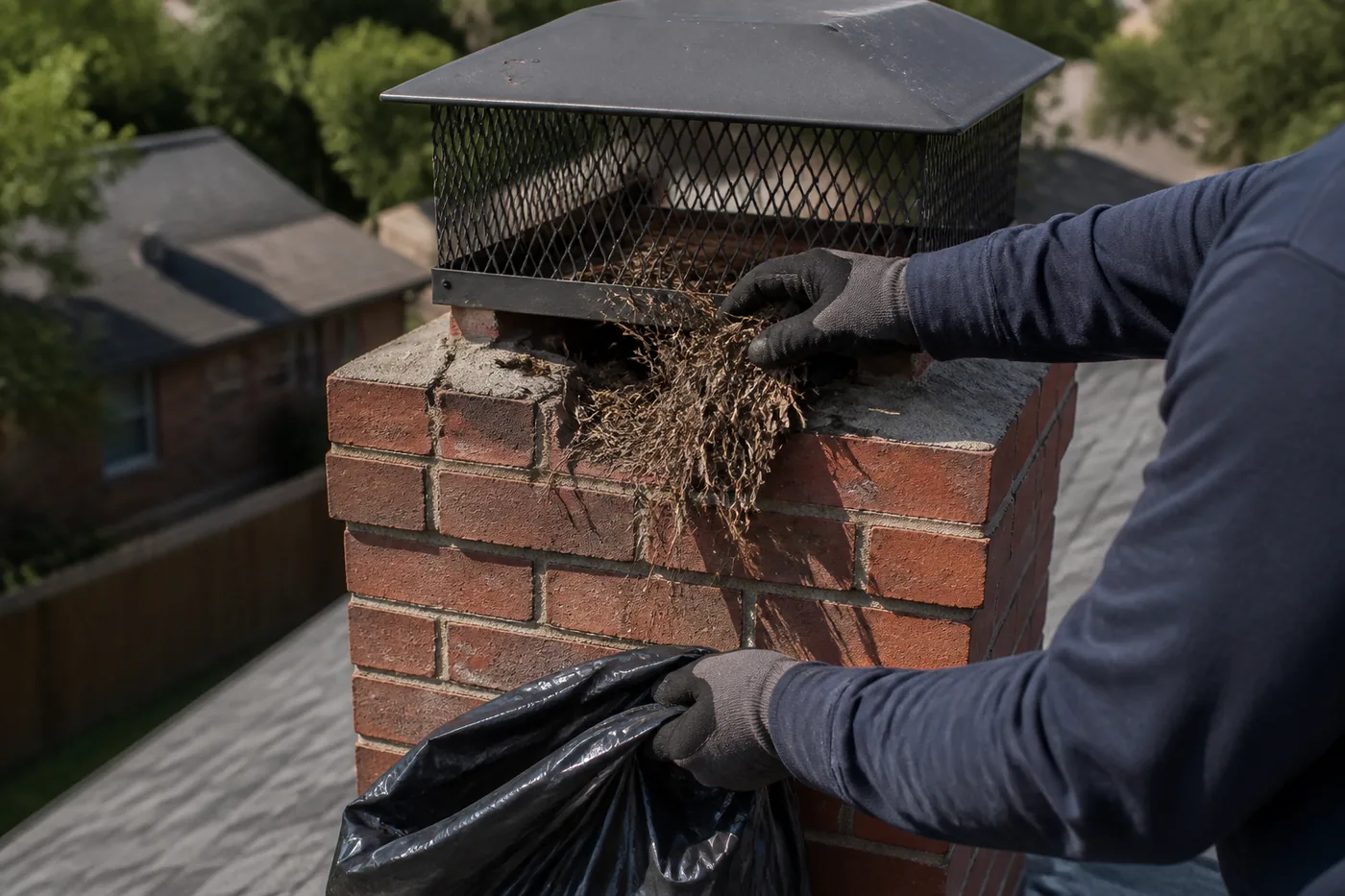
Other clues are physical. You might see twigs, straw, leaves, feathers, or bits of insulation piled on the smoke shelf or dropping into the firebox. A chimney that suddenly won't draft, that pushes smoke back into the room, or that never drew well this season may have a blockage sitting above the damper. A strong, musky, or ammonia-like odor is another red flag, and it gets worse in Texas heat and humidity. Finally, if you see birds repeatedly diving into the top of your chimney or an animal disappearing over the crown, you almost certainly have an active nest. If any of this sounds familiar, it's worth a professional look before you light a fire.
A chimney is a warm, sheltered, predator-safe vertical shaft, which is exactly what a lot of local wildlife is looking for during breeding season. In North Texas we see a handful of usual suspects.
Birds are the most common. Many species will build in the top of an uncapped flue, dropping load after load of sticks until the twigs wedge and form a platform. Chimney swifts are a special case and deserve their own discussion below, because they are federally protected. Squirrels are next. They're agile climbers, they chew, and they'll pack a flue with leaves and shredded material, sometimes falling all the way down to the smoke shelf and getting trapped. Raccoons are the heavyweights. A female raccoon views a masonry chimney as a hollow tree and a nearly ideal den for raising kits; they're strong, clever, and can do real damage to dampers and liners. Occasionally we also find rats, mice, or wasp and bee activity taking advantage of the same opening. Correctly identifying the species matters, because it determines both the legal timing of removal and the safest method.
This is the part every DFW homeowner should understand before scheduling a removal. Chimney swifts are migratory birds, and like most native migratory species in the United States they are protected under the federal Migratory Bird Treaty Act. Under that law it is illegal to remove, disturb, or destroy an active nest, meaning a nest that contains eggs or living young, without a permit. This applies even when the nest is inside your own chimney and even when it's causing you a headache.
Swifts spend their days on the wing and cannot perch like other birds; they cling to vertical surfaces, and an open masonry flue is one of the few places left that mimics the hollow trees they evolved to use. In Texas the swift breeding season generally runs from around April into August. During that window, if we inspect your chimney and find an active swift nest, we cannot legally remove it, and we won't. The good news is that swifts are single-brood, short-term tenants: once the young fledge and the birds migrate south, typically by late summer or early fall, the nest is abandoned and can be cleaned out completely. At that point we remove the old nesting material, sweep the flue, and cap the chimney so the following spring's birds move on to find another site. We'll always tell you honestly what we find and what the law allows, rather than pushing an illegal removal.
A nest isn't just a nuisance. It creates several overlapping safety problems, and they compound the longer the material sits.
Blockage and draft failure. A packed flue can't vent properly. If you run a fireplace, wood stove, or a gas appliance vented through that chimney, exhaust has nowhere to go and can spill back into your living space. Carbon monoxide. This is the most dangerous consequence. When combustion gases can't escape up a blocked flue, colorless, odorless carbon monoxide can push back into the home. Every house with a fuel-burning appliance should have working CO alarms, and a suspected blockage should be treated seriously. Fire risk. Dried twigs, leaves, and grass are essentially kindling stacked inside a heat channel. A nest positioned above the firebox is a genuine chimney-fire hazard, and nesting debris also traps creosote and soot. Odor, insects, and contamination. Nesting material, droppings, and unfortunately sometimes dead animals produce strong smells, attract flies and mites, and can create a biohazard that seeps into the house, especially during a Texas summer. None of these problems fix themselves, and all of them get worse with time.
We approach every job the same careful way, starting with figuring out what we're actually dealing with before anyone reaches in.
1. Inspection and identification. We examine the chimney from the top at the crown and from inside at the firebox and smoke shelf, using lights and cameras as needed to identify the species, locate the nest, and determine whether it's active or abandoned. 2. Legal and timing check. If we find a protected active nest, particularly swifts in spring and summer, we explain the situation and lay out a compliant plan rather than breaking federal law. 3. Safe removal or extraction. For abandoned nests we physically remove all nesting material from above and below. When a live animal such as a squirrel or raccoon is present, humane extraction and exclusion is the priority, and this often overlaps with our chimney animal removal service, especially when young are involved and the mother must be given the chance to relocate them. 4. Thorough cleaning. Once the flue is clear we sweep out remaining debris, droppings, and creosote-laden material, and we deodorize and sanitize where nests have fouled the masonry. 5. Inspection and sealing. We verify the flue is fully open and drafting, check the liner and damper for damage, and address the entry point so the problem doesn't simply repeat next season.
Here's the truth we tell every customer: removing a nest without sealing the flue is a temporary fix. Animals return to sites that worked before, and an open flue in a good neighborhood will be rediscovered, often by next spring. The permanent solution is a properly fitted chimney cap. A quality cap covers the flue opening with heavy-gauge mesh that blocks birds, squirrels, and raccoons while still letting smoke and gases vent freely. It also keeps out rain, which protects your damper and liner, and it acts as a spark arrestor to catch embers. This is why chimney cap installation is the single most cost-effective piece of prevention we offer, and why we recommend pairing it with any nest removal. One correctly sized, correctly secured cap ends the cycle of remove-clean-repeat that frustrates so many homeowners who try to handle nests on their own.
We don't publish a single flat price, because honest pricing depends on what's in your chimney. Several factors move the number, and we'd rather explain them than quote blind.
The type of animal matters: clearing an abandoned bird nest is very different from safely extracting a live raccoon and her kits. The location and depth of the nest affects access; material wedged high in the flue or resting on the smoke shelf takes more work than debris near the top. The degree of blockage and contamination plays a role, since heavy droppings, odor, or a dead animal require additional cleaning, sanitizing, and deodorizing. Access and roof conditions factor in, as does whether you add a cap at the same visit, which we usually recommend because doing it in one trip saves you money versus a second call later. Whether the job requires ongoing exclusion for a protected or denning animal can also affect scope. Because of all this, our approach is to inspect, tell you exactly what we find, and give you a clear, upfront price before any work begins. No surprises, no pressure.
Lowes Chimney Sweep is based in Plano and works across roughly 98 cities in the Dallas-Fort Worth metroplex, from Dallas and Fort Worth to Frisco, McKinney, Allen, Arlington, Irving, Garland, and far beyond. That local footprint matters for nest work, because timing in North Texas is everything. Our spring and summer, especially April through August, is peak nesting and swift season, which is exactly when calls spike and when the protected-species rules are most likely to apply. We know the seasonal pattern here, we know the law, and we schedule accordingly. We're a certified and insured, 5-star-rated company, and we offer same-day service and Sunday appointments because a blocked or occupied chimney rarely waits for a convenient weekday. If you're anywhere in the metroplex and hearing noises up the flue, we can get to you. Call (214) 225-8874 to schedule an inspection and get your chimney back to being a chimney.
"Very pleased with the professionalism and promptness of service. The chimney sweep was done quickly and efficiently at significantly less cost than the first quote I got from another company. Happy to recommend Lowes Chimney Sweep to anyone in Plano!"
"Outstanding chimney sweep service from start to finish. They were punctual, courteous, and left our chimney spotless with no mess in our home. I won't use anyone else for chimney services in Dallas TX!"
More reviews from homeowners across the metroplex are on our reviews section, or learn more about our team before you book.
A chimney nest removal in Dallas-Fort Worth costs $299 to $900 in 2026. You get a free written estimate before any work begins, and the price you’re quoted is the price you pay.
It depends on the species. If we find an active chimney swift nest with eggs or young, federal law under the Migratory Bird Treaty Act prevents removal until the birds fledge and leave, usually by late summer. We'll inspect, tell you exactly what's there, and give you a legal, safe plan. Abandoned nests can be cleared right away.
Any blockage in a flue that vents a fuel-burning fireplace or appliance can trap combustion gases, including carbon monoxide, and push them back into your home. Make sure you have working CO alarms, avoid using the affected appliance until it's checked, and call us for an inspection. We verify the flue is clear and drafting before you use it.
They will if the flue stays open, because wildlife returns to sites that worked before. That's why we strongly recommend chimney cap installation with any nest removal. A properly fitted cap blocks birds, squirrels, and raccoons while still letting your chimney vent, ending the cycle of repeat nesting.
That calls for humane extraction rather than simple cleanup, and it overlaps with our chimney animal removal service. We prioritize getting the animal out safely, giving a mother a chance to move her young, then sealing the entry point. We never seal a live animal inside.
Yes. Nesting material, droppings, and any dead animals leave debris, odor, and biohazard behind. After removal we sweep the flue, clear the smoke shelf, and sanitize and deodorize the affected areas so smells and contamination don't linger, which matters a lot in Texas heat.
We offer same-day service and Sunday appointments across the DFW metroplex. A blocked or occupied chimney is both a safety issue and a nuisance, so we don't make you wait for a weekday. Call (214) 225-8874 and we'll get you scheduled quickly.
Straight answers from our DFW chimney pros before you book.
Get an honest ballpark range for this service, no phone call needed. Built from real Dallas-Fort Worth pricing, then book when you’re ready.
Get My Instant Estimate →