Greenville has anchored Hunt County since 1846, cotton money built its tall Victorian stacks, avionics keeps its paychecks now, and the brick never stopped standing. The deep end of our I-30 run, served at full standard.
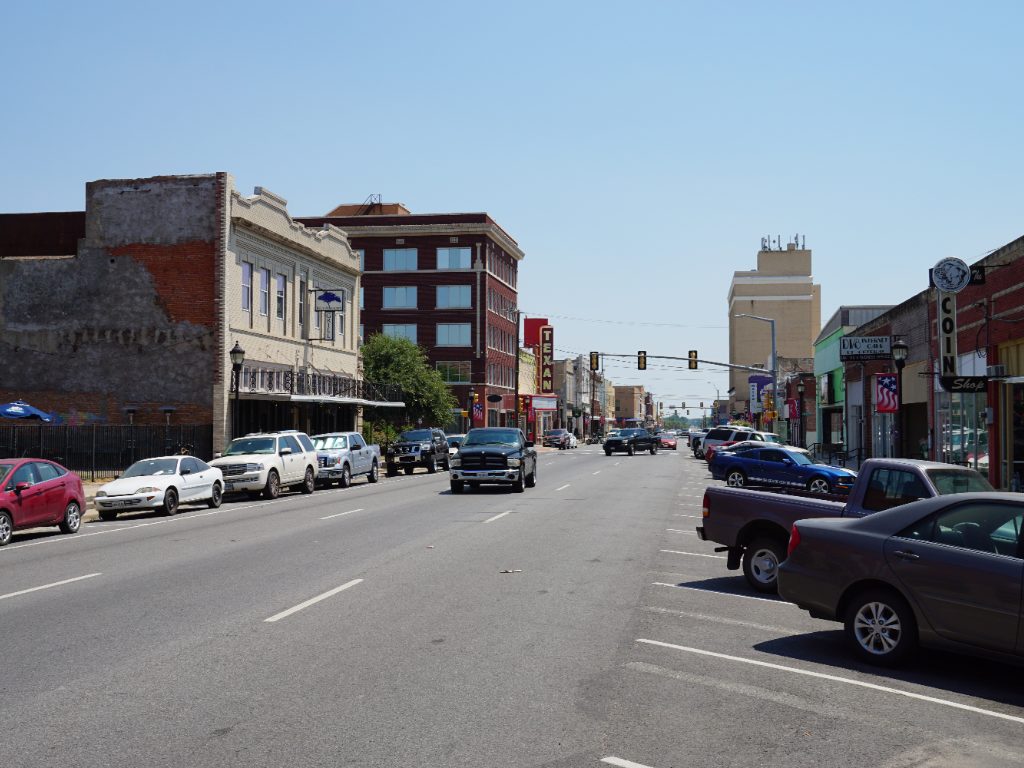
Greenville earned its brick the blackland way: as the seat of Hunt County when cotton was king, its gins and compresses feeding a downtown of Lee Street storefronts and residential streets where the boom years built tall, proud two-story homes with stacks to match. The cotton era passed; the town pivoted, famously, to the avionics bays at Majors Field that anchor its payrolls today. The brick did what Greenville brick does: it stayed.
Cotton-era masonry is the deep specialty of our northeast run, and Greenville holds the most of it. Tall Victorian stacks that weather hardest at the top, lime mortar finishing its long design life, generous fireboxes with a century of family fires behind them, unlined flues from before the standards existed. None of it fragile, all of it deserving the senior protocol: cameras before conclusions, materials matched to the original hand, and rebuild verdicts reserved for what the footage truly proves.
The Greenville toolkit is the heritage set at full depth: honest rebuild work that restoration must earn on video first, lime-matched tuckpointing for joints renewed to disappear, firebox restoration in proper refractory materials, and camera inspections that open every conversation on every era of brick.
The Lee Street orbit holds the founding file, the cotton-era commercial blocks and the historic districts behind them, the senior masonry of the northeast. The boom-years residential streets carry the tall Victorian file, stacks that need access planning as much as mortar. The mid-century belt runs the postwar cohort on the standard renewal clock, and the I-30 edges add the modest young file where the interstate meets the blackland.
From gin-whistle streets to avionics shifts is one town and one route, and the era of the mason decides the protocol at every address.
Logistics: Greenville anchors the deep end of the I-30 northeast run, same-week standard, seven days, with heritage visits booked long enough to do the slow parts right.
Tall brick talks from the top down, call (214) 225-8874 and we'll send the camera up.
A Typical Greenville Project
A boom-years two-story near the historic districts, tall twin stacks and a firebox the family had stopped trusting: the camera found the structure true, the firebox joints failed, and the upper courses weathered exactly where tall chimneys weather. The staged plan ran firebox rebuild in refractory first, upper-course repointing with proper access next, lime-matched mortar throughout, every finding on video. The fireplace came back into the family's rotation by the first front, structure intact, verdict earned, nothing demolished that didn't deserve it.
Hunt County serves the standard northeast menu, hail springs, wind fronts, long summers, clay running its slow arithmetic, with one Greenville multiplier: altitude. Tall stacks take wind and weather hardest at the top, exactly where homeowners can't see, which is why the cotton-era file rewards the camera more than any other. A hundred years of proof below; the margin question always lives in the upper courses.
The standard covers every course: NFPA 211 calls for an annual inspection of every chimney regardless of age or fuel, and the Chimney Safety Institute of America keeps the homeowner guidance current. For the northeast's tallest senior brick, the annual habit is the preservation plan.
The Lee Street founding file, cotton-era commercial-district brick, century protocol always. The boom-years Victorians, tall stacks, access-planned care. The mid-century belt, the postwar cohort, renewal season now. The I-30 edges, the young minority, baseline years.
Lime where the century demands it, refractory where the firebox does, and verdicts you can watch before any number appears. The before-and-after gallery shows heritage brick brought back honestly, and our reviews ride the northeast run end to end.
Greenville holds the deep end of our I-30 northeast run, same-week appointments are the standard, seven days a week, 8AM to 8PM, and Hunt County batches with the Royse City and Rockwall stops so the interstate miles never push your window.
A county seat's full archive: cotton-era Victorians with tall stacks and lime mortar, early-1900s houses on the streets behind Lee Street, a broad mid-century belt at crown-and-cap age, and a modest young file on the growth edges. The deep senior stock is the specialty out here, patient camera surveys, matched materials, staged plans.
Craftsmanship worth preserving, with a renewable layer that's due. Greenville built its finest streets when cotton money was tall, and the masonry shows it, generous fireboxes, proud stacks, brick laid to impress. A century on, what needs attention is the layer designed to be renewed: lime-era mortar, original crowns, unlined flues. We renew it in kind and leave the cotton-era hand visible.
The Lee Street orbit and the historic districts around downtown, the cotton-era core that made Greenville the seat of Hunt County's boom years. Age steps down through the mid-century belt and again toward the newer edges by the interstate.
It changes the logistics, not the standard. Cotton-era two-stories carry some of the tallest residential stacks on our routes, which means proper access planning, staged scaffolding where ladders won't do honestly, and extra attention to wind exposure on the upper courses, the part of a tall stack that weathers hardest. The camera goes up either way; the price reflects the access, never guesswork.
Hunt County blackland runs the region's standard wet-dry arithmetic, answered by age: century footings settled generations ago, mid-century slabs carry old stable lines, newer builds are still finding posture. We measure and photograph every crack so the verdict rests on trend data rather than one afternoon's look.
The northeast corridor takes its hail springs honestly, and century crowns chip long before young concrete does. Any storm year, photograph the chimney top inside the same claim window as the roof, and on heritage masonry, get the photos before anyone touches anything.
Almost never. Fireboxes are the hardest-working brick in the house and the most repairable: cracked firebrick and failed refractory joints are a restoration job, not a demolition verdict. The camera confirms the structure behind the box, the firebox gets rebuilt in proper refractory materials, and the chimney above usually just watches. Whole-chimney conversations require whole-chimney evidence, on video, before any number.
Cotton-era masonry: the annual look before the first fire, no exceptions, tall senior stacks carry the least margin for skipped years. Everyone else: fall inspections, spring storm checks, and renewals staged across seasons when that suits the budget. The northeast run fills fast once the first front crosses the blackland.
The northeast run links Greenville with Royse City down I-30 and Rockwall at the lake, and all 98 DFW cities we serve are on the map.
Free online quotes · Tall-stack expertise · Refractory firebox craft · Open 7 days
(214) 225-8874📍 1008 Ridgefield Dr, Plano TX 75075 | 🕗 Open 7 days · 8AM-8PM
Our techs know Greenville and the Hunt County back roads from years of service runs, covering ZIP codes 75401 and 75404 end to end. FAST Scheduling appointments reach here when the schedule allows, and the annual inspection keeps every fireplace in town code-ready.
"Very pleased with the professionalism and promptness of service. The chimney sweep was done quickly and efficiently at significantly less cost than the first quote I got from another company. Happy to recommend Lowes Chimney Sweep to anyone in Plano!"
"Outstanding chimney sweep service from start to finish. They were punctual, courteous, and left our chimney spotless with no mess in our home. I won't use anyone else for chimney services in Dallas TX!"
More reviews from homeowners across the metroplex are on our reviews section, or learn more about our team before you book.
Full-service chimney care across Greenville and the DFW metroplex.
Helpful guides: