Terrell has been standing on the blackland since the T&P laid rails, long enough to host Britain's wartime flight school and to grow the deepest senior brick on our eastern line. We serve it like we know what it's worth.
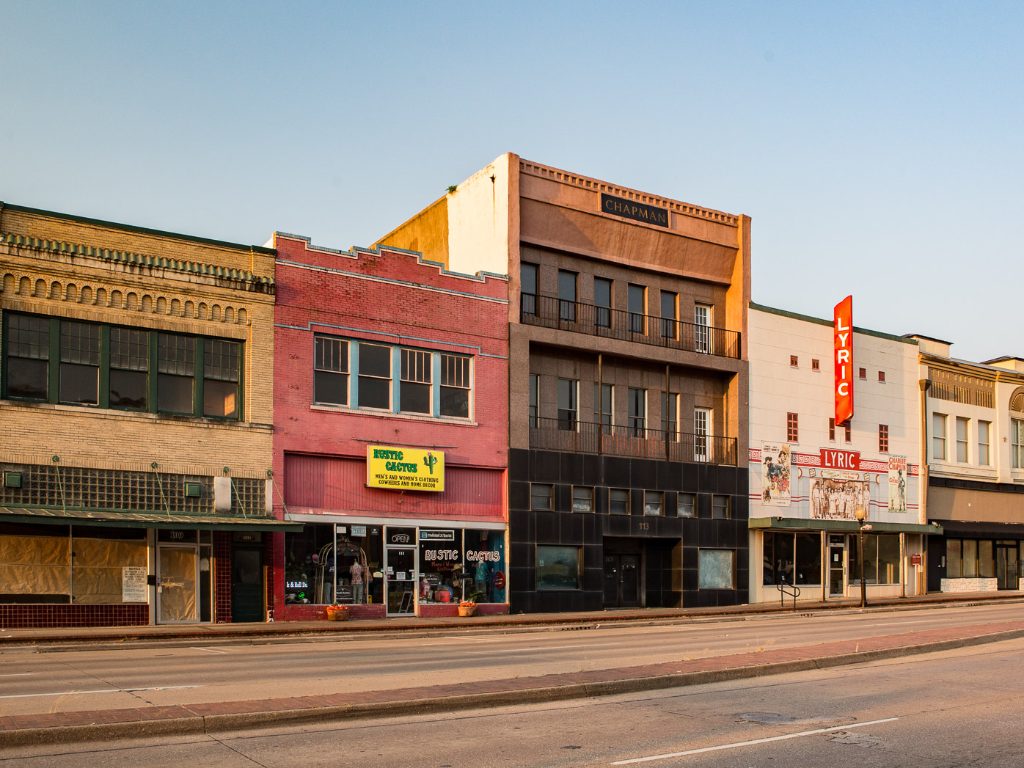
Terrell was born in 1873 where the Texas & Pacific crossed the blackland, and it built like a town that intended to stay: brick storefronts along Moore Avenue, stately homes on the streets behind them, institutions that put down century roots. When the Second World War came, this little Kaufman County seat-of-sorts did something remarkable, it hosted the No. 1 British Flying Training School, where thousands of RAF pilots earned their wings over Texas prairie before flying for Britain. The museum at the airfield still tells the story; the downtown that welcomed those cadets still stands in original brick.
A town this old is a masonry archive, and the eastern line has no deeper one. Downtown-orbit chimneys date to the rail decades. Early-1900s houses carry tall stacks over fireboxes originally laid for coal, a conversion history that decides how they should burn today. The broad mid-century belt is arriving at ordinary renewal age all at once. Every file deserves the same two things: evidence before verdicts, and repairs matched until they vanish into the original hand.
The Terrell toolkit is the heritage set: restoration tuckpointing in lime-appropriate, color-matched mortar, honest rebuild work reserved for what the camera truly proves, careful sweeps for flues that have drawn for a century, and firebox restoration that sets coal-era hearths up correctly for the fuel they burn now.
The downtown orbit along Moore Avenue holds the founding file, rail-era commercial brick and the senior houses behind it, the oldest stock on our eastern loop. The college-district streets carry the stately early-1900s file with the tall coal-era stacks. The mid-century belt spreads the '50s–'70s cohort across town on the standard renewal clock, and the airfield side, where the British cadets once trained, anchors the town's eastern reach along US 80.
A century and a half in one compact rail town, and the age of the hand that laid the brick decides our protocol.
Logistics: Terrell anchors the deep end of the eastern loop on US 80, same-week standard, seven days, with heritage visits booked long enough to do the slow parts right.
Old brick speaks quietly and deserves quick answers, call (214) 225-8874.
A Typical Terrell Project
An early-1900s home near the college streets, a fireplace that always smoked: the camera told the story, a coal-era firebox burned for decades as a wood hearth, flue sized for a fuel nobody uses anymore, era mortar soft on the weather faces. The fix respected the house: liner sized right, damper corrected, firebox restored in kind, joints repointed in matched lime mortar. First smokeless fire in living memory, and from the sidewalk you'd swear nothing was ever touched.
Terrell's brick has answered every season the east line runs, hail springs, drought summers, the blackland's slow foundation arithmetic, for longer than almost anything else we service. Survival is settled; margin is the question. The founding file carries the least spare material between fine and not, and the coal-era conversions add a variable most towns never had. Both are exactly why the annual look earns the most here.
The standard is the same one the founding masons never had: NFPA 211 calls for an annual inspection of every chimney regardless of age or fuel, and the Chimney Safety Institute of America keeps the homeowner guidance current. For a masonry archive, the annual habit is the preservation plan.
The rail-era founding file, downtown-orbit brick, century protocol always. The coal-era conversions, early-1900s stacks, fuel-history verified. The mid-century belt, the big cohort, renewal season now. The newer edges, the young minority, baseline years.
Lime-appropriate mortar, brick matched until repairs vanish, and verdicts you can watch on video before any number appears. The before-and-after gallery shows old brick brought back honestly, and our reviews ride the eastern line end to end.
Terrell anchors the deep end of our eastern loop out US 80, same-week appointments are the standard, seven days a week, 8AM to 8PM, and the east-side stops batch together so Kaufman County miles never delay your window.
The deepest senior file on our eastern routes: 1870s-onward downtown-orbit masonry with era mortar and pre-standard flues, early-1900s houses with tall coal-era stacks, and a broad mid-century belt arriving at crown-and-cap season. Terrell's work is mostly patient renewal, cameras, matched mortar, staged plans, with honest sweeps for fireplaces that have burned for generations.
It matters, and it's one of our favorite east-line specialties. Rail-town houses of this era often carry shallow coal-grate fireboxes and flues sized for coal's draft, later converted to wood or gas. The conversion details decide everything: firebox depth, damper behavior, liner sizing. A camera survey maps what the original mason built and what the decades changed, then the fireplace gets set up correctly for the fuel it burns now.
The downtown orbit along Moore Avenue and the blocks that grew with the 1873 rail line, plus the stately early-1900s streets near the college. That founding file is the senior masonry of our entire eastern loop, and it gets the century protocol without exception.
They're Terrell's big cohort, and they're right on schedule: '50s–'70s crowns at their cracking years, original caps overdue for stainless, first repointing on the weather faces, and fireplaces with decades of family winters behind them. Standard renewal work, sequenced sensibly and photographed at every step.
The blackland out here moves with every wet-dry cycle, and Terrell's foundations answer by age: century footings sway in a long-settled rhythm, mid-century slabs show decades-old stable cracking, and the newer edges are still finding posture. We measure and photograph every line so verdicts rest on trends, not one afternoon's look.
The east line takes its hail springs honestly, and senior crowns chip long before young concrete does. Any storm year, have the chimney top photographed inside the same claim window as the roof, and on century masonry, insist the photos happen before anyone touches anything, so the record stays clean.
That's the craft. We match mortar by color, texture, and joint profile, lime-appropriate where the era demands it, and source or salvage brick until the repair reads as original from the sidewalk. On 150-year-old work the goal is invisibility: the repaired chimney should look like nothing ever happened to it.
Senior masonry: the annual look before the first fire, no exceptions, old flues carry the least margin for skipped years. Mid-century homes: fall inspections, with renewals staged across seasons when that suits the budget. And the eastern loop fills quickly once the first front crosses the blackland, so late summer buys the easiest windows.
The eastern loop runs from Terrell up US 80 through Forney and on toward Mesquite, and all 98 DFW cities we serve are on the map.
Free online quotes · Lime-matched restoration · Coal-era expertise · Open 7 days
(214) 225-8874📍 1008 Ridgefield Dr, Plano TX 75075 | 🕗 Open 7 days · 8AM-8PM
Our techs know Terrell and the Kaufman County back roads from years of service runs, covering ZIP codes 75160 and 75161 end to end. FAST Scheduling appointments reach here when the schedule allows, and the annual inspection keeps every fireplace in town code-ready.
"Very pleased with the professionalism and promptness of service. The chimney sweep was done quickly and efficiently at significantly less cost than the first quote I got from another company. Happy to recommend Lowes Chimney Sweep to anyone in Plano!"
"Outstanding chimney sweep service from start to finish. They were punctual, courteous, and left our chimney spotless with no mess in our home. I won't use anyone else for chimney services in Dallas TX!"
More reviews from homeowners across the metroplex are on our reviews section, or learn more about our team before you book.
Full-service chimney care across Terrell and the DFW metroplex.
Helpful guides: