Texas's smallest county built one of its proudest county seats: a courthouse square above Lake Ray Hubbard's east shore, ringed by the I-30 boom. We keep its rooftops ahead of what the lake and the sky send.
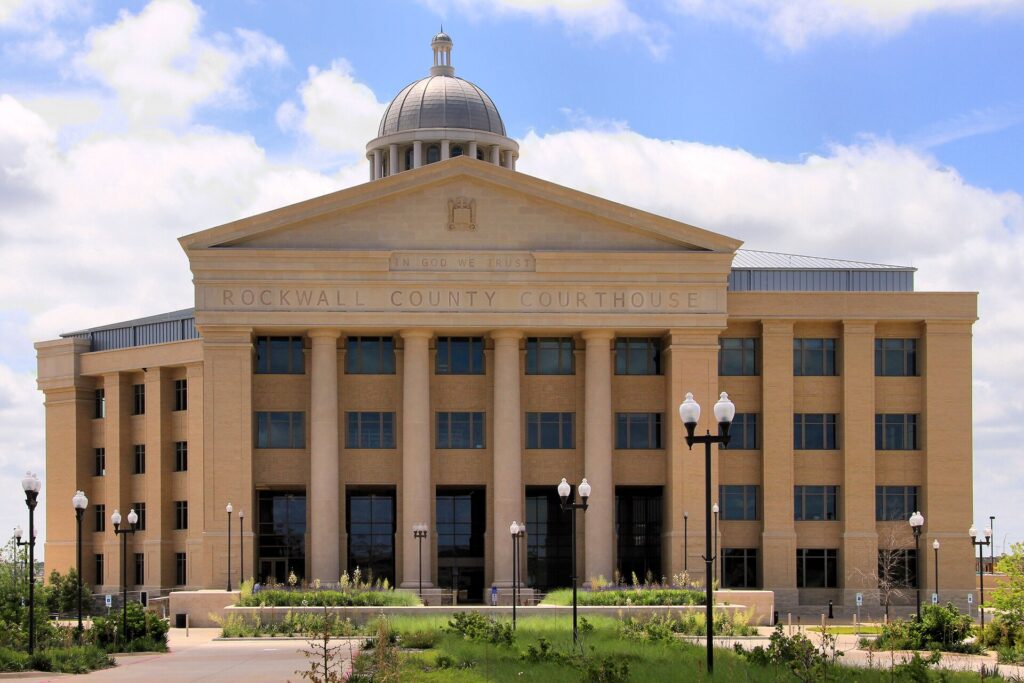
In the 1850s, settlers digging a well struck what looked like buried masonry, a mysterious subsurface wall that named the town, then the county. Rockwall grew into the seat of Texas's smallest county with one of its most intact courthouse squares, and when I-30 bridged Lake Ray Hubbard, the boom followed: the Harbor district on the shoreline, and wave after '90s–'10s wave of family neighborhoods climbing east from the water.
The lake writes the maintenance schedule here. East-shore moisture cycles through caps, covers, and flashing faster than inland air, builder galvanized rusts early, freeze-thaw works harder, and shoreline rooftops meet spring hail with open water for a runway. A town named for hidden masonry deserves inspections that actually look.
The east-shore toolkit: stainless cap installation that retires the galvanized-replacement cycle, chase covers cross-broken to shed lake weather, documented sweeps for the square's wood-burners and the boom's overdue flues, and flashing repair where the shoreline found the shortcut.
The courthouse square blocks carry Rockwall's founding masonry, 1850s-rooted senior brick on the camera-first protocol. The Harbor and the shoreline streets run the fastest metal clocks in the county, lake view included.
The I-30 boom waves hold the biggest cohort, '90s sections entering first renewal, '00s–'10s master plans with gas majorities and undocumented chases, while the eastern edges keep growing toward the county line.
Logistics: Rockwall caps the eastern loop across the Ray Hubbard bridges, same-week standard, seven days, both sides of I-30.
See the lake from your roof? Call (214) 225-8874, stainless beats the cycle.
A Typical Rockwall Project
A shoreline two-story near the Harbor, 2003 build, third galvanized cap in twenty years and the owner tired of the pattern: the ladder confirmed the east shore's usual work, cap rusted at every seam, cover ponding a saucer's worth, flashing sealant finished. One visit retired the cycle: stainless cap and cross-broken stainless cover fitted once, flashing cut in properly. The lake keeps sending weather; the metal stopped caring. East of the lake, ahead on the details.
Rockwall's bill combines the corridor's standard menu with the lake's surcharge: spring hail crossing open water at full speed, freeze-thaw winters with shoreline moisture to work with, and Blackland clay flexing boom slabs and square-block foundations through every wet-dry season. The town that started with mysterious masonry underground has spent 170 years learning to mind the masonry above it.
The standard holds shore to square: NFPA 211 calls for annual inspection of every chimney and venting system, with homeowner guidance from the Chimney Safety Institute of America. On the east shore, the annual look is what keeps the lake's surcharge from compounding.
The courthouse square blocks, 1850s-rooted seniors, camera-first protocol. The Harbor and shoreline streets, fastest metal clocks, stainless territory. The '90s boom sections, first renewal arriving. The '00s–'10s master plans, gas majorities, baselines overdue.
Photos before prices, stainless fitted once instead of galvanized replaced twice, and square-blocks patience where the century has earned it. The before-and-after gallery shows the standard; the reviews come from the square to the shoreline.
Rockwall caps the eastern end of our routes across the Ray Hubbard bridges from Rowlett and Garland, same-week appointments are the standard, with windows confirmed the day before. Seven days a week, 8AM to 8PM, on both sides of I-30.
Lakeside metal problems ahead of schedule, and boom-era basics behind on their first service. Lake Ray Hubbard's east shore cycles extra moisture through caps, covers, and flashing, builder-grade galvanized rusts early here, while the I-30 boom's '90s–'10s neighborhoods carry gas log sets and chase systems that have never been documented. The courthouse-square blocks add a genuine senior file on top.
It is, early settlers digging a well in the 1850s struck what looked like a buried masonry wall, and the mysterious subsurface formation named both the town and the county. Geologists call it a natural sandstone dike; locals call it a good story. Either way, it set the tone: this is a town that takes what's beneath and behind its walls seriously, and we inspect accordingly.
Modestly and predictably, shoreline streets and the Harbor district cycle more moisture through metal and masonry than inland blocks. Builder galvanized shows rust freckles sooner, freeze-thaw gets more material to work with, and caps and covers earn replacement early. Stainless fitted once beats galvanized replaced twice, and nowhere proves it faster than the east shore.
The blocks around the historic courthouse square, Rockwall is the seat of Texas's smallest county, and the square's surrounding streets carry masonry from the town's 1850s-rooted first century. Those senior flues get camera-first inspection, matched mortar, and the patience the square's brick has earned.
An annual look, per NFPA 211, gas burns clean but venting still corrodes, gaskets dry out, burners drift, and carbon monoxide has no smell. The I-30 boom made gas log sets the majority setup in Rockwall's newer waves, and most have never been serviced since the builder's walkthrough. Quick, documented, worth the hour.
The county's Blackland clay swells and shrinks with the seasons like the rest of the corridor: boom-era slabs settle into the rhythm and print stair-step hairlines through veneer, while the square's older foundations move in a slower, established pattern. Stable lines are aging; widening gaps get measured, photographed, and planned.
Rockwall County catches the corridor's spring hail regularly, and open lake water gives storms a clean approach at the shoreline rooftops. The pattern to audit is the regional one: roofs replaced on insurance while the chimney tops above them stayed off the claim. Roof newer than the chimney top is the tell worth acting on.
Late summer through September beats the metroplex rush, lakeside homes do well with a spring metal check after winter, gas households should book before the October surge, and the square's senior masonry takes its annual look best before the first fire. Hail that makes the news puts the chimney top on the roof's claim clock.
The eastern loop crosses the Ray Hubbard bridges from Rowlett and Garland, both page-deep already, with Fate, Heath, and Royse City next up the interstate. Every one of the 98 DFW cities we serve is listed now.
Free online quotes · Lakeside stainless · Square-blocks protocol · Open 7 days
(214) 225-8874📍 1008 Ridgefield Dr, Plano TX 75075 | 🕗 Open 7 days · 8AM-8PM
"Very pleased with the professionalism and promptness of service. The chimney sweep was done quickly and efficiently at significantly less cost than the first quote I got from another company. Happy to recommend Lowes Chimney Sweep to anyone in Plano!"
"Outstanding chimney sweep service from start to finish. They were punctual, courteous, and left our chimney spotless with no mess in our home. I won't use anyone else for chimney services in Dallas TX!"
More reviews from homeowners across the metroplex are on our reviews section, or learn more about our team before you book.
Full-service chimney care across Rockwall and the DFW metroplex.
Helpful guides: