Ennis has been dancing polkas and laying brick since the railroad arrived in 1872, Czech-settler craftsmanship downtown, bluebonnet prairie around it, and working wood flues on the acreage south. The southern line serves it all.
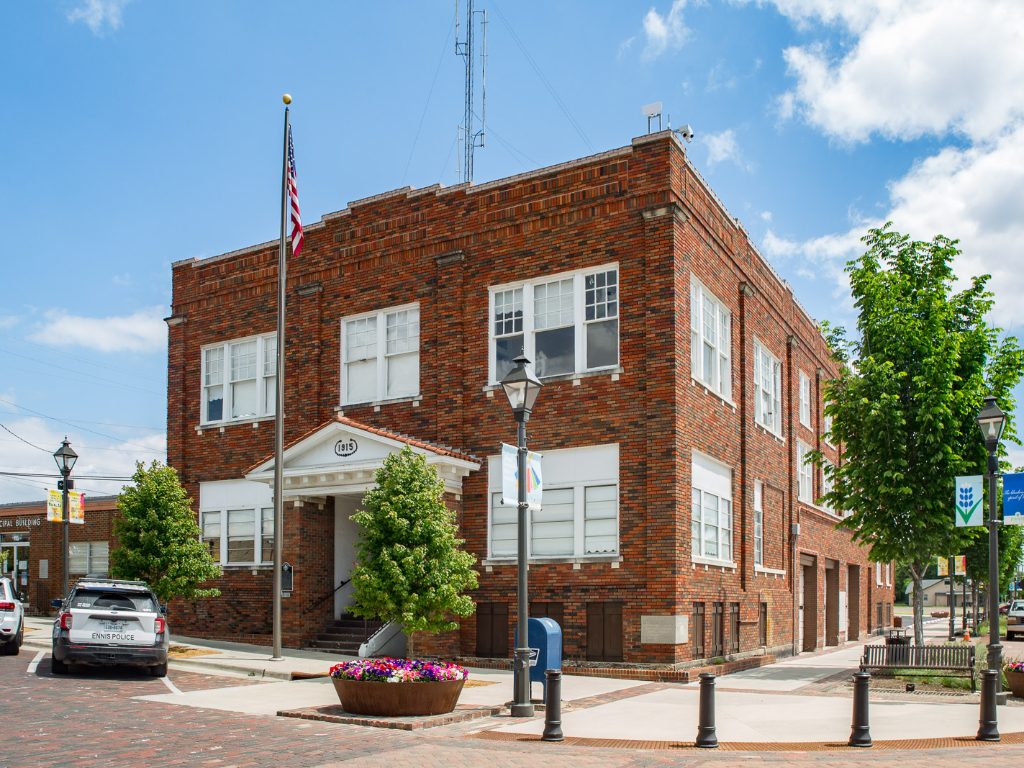
Ennis carries two official titles and wears both well: the Bluebonnet City of Texas, whose forty miles of spring trails draw the whole state every April, and the home of the National Polka Festival, the Czech-heritage celebration that's filled these streets every Memorial Day weekend for generations. Both titles trace to the same beginning, the Houston & Texas Central railroad arriving in 1872, and the Czech immigrant families who settled the blackland around it and built a downtown with old-world care.
That settler craftsmanship is still standing, and it's the anchor of our southern line. The downtown orbit carries founding-era brick laid by masons who built like it was personal, tight joints, honest proportions, chimneys that have drawn for a century. Around it, the mid-century belt runs the standard renewal clock, and past the city limits the Ellis County acreage burns wood as genuine heat, which puts those flues on a working schedule all their own.
The Ennis toolkit spans town and country: careful sweeps for century flues and hard-working stoves alike, heritage tuckpointing in lime-appropriate mortar matched to the settler hand, camera inspections that open every senior-masonry conversation, and crown repair for every generation of top the prairie weather has worn.
The downtown orbit holds the founding file, the 1872 railroad blocks and the Czech-built streets around them, the senior masonry of the southern line. The mid-century belt spreads the '50s–'70s cohort across town on the standard renewal clock. The newer east and north edges add the young file along the I-45 side, and the rural south rounds the route with farmhouse flues and wood stoves doing honest winter work on the open blackland.
Polka halls to pasture fences is ten minutes and a hundred years, and the protocol changes with every mile marker south.
Logistics: Ennis anchors the southern line down I-45 and 287, same-week standard, seven days, with wood-heat households offered first-of-season priority slots.
Town brick or country stove, call (214) 225-8874 and the southern line answers.
A Typical Ennis Project
A founding-era home in the downtown orbit, same family for generations: the camera found settler brickwork still true as the day it was laid, lime mortar soft on the weather faces, and an unlined flue with a century of honest draw. The staged plan ran reline-and-repoint first, crown restoration next, lime-appropriate mortar throughout, every finding on video. From the street the repairs vanished into the original hand, which, in a town this proud of its builders, is the only acceptable result.
Ennis takes the southern corridor's full menu, hail springs, wind fronts, summers that cure mortar brittle, blackland clay running its slow arithmetic under every foundation, and adds the usage multiplier of a town where plenty of flues still work for a living. Century masonry answers with a hundred years of proof; working stoves answer with deposits that don't wait; both answer best with the annual look.
The standard covers town and country alike: NFPA 211 calls for annual inspection of every chimney and venting system, heavy-use flues cleaned as often as buildup demands, and the Chimney Safety Institute of America carries the homeowner guidance. On the southern line, the annual habit is the whole plan.
The Czech-built founding file, settler brick, century protocol always. The mid-century belt, the big cohort, crown-and-mortar season. The I-45 edges, the young file, baseline years. The rural south, working flues, working schedule.
Lime-appropriate mortar where the century demands it, working-flue seriousness where the woodpile does, and photos before prices everywhere between. The before-and-after gallery shows the range, and our reviews ride the southern line end to end.
Ennis anchors the southern end of our routes down I-45 and US 287, same-week appointments are the standard, seven days a week, 8AM to 8PM, and the southern stops batch together so Ellis County never waits on metro traffic.
A southern-line spread: heritage downtown-orbit masonry with era mortar and pre-standard flues, a broad mid-century belt at crown-and-cap age, and the rural south's working wood flues building creosote on a heating schedule. Renewal craft in town, working-flue discipline outside it, both ride the same truck south.
Yes: the quality. Ennis grew on Czech immigrant craftsmanship, and the founding-era brickwork around downtown shows it, tight joints, honest proportions, chimneys laid by masons who built like it was personal. What ages out is the renewable layer: lime-era mortar, original crowns, unlined flues. Our job is renewing that layer in kind, so the original hand stays visible for another century.
The downtown orbit along the historic commercial blocks, where the town grew up with the 1872 railroad, plus the early-1900s streets around it. That founding file is the senior masonry of our southern line, and it gets the century protocol: camera first, matched mortar, minimal intervention.
The working-flue schedule. A stove that heats an Ellis County place through winter builds creosote like the appliance it is, and heavy deposits are the direct fuel of chimney fires. Annual sweeps are the floor for heavy burners, many need mid-season attention too, and the county roads south of Ennis are a normal part of our route, not an exception to it.
The Ellis County blackland runs the same wet-dry arithmetic as the rest of the prairie: century footings downtown settled into their rhythm generations ago, mid-century slabs carry old stable cracking, and newer builds are still learning posture. We measure and photograph every line so verdicts rest on trend data instead of one afternoon's impression.
The southern corridor takes its hail springs, and the older the crown, the easier it chips. Any storm year, photograph the chimney top inside the same claim window as the roof, and on heritage masonry, get the photos before any contractor touches anything, so the record stays clean.
A dormant flue still needs an annual look, just a different one. Unused chimneys collect their own problems: nesting animals, moisture riding an open flue into the house, dampers seizing, crowns failing silently overhead. A yearly inspection keeps a decorative fireplace from becoming a structural or water problem, and keeps it ready the one cold night you want a real fire.
Wood burners: before the season, every season, and mid-winter if the stove runs daily. Heritage masonry: the annual look before the first fire, no exceptions. Everyone else: fall for burners, spring for the storm check, and the southern line books quickest once the first front crosses the prairie.
The southern routes link Ennis with Midlothian up US 287 and Mansfield across the county, and all 98 DFW cities we serve are on the map.
Free online quotes · Settler-brick restoration · Working-flue schedules · Open 7 days
(214) 225-8874📍 1008 Ridgefield Dr, Plano TX 75075 | 🕗 Open 7 days · 8AM-8PM
Homeowners in Ennis (75119 and 75120) call us for everything from a first-time sweep to full masonry work. We arrive with the brushes, the camera, and the honest recommendation. Just west, we also serve Waxahachie, the Ellis County seat known for its historic courthouse square.
"Very pleased with the professionalism and promptness of service. The chimney sweep was done quickly and efficiently at significantly less cost than the first quote I got from another company. Happy to recommend Lowes Chimney Sweep to anyone in Plano!"
"Outstanding chimney sweep service from start to finish. They were punctual, courteous, and left our chimney spotless with no mess in our home. I won't use anyone else for chimney services in Dallas TX!"
More reviews from homeowners across the metroplex are on our reviews section, or learn more about our team before you book.
Full-service chimney care across Ennis and the DFW metroplex.
Helpful guides: