Burleson runs from founding-era storefronts to brand-new phases to acreage where wood is real heat. Three chimney files, one southern route, one standard.
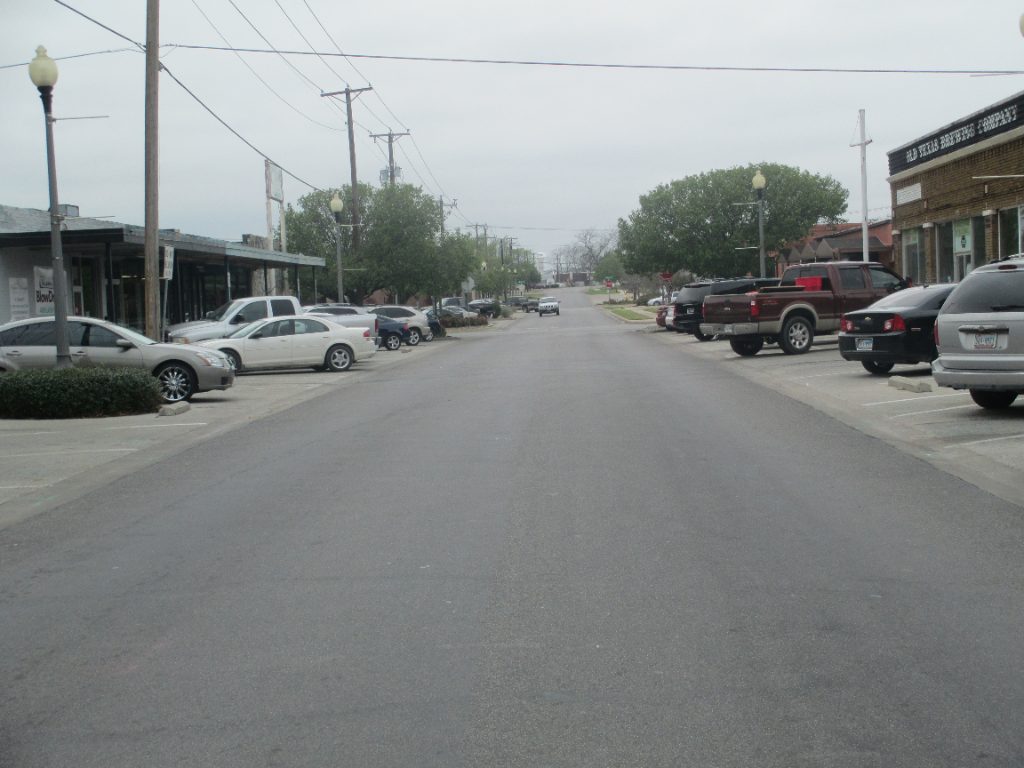
Burleson keeps its beginnings on display: the Old Town blocks where the rail line made a town, the preserved Interurban car parked like a comma in the city's first sentence, storefronts that have watched a century of Main Street. Around that core, the growth rings tell the newer story, subdivisions filling out along Alsbury and the I-35W corridor through the '90s, 2000s, and 2010s, and past the rings, Johnson County acreage begins, where a chimney isn't decor but heating equipment.
Three kinds of city means three kinds of chimney work, and Burleson is the route where we carry all three protocols at once. Founding-era masonry wants patience and matched mortar. Growth-ring metal wants honest end-of-life verdicts. And working wood flues want the discipline of a real maintenance schedule, because a stove that heats a house all winter builds creosote like the serious appliance it is.
The Burleson toolkit covers the spread: working-flue sweeps on the schedule heavy burners actually need, camera inspections that open every senior-masonry conversation, tuckpointing matched into Old Town's founding joints, and stainless cap installation for growth-ring originals that have finished their tour.
Old Town and its surrounding blocks hold the founding file, the oldest masonry on our southern routes, camera-first territory always. The Alsbury corridor carries the '90s-to-2000s ring, builder metal arriving at renewal together. The newer phases south and east keep the growth story running, baseline country. The acreage edges into Johnson County round it out, farmhouse flues and wood stoves doing genuine winter work.
Downtown to the county line is fifteen minutes and a hundred years, and the protocol changes with every ring you cross.
Logistics: Burleson anchors the southern swing down 35W, same-week standard, seven days, with wood-heat households offered first-of-season priority slots.
Working flues earn quick answers, call (214) 225-8874 and we'll take it seriously with you.
A Typical Burleson Project
An acreage place past the city's southern edge, wood stove running since October: the sweep pulled a season's honest creosote, the camera found the liner sound but one stovepipe joint seeping, and the cap screen had matted with ash and leaf litter. Reseat, rescreen, done, with a mid-winter re-sweep penciled in, because this flue works for a living. The homeowner's note said it plainly: first company that treated the stove like the furnace it is.
Burleson's weather diet is the metroplex standard, hail springs, wind fronts, clay that flexes every foundation through the wet-dry cycle, with one local multiplier: usage. A flue that burns nightly from November to March meets every storm with deposits already aboard, and senior Old Town masonry meets them with less material to spare. Weather sets the calendar; the woodpile sets the tempo.
The rulebook is unambiguous about both: NFPA 211 calls for annual inspection of every chimney and venting system, with heavy-use flues cleaned as often as buildup demands, and the Chimney Safety Institute of America keeps the homeowner guidance current. On working flues, the schedule is the safety system.
The Old Town founding file, century masonry, camera-first and matched-mortar. The '90s–2000s rings, builder metal at renewal age. The newest phases, young systems, record-starting years. The acreage working flues, real heat, real schedule, real respect.
Photos before prices, verdicts you can watch on video, and heating flues treated with the seriousness of any furnace. The before-and-after gallery runs from downtown brick to stovepipe steel, and our reviews ride the whole southern loop.
Burleson anchors the southern end of our western loop, straight down I-35W, same-week is the standard, seven days a week, 8AM to 8PM, and we batch the southern routes so drive time never pushes your window.
Three files share the route. Old Town and its surrounding blocks bring genuine senior masonry, soft joints, worn crowns, era liners. The subdivision rings off Alsbury and the 35W corridor bring builder-metal renewals and unserviced gas sets. And the acreage edges bring the hardest-working flues we see anywhere: wood burned as real heat, which means real creosote on a real schedule.
Old Town, the blocks around the historic downtown where Burleson began as a rail stop, home to the preserved Interurban car and the city's founding storefronts. The houses in that orbit carry masonry from the early decades of the 1900s onward, and they get camera-first care, matched mortar, and no shortcuts.
It moves you to the working-flue schedule. A fireplace burned for ambiance makes creosote slowly; a stove or insert run as primary heat makes it fast, and heavy deposits are the direct fuel of chimney fires. Heavy burners should sweep at least annually, many mid-season as well, and NFPA 211 backs exactly that rhythm. We treat heating flues as the serious equipment they are.
A documented start. The growth-ring homes off Alsbury and the corridor run gas log sets in framed chases under builder-grade caps and covers, most untouched since the walkthrough. One baseline visit, burner service, venting and CO check, photos of the chase top, opens the record and usually catches the first round of end-of-life metal before it leaks.
Gladly, the county edges are a regular part of our southern routes. Farmhouse masonry, stove installations, and long-serving heating flues are some of our most common rural calls, and the acreage properties around Burleson burn more wood than almost anywhere else we serve.
Same clay story as the rest of North Texas, told across three ages of foundation: Old Town's senior footings move in a settled rhythm, the growth rings are still finding posture, and rural pier-and-beam adds its own seasonal sway. We measure and photograph every crack so the next look compares against data instead of memory.
The southern corridor takes its hail years like everywhere else in the metroplex, and Old Town's thinner senior crowns chip more easily than young concrete. After any storm spring, put the chimney top in the same photo session as the roof, dated evidence keeps the claim conversation short.
Wood burners: before the season, every season, and mid-winter again if the stove runs daily. Gas households: early fall, ahead of the first-front rush. Old Town masonry: the annual look before the first fire, without exception. The southern routes fill fast once the first cold front lands.
The southern loop links Burleson with Fort Worth up 35W and Mansfield across the eastern line, and all 98 DFW cities we serve are on the map.
Free online quotes · Working-flue schedules · Matched-mortar repairs · Open 7 days
(214) 225-8874📍 1008 Ridgefield Dr, Plano TX 75075 | 🕗 Open 7 days · 8AM-8PM
"Very pleased with the professionalism and promptness of service. The chimney sweep was done quickly and efficiently at significantly less cost than the first quote I got from another company. Happy to recommend Lowes Chimney Sweep to anyone in Plano!"
"Outstanding chimney sweep service from start to finish. They were punctual, courteous, and left our chimney spotless with no mess in our home. I won't use anyone else for chimney services in Dallas TX!"
More reviews from homeowners across the metroplex are on our reviews section, or learn more about our team before you book.
Full-service chimney care across Burleson and the DFW metroplex.
Helpful guides: