The grain elevators tell you everything about Saginaw's weather: this is the metroplex's open northwest shoulder, where rooftop metal works for a living. We fit caps and covers rated for it.
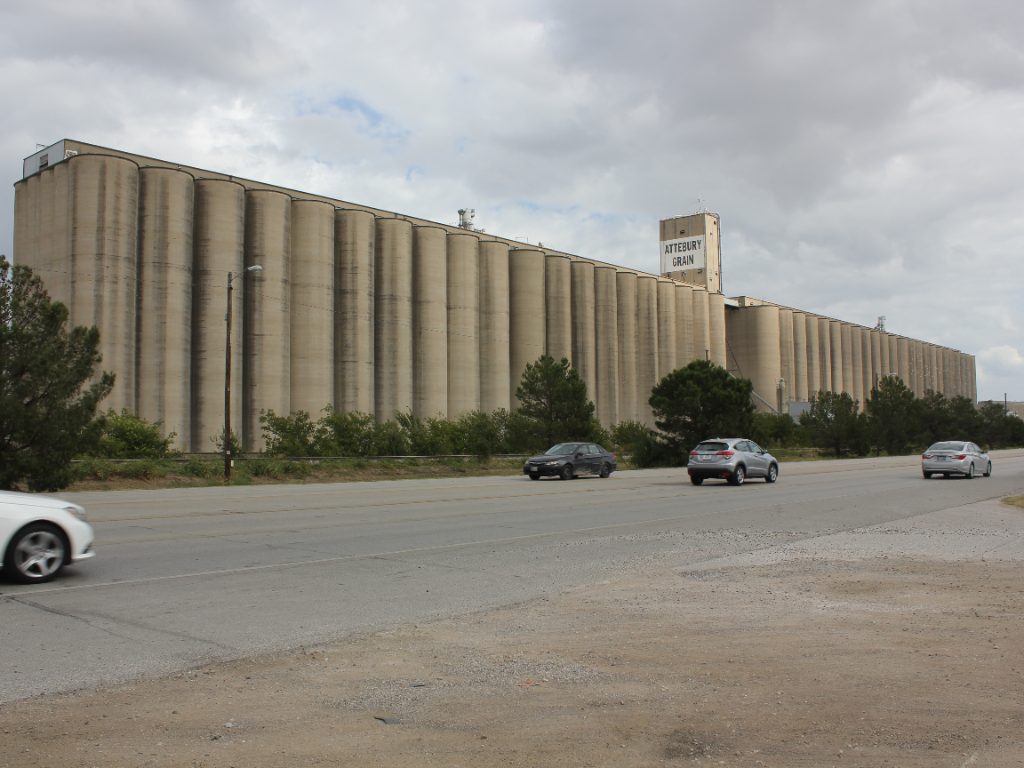
Saginaw announced itself for a century by silhouette: the great grain elevators rising over the BNSF line, visible for miles across the open country northwest of Fort Worth. The elevators are still working, and so is the openness. Around the old rail-and-grain core, Saginaw has grown in waves since the '90s, subdivision after subdivision filling the prairie along Business 287, one of the steadiest growth stories on the metroplex's west side.
Open country makes honest wind, and honest wind is hard on rooftop metal. The same exposure that made this a natural place to stand grain elevators works every cap fastener, flexes every light-gauge chase cover, and fatigues flashing sealant ahead of schedule. Add two decades of builder-grade installations from the growth waves, and Saginaw's most common chimney problems are written in metal, not masonry.
So the Saginaw toolkit is built for the wind: stainless caps specified and anchored for open exposure, custom chase covers cross-broken so nothing ponds, gas fireplace service for the growth-wave log sets overdue their first attention, and flashing repair where movement has finished what the sun started.
The Main Street core by the rail line holds old Saginaw, the small senior file that grew up with the depot and the elevators, served camera-first with matched mortar. The '90s first ring brought the initial subdivision wave and its now-due builder metal. The 2000s–2010s belt along Business 287 and the Bailey Boswell corridor carries the biggest cohort, prime baseline territory. The newest phases keep opening on the prairie edge, joining the route as the rooftops rise.
Rail-town center, boomtown rings, and the wind treats every one of them exactly the same.
Logistics: Saginaw leads the northwest swing off Business 287, same-week standard, seven days, with post-storm calls triaged for active leaks first.
Wind damage compounds quietly, call (214) 225-8874 and we'll get eyes on the metal.
A Typical Saginaw Project
A 2000s two-story off the Business 287 corridor, first owners: the spring fronts had walked the storm collar loose, the builder cover was ponding at the center, and the gas logs had never been serviced. One visit closed it out, custom stainless cover, wind-anchored cap and collar, full gas service with a clean CO reading, every step photographed for the file. The next front came through two weeks later; the rooftop didn't notice.
Saginaw takes North Texas weather at full strength: hail with a clear run-up, straight-line winds that arrive unfiltered, sun that cures sealants brittle, and the clay below doing its slow seasonal arithmetic under every slab. None of it is unusual for the region, it's just less negotiated here, which is why rooftop components age on the fast side of their ratings.
The standard doesn't bend for geography: NFPA 211 calls for an annual inspection of every chimney and venting system, gas included, and the Chimney Safety Institute of America carries the homeowner guidance. On the open shoulder, the annual look is simply worth more.
The rail-core originals, old Saginaw's small senior file, matched-mortar territory. The '90s first ring, builder metal at end of life now. The 2000s–2010s belt, the big cohort, baseline-and-annual years. The newest prairie phases, young systems, perfect record-starting age.
Metal specified for the exposure it will actually live in, photos before prices, and installations meant to be the last one the house needs. The before-and-after gallery shows the upgrades; our reviews ride the whole western loop.
Saginaw opens the northwest leg of our Fort Worth loop, straight up Business 287, same-week appointments are standard, morning calls often land FAST-scheduling, and we run seven days a week, 8AM to 8PM.
Wind-worked metal leads the list: caps loosened or lost outright, chase covers flexed until they pond, storm collars walked out of position, and flashing sealant fatigued early by constant movement. Behind the metal comes the growth-era backlog, gas log sets from the '90s and 2000s waves that have never once been serviced.
A measurable one. Saginaw sits on the metroplex's open northwest shoulder, where wind arrives with little to slow it, the same exposure that made this the grain-elevator capital of Tarrant County. Rooftop metal here lives a harder life than the same parts ten miles southeast: fasteners work loose sooner, light-gauge covers oil-can and pond sooner, and a marginal cap becomes a missing cap in one spring front.
With a documented baseline. Most growth-wave homes here run gas log sets in framed chases under builder-grade metal, untouched since the walkthrough. One visit photographs the chase top, services the burner and gaskets, checks venting and carbon monoxide, and stamps a date on everything, the record every year after builds on.
The original core near Main Street and the rail line, old Saginaw, the blocks that grew up alongside the depot and the elevators. The senior file there is small but genuine, and it gets camera-first handling and matched mortar, a different protocol from the subdivision streets entirely.
Yes, on the usual North Texas schedule: newer slabs spend their first years finding posture, and the chase or stack prints the story in hairlines. Established foundations settle into a rhythm. We measure, photograph, and compare year over year, trend data beats guesswork every time.
The northwest corridor is a habitual hail path, and open exposure means Saginaw catches storms at full strength. Builder galvanized dents readily and a dented cover often starts ponding the same season. Photograph the top in the same claim window as the roof, dated evidence keeps it simple.
Gas households: early fall, ahead of the first-front rush. Wind-metal concerns: right after any spring of named storms, when loosened caps and shifted collars are freshest. And every growth-wave home deserves its baseline year one of your ownership, the earlier the record starts, the more it protects.
Lighting fine is the least demanding test a gas system ever passes. Venting corrodes invisibly, gaskets dry, burners drift rich or lean, and carbon monoxide never announces itself. NFPA 211 calls for the annual look regardless of symptoms, in Saginaw's growth streets, that annual is usually the first the system has ever had.
The northwest swing runs from Saginaw into Fort Worth next door and across the 35W corridor to Keller, and all 98 DFW cities we serve are on the map.
Free online quotes · Wind-rated installations · Post-storm priority · Open 7 days
(214) 225-8874📍 1008 Ridgefield Dr, Plano TX 75075 | 🕗 Open 7 days · 8AM-8PM
"Very pleased with the professionalism and promptness of service. The chimney sweep was done quickly and efficiently at significantly less cost than the first quote I got from another company. Happy to recommend Lowes Chimney Sweep to anyone in Plano!"
"Outstanding chimney sweep service from start to finish. They were punctual, courteous, and left our chimney spotless with no mess in our home. I won't use anyone else for chimney services in Dallas TX!"
More reviews from homeowners across the metroplex are on our reviews section, or learn more about our team before you book.
Full-service chimney care across Saginaw and the DFW metroplex.
Helpful guides: