Lowes Chimney Sweep Blog
Chimney Leaking? Crown, Flashing, or Cap: How We Find It
By the Lowes Chimney Sweep crew · Plano, TX
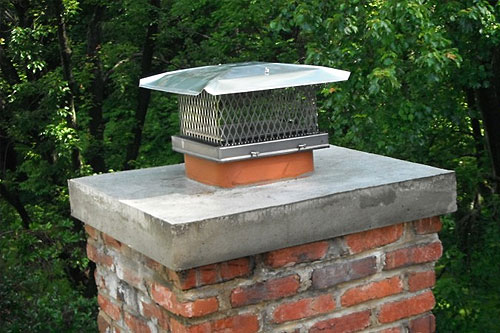
If water is getting into your home through the chimney, the source is almost always one of three parts: the crown, the flashing, or the cap. They sit within a few feet of each other at the top of the chimney, they fail in completely different ways, and the repair for one will do nothing for the other.
This guide explains what each part does, how it fails, what the repair actually involves, and how a technician narrows down which one is responsible. If you would rather work backwards from where the water is showing up inside, start with what the location of the water tells you.
The crown: your chimney’s umbrella
The crown is the sloped concrete or mortar slab across the top of a masonry chimney. Its job is to shed water away from the flue and off the edge of the brick, like a roof over the chimney itself.
How crowns fail
Many crowns were built from ordinary mortar rather than proper concrete, which is not designed to survive decades of standing weather. Texas heat cycling expands and contracts the slab daily, and hairline cracks open up. Water gets into those cracks, and each freeze in January widens them a little more.
Once the crown is cracked, water runs straight down into the masonry and the space around the flue tile, where it has nowhere to escape. That is when you start seeing damage well below the roofline.
What you might notice
- Visible cracks or missing chunks across the top slab, often seen from a ladder or drone photo
- Damp or discolored brick on the upper chimney
- White chalky staining on the outside masonry
- Pieces of concrete or mortar in the gutters or on the roof
What repair involves
Minor cracking can sometimes be sealed with a flexible crown coating that bridges hairline gaps. A crown that is broken up, spalling, or badly undersized needs to be rebuilt properly, with an overhang that throws water clear of the brick and an expansion joint around the flue tile so the two can move independently.
The flashing: where roof meets brick
Flashing is the layered metal barrier sealing the joint where the chimney passes through the roof. Done correctly it is two parts: step flashing woven into the shingle courses, and counter flashing set into a groove cut in the mortar joint and folded down over the top.
How flashing fails
Flashing is the single most common source of chimney leaks, and usually it was never installed correctly to begin with. Common problems include flashing sealed with caulk instead of being properly embedded, missing counter flashing, nail holes through the surface, or metal that has simply corroded and pulled loose over twenty years.
Because roof water naturally collects and channels against the uphill side of the chimney, a small flashing failure handles a surprising amount of water.
What you might notice
- Brown staining on the ceiling near the chimney, often several feet away from the fireplace
- Damp drywall or peeling paint on the wall the chimney runs through
- Water that appears only during wind-driven rain
- Visible gaps, lifted metal, or old cracked caulk where the chimney meets the shingles
What repair involves
Caulk over failing flashing is a temporary patch, not a repair. A proper flashing repair means removing the old metal, installing new step and counter flashing correctly integrated with the roofing, and sealing it into the masonry rather than smearing sealant across the surface.
Honest Work at an Honest Number
Free online quotes · Photos before prices · HEPA dust control · Open 7 days
Call (214) 225-8874Get an Instant Estimate →📍 1008 Ridgefield Dr, Plano TX 75075 | 🕗 Open 7 days · 8AM-8PM
The cap: the cheapest insurance you can buy
The chimney cap is the covering over the flue opening, usually stainless steel with a mesh screen. It keeps rain out of the flue, stops birds and animals from getting in, and blocks embers from landing on the roof.
How caps fail, or never existed
Plenty of chimneys have no cap at all. Others have a cheap galvanized cap that rusted through, or one that was never fastened properly and blew off in a storm. Once the flue is open, every rain event drops water directly onto the smoke shelf and damper.
An open flue is also an open invitation. Squirrels, raccoons and birds all nest in uncapped chimneys, and chimney swifts are federally protected once they start nesting, which limits when they can be removed.
What you might notice
- Water dripping into the firebox during or after rain
- Rust on the damper or damper that will not move freely
- Damp ash, or a musty smell after storms
- Scratching, chirping or fluttering sounds from the flue
- Debris, leaves or twigs in the firebox
What repair involves
This is usually the least expensive of the three fixes and the highest return. A correctly sized stainless steel cap, properly secured, addresses rain, animals and embers at once. On prefabricated chimneys the equivalent part is the chase cover, which is a larger metal lid over the whole chase and a common rust point.
Telling them apart
| Where the water shows up | Most likely source |
|---|---|
| Dripping into the firebox after rain | Cap or crown |
| Ceiling stains near the chimney, away from the fireplace | Flashing |
| Damp interior wall alongside the chimney | Crown or deteriorated masonry |
| White chalky residue on exterior brick | Water moving through the masonry, often crown |
| Rust on damper or firebox metal | Cap, or chase cover on a prefab |
| Water only during driving rain | Flashing, or open mortar joints |
These overlap, which is exactly why guessing leads to repairs that do not solve anything. More than one can be failing at the same time.
How we find yours
A leak inspection works from the top down. The crown gets checked for cracking, thickness and overhang. The flashing gets examined where it meets both the roof and the masonry. The cap or chase cover is checked for presence, fit, corrosion and secure attachment. The masonry itself gets inspected for open joints and spalling brick.
Inside, we look at the firebox, damper and smoke shelf for staining, rust and moisture. Where the water is landing internally often confirms what was found up top.
You should expect photographs of whatever was found. If someone tells you the crown is cracked, you should be able to see the crack yourself before agreeing to any work.
What it costs to find out
Our standard single-flue chimney cleaning with a Level 1 visual inspection is a flat $299, and leak diagnosis is done as part of an on-site inspection. What the repair costs depends entirely on which component failed and how far the damage has spread, and we explain that before anything begins.
The pattern worth knowing: a cap is the cheapest of the three, crown work sits in the middle, and a leak left alone long enough to soak framing and drywall becomes the expensive one. Catching it early is the whole game.
The bottom line
Crown, flashing and cap fail in different ways and need different repairs. Sealing the wrong one wastes money and leaves the leak running. If you have seen water, staining or rust anywhere near your fireplace, get the top of the chimney looked at before the next storm.
Related reading: where the water appears and what it means and warning signs your chimney needs repair.
Quick Answers
What is the most common cause of a chimney leak?
Damaged or improperly installed flashing, the metal barrier where the chimney meets the roof. It is the most frequent source of ceiling stains near a chimney.
Can I just caulk the flashing myself?
Caulk is a short-term patch, not a repair. If the flashing is not properly integrated with the roofing and set into the mortar joint, water will find its way back through.
How do I know if my chimney crown is cracked?
It usually takes a look from the roof or a photo taken from above. Signs visible from the ground include damp upper brick, white chalky staining, or bits of concrete in the gutters.
Is a chimney cap really necessary?
Yes. An uncapped flue lets rain fall directly onto the damper and smoke shelf and lets birds and animals nest inside. It is typically the least expensive of these three repairs.
Can more than one of these be leaking at once?
Often, yes. A cracked crown and failing flashing frequently show up together, since both are weathering on the same chimney at the same age.
What is a chase cover?
On a prefabricated chimney, the chase cover is the metal lid over the top of the chase. It serves the same purpose as a masonry crown and is a common rust and leak point.
How much does it cost to find the leak?
Our standard single-flue chimney cleaning with a Level 1 visual inspection is a flat $299, and leak diagnosis happens during an on-site inspection. Repair pricing depends on which part failed and is explained before any work begins.
Where to go next
Ready for the service? → Chimney Leak Repair
Keep reading: → Why Your Chimney Leaks When It Rains
Did you like this article?
Your feedback helps us write better chimney guides for DFW homeowners.
Found a typo or wording we should improve? Email us and tell us exactly what to fix.