CHIMNEY WATER DAMAGE
Chimney Leak? The Location of the Water Tells You What's Wrong
Lowes Chimney Sweep · Plano, TX · Serving 98 DFW cities
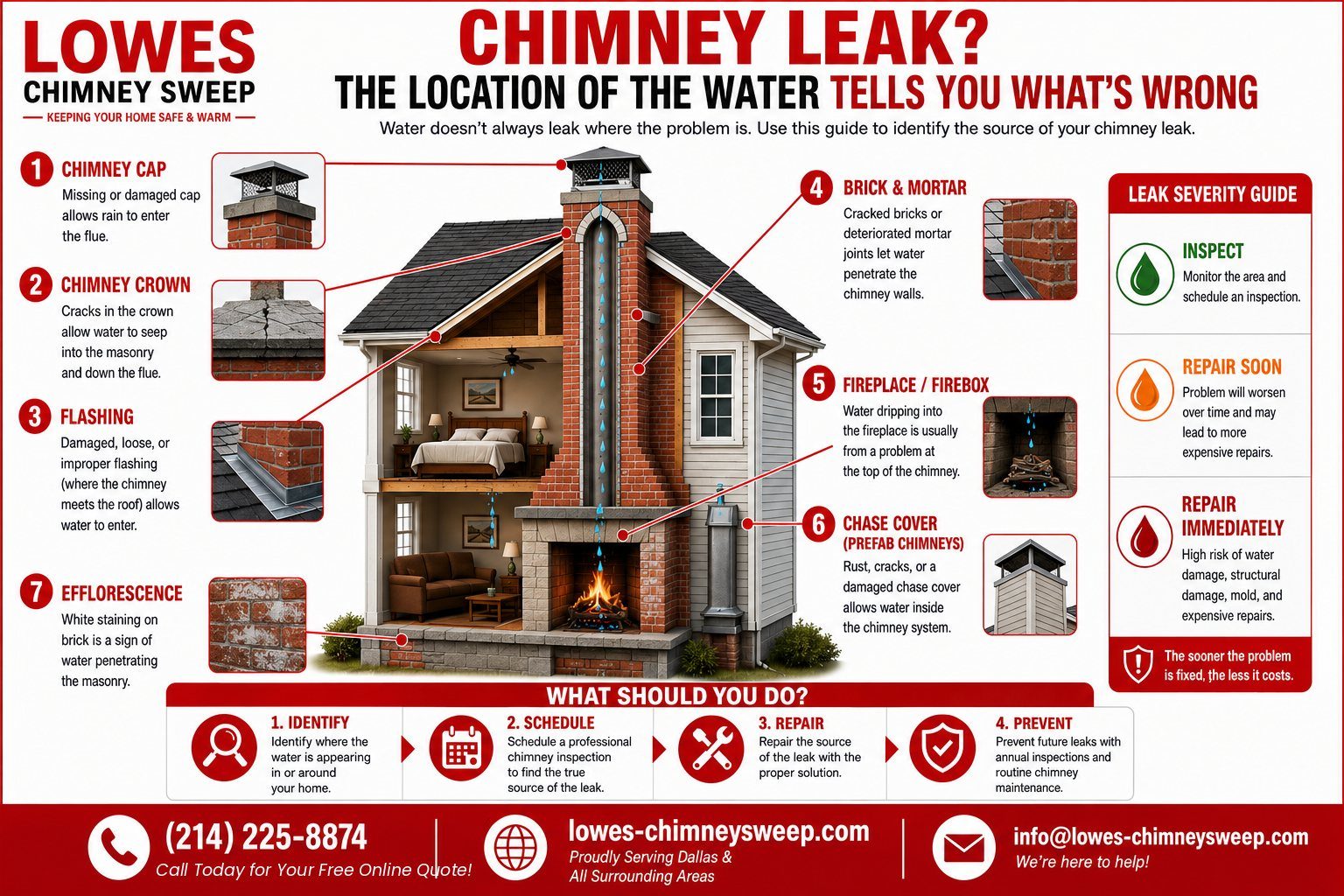
A chimney leak rarely starts where you see the water. Water often travels through hidden spaces before it becomes visible inside your home. That means the stain on your ceiling or the water inside your fireplace may not be coming from the exact location of the damage.
The good news is that where the water appears provides valuable clues about what's actually causing the leak. By identifying the location of the moisture, you can often narrow the problem down to a few common chimney issues before they become expensive structural repairs.
In this guide, we'll explain what different leak locations usually mean, what causes them, how serious they are, and what should be done to stop the problem before it gets worse.
Why Chimney Leaks Should Never Be Ignored
A small chimney leak can quickly become a major repair if left untreated. Water can slowly damage brick, mortar joints, framing, drywall, insulation, ceilings, flooring, and even the fireplace itself.
Moisture can also lead to:
- Mold and mildew growth
- Interior water stains
- Rusted fireplace components
- Masonry deterioration
- Freeze-thaw damage during winter
- Expensive structural repairs
The sooner the source of the leak is identified, the easier and less expensive the repair usually is.
Where Is the Water Coming From?
The location of the water is often the first clue.
Water Dripping Inside the Fireplace
Most Common Causes:
- Damaged or missing chimney cap
- Cracked chimney crown
- Missing or damaged chase cover (prefabricated chimneys)
- Heavy rain entering the flue
If you notice water dripping directly into the fireplace after rain, the top of the chimney is usually the first place to inspect.
A missing chimney cap allows rainwater to fall directly into the flue. Birds, leaves, and debris may also enter the chimney, sometimes requiring animal removal before the cap can be safely replaced.
A cracked chimney crown can also allow water to penetrate around the flue opening and seep into the chimney structure.
Typical Signs:
- Water inside the firebox
- Damp ashes
- Rust on the damper
- Musty smell
- Water after heavy rain
Typical Repair:
- Install or replace the chimney cap
- Repair or rebuild the chimney crown
- Replace a damaged chase cover if necessary
Water Stains on the Ceiling Near the Chimney
Most Common Cause: Damaged roof flashing
Flashing is the waterproof metal barrier installed where the chimney meets the roof.
Over time flashing may:
- Pull away
- Rust
- Crack
- Lose its seal
- Be improperly installed
When flashing fails, rainwater follows the roof and enters the home around the chimney, often creating ceiling stains several feet away from the fireplace.
Typical Signs:
- Brown ceiling stains
- Wet drywall
- Peeling paint
- Water during heavy rain
- Ceiling damage around the chimney
Typical Repair:
- Replace flashing
- Install new waterproof membrane
- Reseal flashing correctly
Water Stains on Interior Walls Around the Fireplace
Most Common Causes:
- Cracked brick
- Missing mortar joints
- Failed waterproofing
- Masonry deterioration
Brick is porous.
Without proper waterproofing, bricks absorb rainwater like a sponge.
Over time, damaged mortar joints allow even more moisture into the chimney.
Eventually, the water migrates through the chimney structure and appears inside your home.
Typical Signs:
- Interior wall stains
- Damp drywall
- Efflorescence (white powder)
- Bubbling paint
- Mold odor
Typical Repair:
- Tuckpoint damaged mortar
- Replace deteriorated bricks
- Apply breathable chimney waterproofing
- Repair damaged masonry
Water Running Down the Outside of the Fireplace
If water appears on the exterior face of the fireplace, it may indicate:
- Masonry leaks
- Crown failure
- Flashing issues
- Exterior brick deterioration
Sometimes multiple problems exist at the same time.
This is why a professional inspection is important before making repairs.
Water in the Basement Near the Chimney
Although less common, water around the chimney foundation may indicate:
- Exterior grading problems
- Foundation cracks
- Poor drainage
- Water entering through deteriorated masonry
A complete inspection should determine whether the problem originates at the chimney or elsewhere around the home.
Rust Around the Fireplace
Rust is often an early warning sign.
Look for rust on:
- Damper
- Fireplace doors
- Metal firebox components
- Chase cover
- Chimney cap
Rust almost always indicates that moisture has been entering the system for some time, even if you haven't yet seen visible water.
White Stains on the Brick (Efflorescence)
White powdery deposits on the outside of the chimney are called efflorescence.
This happens when:
- Water enters the masonry.
- Minerals dissolve inside the brick.
- As the water evaporates, those minerals remain on the surface.
While efflorescence itself is not dangerous, it is a clear warning that water is penetrating the masonry.
Ignoring it can eventually lead to cracked bricks, failing mortar joints, and costly repairs.
Common Chimney Leak Problems
| Problem | Common Symptoms | Typical Repair |
|---|---|---|
| Missing chimney cap | Water in fireplace | Install chimney cap |
| Cracked crown | Water inside chimney | Crown repair or rebuild |
| Damaged flashing | Ceiling leaks | Flashing replacement |
| Missing mortar | Wall stains | Tuckpointing |
| Cracked brick | Water penetration | Masonry repair |
| Failed waterproofing | Damp masonry | Waterproof chimney |
| Rusted chase cover | Water inside prefab chimney | Replace chase cover |
Honest Work at an Honest Number
Free online quotes · Photos before prices · HEPA dust control · Open 7 days
Call (214) 225-8874Get an Instant Estimate →📍 1008 Ridgefield Dr, Plano TX 75075 | 🕗 Open 7 days · 8AM-8PM
Can I Fix a Chimney Leak Myself?
Some homeowners can safely identify visible issues such as a missing chimney cap from the ground.
However, diagnosing the exact source of a chimney leak is often more complicated because water frequently travels before becoming visible.
Replacing caulk without identifying the real source usually provides only a temporary solution.
A professional chimney inspection can identify:
- Entry point of the leak
- Hidden masonry damage
- Flashing condition
- Crown condition
- Chimney cap issues
- Chase cover problems
- Interior moisture damage
This ensures the actual cause is repaired instead of simply treating the symptoms.
How to Prevent Chimney Leaks
Preventive maintenance is far less expensive than repairing water damage.
We recommend:
- Annual chimney inspections and chimney cleaning
- Regular chimney cap inspections
- Crown maintenance
- Flashing inspections after major storms
- Waterproofing masonry every several years when appropriate
- Prompt repair of cracked mortar joints
- Removing vegetation growing against the chimney
Routine maintenance helps prevent expensive structural damage and extends the life of your chimney.
When Should You Call a Professional?
Contact a chimney professional if you notice:
- Water inside your fireplace
- Ceiling stains near the chimney
- Wet walls around the fireplace
- White staining on chimney brick
- Rusted fireplace components
- Pieces of brick or mortar falling
- Musty odors after rain
- Visible cracks in the chimney crown
- Loose or missing chimney cap
Waiting usually allows the damage to spread, increasing repair costs over time.
Even a small water stain can be the first sign of a much larger problem hidden inside your chimney.
Whether the issue is a damaged chimney cap, deteriorated flashing, cracked masonry, or a failing chimney crown, identifying the source early can save you thousands of dollars in future repairs.
If you've noticed water around your fireplace or chimney, schedule a professional inspection. An experienced chimney technician can locate the source of the leak, recommend the proper chimney leak repair, and help protect your home from further water damage before the problem becomes more serious.
Quick Answers
Why is water dripping into my fireplace?
The most common causes are a missing chimney cap, a cracked chimney crown, or a damaged chase cover that allows rainwater to enter the chimney.
Can roof flashing cause a chimney leak?
Yes. Damaged or improperly installed flashing is one of the most common reasons homeowners find water stains on ceilings near the chimney.
Is chimney waterproofing worth it?
Professional breathable waterproofing helps protect brick and mortar from absorbing rainwater while still allowing trapped moisture to escape.
What is the white powder on my chimney?
The white residue is called efflorescence. It indicates that water is moving through the masonry and carrying mineral deposits to the surface.
Can a chimney leak cause mold?
Yes. Persistent moisture inside walls, ceilings, or insulation can create conditions that encourage mold growth if the leak is not repaired.
Where to go next
Ready for the service? → Chimney Leak Repair
Keep reading: → Why Your Chimney Leaks When It Rains
Did you like this article?
Your feedback helps us write better chimney guides for DFW homeowners.
Found a typo or wording we should improve? Email us and tell us exactly what to fix.