When our service map promises Plano to Weatherford, this is the Weatherford, the 1886 courthouse, the Victorian square, the Parker County acreage where wood is real heat. The western line ends here, at full standard.
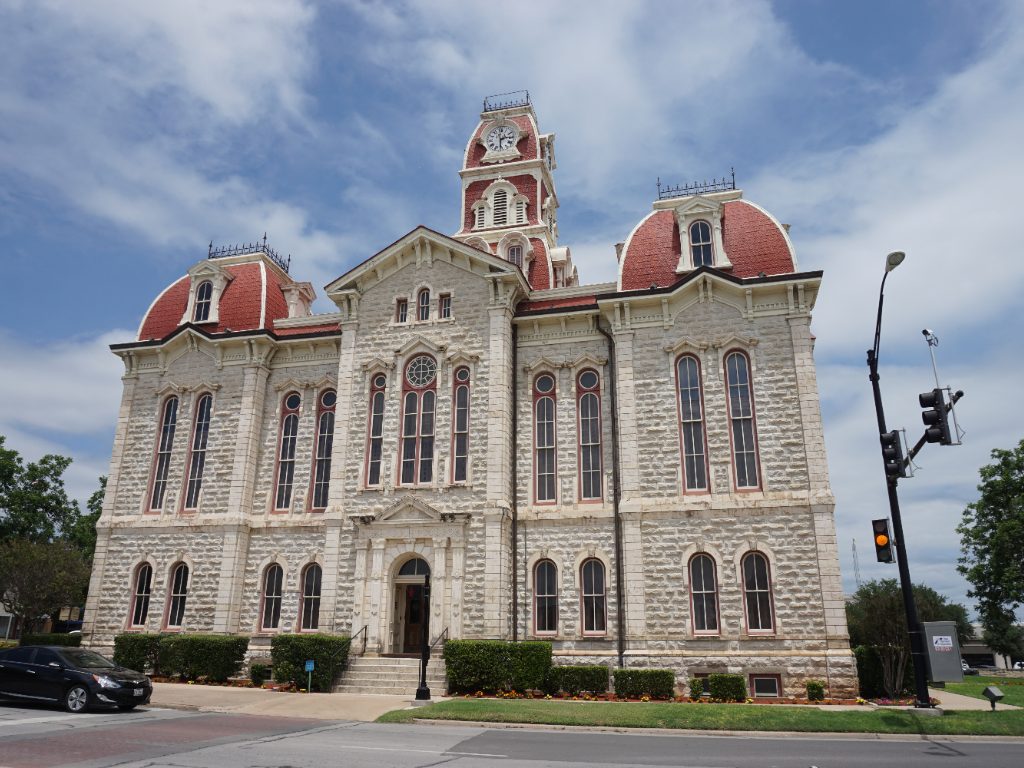
Every route needs a far end, and ours is a good one: the 1886 Parker County Courthouse rising over Weatherford's square, one of the handsomest pieces of Victorian masonry in Texas, ringed by the historic blocks that grew up with it. This is the Peach Capital, the cutting-horse capital, the county seat where the metroplex finally hands off to the Cross Timbers, and the westernmost promise on our service map, kept weekly.
A courthouse town carries a courthouse town's chimneys. The square orbit holds Victorian and early-1900s stacks, the most senior residential masonry anywhere we work, tall and lime-mortared and proud. The mid-century neighborhoods run the classic renewal schedule. The newer subdivisions bring builder metal coming due. And the Parker County acreage burns wood as genuine heat, which makes those flues working equipment on a working schedule.
The Weatherford toolkit spans the whole line: restoration and rebuild work reserved for what the camera truly proves, era-matched tuckpointing from lime-mortar Victorians to '70s brick, working-flue sweeps on the schedule heavy burners demand, and crown repair for every generation of top the western weather has worn.
The courthouse-square orbit holds the founding file, Victorian and early-1900s masonry, the senior stock of the entire route. The mid-century neighborhoods spread the '50s–'70s cohort outward on the standard renewal clock. The newer subdivisions along the I-20 side add the young file, and the Parker County acreage rounds it out, farmhouse flues and wood stoves doing honest winter work under open western sky.
Square to county line is one route and four protocols, and we carry all four every trip west.
Logistics: Weatherford anchors the far end of our western loop down I-20, same-week standard, seven days, jobs batched so Parker County never waits on metro traffic.
The far end of the line gets the same fast answers, call (214) 225-8874.
A Typical Weatherford Project
A Victorian in the square's orbit, tall twin stacks against the sky: the camera found lime mortar soft on the weather faces, one flue honest but unlined, and crowns patched across generations, venerable bones, renewable skin. The plan came staged: reline and repoint this season, crowns next, lime-appropriate mortar throughout, everything on video. The same trip, an acreage stove flue west of town got its pre-season sweep. That's the western line: a century and a woodpile on one route sheet.
Parker County meets the metro's storms before the metro does, hail that makes the news here first, fronts that arrive with their full running start, and Cross Timbers ground that varies foundation behavior lot to lot where the blackland gives way to sand. Century masonry answers with a hundred years of proof; working stoves answer with deposits that don't wait; both answer best with an annual look.
The standard travels the whole line: NFPA 211 calls for annual inspection of every chimney and venting system, heavy-use flues cleaned as often as buildup demands, and the Chimney Safety Institute of America carries the homeowner guidance. At the end of the western line, the annual habit is the whole plan.
The square-orbit Victorians, the route's most senior file, restoration protocol always. The mid-century neighborhoods, the big cohort, crown-and-mortar season. The I-20 subdivisions, young metal, baseline years. The county acreage, working flues, working schedule.
Lime-appropriate mortar where the century demands it, working-flue seriousness where the woodpile does, and photos before prices everywhere. The before-and-after gallery shows the range, and our reviews ride the western line end to end.
Really. Weatherford is the western anchor of the promise on our service-areas page, FAST-scheduling service that stays true from Plano to Weatherford, and the way we keep it is routing: western jobs batch together down I-20, so a Parker County address rides a dedicated loop instead of fighting crosstown traffic. Same-week is the standard; call early and FAST-scheduling happens more than you'd think.
The full western spread: square-orbit Victorians with century mortar and pre-standard flues, mid-century neighborhoods on the classic crown-and-cap schedule, newer subdivisions with builder metal coming due, and Parker County acreage where wood stoves work all winter and build creosote like the heating equipment they are.
With the oldest-file protocol we own. The blocks around the 1886 courthouse hold some of the most senior residential masonry anywhere on our routes, tall Victorian stacks, lime-era mortar, flues from before lining standards existed. They get unhurried camera surveys, era-appropriate matched mortar, minimal intervention, and full photographic records. The goal is a second century, not a modern-looking patch.
The working-flue schedule. A stove that heats a Parker County place through the winter builds creosote fast, and heavy deposits are the direct fuel of chimney fires. Annual sweeps are the floor for heavy burners, many need mid-season attention too, and NFPA 211 backs exactly that rhythm. We treat rural heating flues as the serious equipment they are, and the county roads are a normal part of our western loop.
The courthouse-square orbit, the Victorian and early-1900s blocks that grew up around the Parker County seat, with age stepping down through the mid-century neighborhoods and again toward the newer subdivisions and the acreage builds. The square file is the most senior masonry on our entire western line.
Noticeably. Weatherford sits where the blackland begins giving way to sandier, more variable Cross Timbers ground, so foundation behavior varies lot to lot more than in the flat clay suburbs. Century foundations here settled generations ago; newer builds find posture on their own local schedule. Either way we measure and photograph, so verdicts rest on trend data rather than one afternoon's look.
Western storms arrive here first and often strongest, Parker County regularly leads the metro's hail news. Century crowns chip easily and builder metal dents readily, so any storm spring, put the chimney top in the same photo session as the roof. Dated evidence keeps claims short, and on Victorian masonry it protects the historic record too.
Almost always, and usually for less than people fear. Square-era masons built tall and true; what fails is the renewable layer of mortar, crown, and liner, which restoration replaces in kind. The camera makes the case either way: most century stacks earn a staged restoration plan, and the rare one that genuinely needs rebuilding will have proven it on video before we say the word.
Wood burners: before the season, every season, and mid-winter if the stove runs daily. Square-era masonry: the annual look before the first fire, no exceptions. Everyone else: fall for burners, spring for the storm check, and remember the western loop fills fast once the first cold front crosses Parker County.
The western loop runs from Weatherford back through Fort Worth and past Benbrook on the loop's southwest corner, and all 98 DFW cities we serve are on the map.
Free online quotes · Victorian restoration craft · Working-flue schedules · Open 7 days
(214) 225-8874📍 1008 Ridgefield Dr, Plano TX 75075 | 🕗 Open 7 days · 8AM-8PM
"Very pleased with the professionalism and promptness of service. The chimney sweep was done quickly and efficiently at significantly less cost than the first quote I got from another company. Happy to recommend Lowes Chimney Sweep to anyone in Plano!"
"Outstanding chimney sweep service from start to finish. They were punctual, courteous, and left our chimney spotless with no mess in our home. I won't use anyone else for chimney services in Dallas TX!"
More reviews from homeowners across the metroplex are on our reviews section, or learn more about our team before you book.
Full-service chimney care across Weatherford and the DFW metroplex.
Helpful guides: