Lowes Chimney Sweep Blog
When Should Chimney Mortar Be Tuckpointed Instead of Rebuilt?
By the Lowes Chimney Sweep crew · Plano, TX
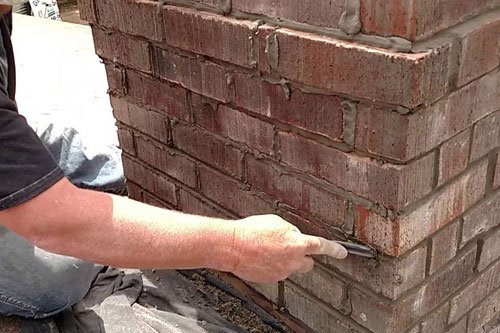
If the mortar joints are receding or cracking but the bricks are sound and the chimney stands plumb, tuckpointing restores it. If the bricks themselves are failing across large areas, the stack leans, or past repairs keep failing, a rebuild, often partial, is the honest answer. The whole decision comes down to one question: which material gave up, the mortar or the brick it holds?
Why Mortar Fails Before the Brick Does
Mortar is the sacrificial part of a chimney by design. It is intentionally softer than the brick around it, so seasonal movement, thermal swings, and weather wear out the joints instead of the masonry units. Rain and wind erode the joint faces year after year until they recede, and once a joint sits back from the brick face, water starts collecting in it, and water accelerates everything. A chimney with receding joints and crisp, solid brick is not a failing chimney. It is a chimney doing exactly what it was built to do, and asking for its scheduled maintenance.
What Tuckpointing Actually Is
Tuckpointing, repointing, if we are being precise, is not smearing new mortar over old joints. The failed mortar is ground out to a proper depth, the joints are cleaned, and fresh mortar is packed and tooled in place. Two matches make or break the job. Strength: the new mortar must match the softness of the original, because a modern, too-hard mortar does not flex, it transfers every bit of seasonal movement into the faces of older, softer brick and slowly pops them apart. A bad repointing job can genuinely destroy brick that was healthy. Color: matched sand and mortar tone is the difference between an invisible repair and a chimney that looks striped.
There is also a middle option most homeowners never hear about: a crown-down partial rebuild. The top few courses of a chimney take the worst of the weather, so it is common to find failed brick up top and sound masonry below. In that case the failed top courses and crown are rebuilt and the rest is tuckpointed, a full teardown is rarely necessary.
What You Can Safely Check
From the ground, compare the joints to the brick faces. Joints that are receding, sandy, or hairline-cracked next to crisp, intact brick point to tuckpointing. Brick faces that are flaking, cracked through, or missing chunks across wide areas point toward rebuilding. Drag a key across a low joint, solid mortar resists; failing mortar powders. Sight up the chimney edge from two different sides to check that it is plumb, and use binoculars for the top courses rather than a ladder. Finally, note the pattern: damage concentrated in the top few feet suggests a partial-rebuild candidate, while scattered joint erosion with sound brick is classic tuckpointing territory.
When the Chimney Is Past Tuckpointing
Some signs mean the joint question is already settled and the structure itself is the concern. A visible lean, daylight showing through open joints, or bricks that have dropped into the yard or onto the roof mean the stack is no longer holding itself together reliably. Keep people and parked cars out of the area beside the chimney, stop using the fireplace, and have the structure assessed before anything else. Tuckpointing cannot straighten a leaning stack, and mortar packed into a moving crack simply cracks again.
How a Professional Makes the Call
A masonry assessment starts with the brick, not the mortar: we sound the units, check for spalling and through-cracks, verify the stack is plumb, and map where the damage concentrates. If the brick is healthy, our chimney tuckpointing service grinds the joints to depth and repoints with mortar matched in strength and color to the original. If the top courses have failed but the base is sound, a partial chimney rebuild from the crown down replaces only what is actually gone. And when the damage is mixed, a few failed bricks here, eroded joints there, broader chimney masonry repair combines both, so you pay for the repair the chimney needs, not the biggest one on the menu.
Honest Work at an Honest Number
Free online quotes · Photos before prices · HEPA dust control · Open 7 days
Call (214) 225-8874Get an Instant Estimate →📍 1008 Ridgefield Dr, Plano TX 75075 | 🕗 Open 7 days · 8AM-8PM
The DFW Factor
North Texas chimneys live on expansive clay soil that swells with spring rain and shrinks hard in August drought, and every bit of that seasonal movement works through the masonry above. The mortar joints absorb the motion, which is why DFW chimneys so often show receding, cracked joints while the brick still looks nearly new, and why catching the problem at the tuckpointing stage matters more here than in most places. Add the occasional hard freeze driving water deeper into open joints, and an eroded joint left alone rarely stays a mortar-only problem for long.
Not sure whether your joints need repointing or your chimney needs more? Send us a photo of the worst section and request a Free Online Quote, or call (214) 225-8874, we will tell you honestly whether it is a tuckpointing job, a partial rebuild, or nothing urgent at all.
Quick Answers
Is tuckpointing much cheaper than rebuilding a chimney?
Substantially, repointing joints is a fraction of the cost of replacing masonry, which is exactly why catching failing mortar before the brick starts going matters. The assessment tells you which side of the line you are on before any work is quoted.
Can I repoint the joints myself with bagged mortar from the hardware store?
We would not recommend it, standard bagged mortar is usually harder than older brick, and a too-hard joint transfers movement stress into the brick faces and spalls them. Matching the mortar's strength and color to the original is most of the skill in the job.
How long does a proper tuckpointing job last?
Ground to proper depth and repointed with correctly matched mortar, decades, the new joints should weather at roughly the pace the originals did. A repair that fails within a few years usually means the joints were surface-smeared or the mortar was mismatched.
Where to go next
Ready for the service? → Chimney Tuckpointing
Keep reading: → Repair Without a Full Rebuild?
Did you like this article?
Your feedback helps us write better chimney guides for DFW homeowners.
Found a typo or wording we should improve? Email us and tell us exactly what to fix.