
Lowes Chimney Sweep Blog
Chimney Crown Cracked? Repair vs. Rebuild Cost in North Texas
By the Lowes Chimney Sweep crew · Plano, TX
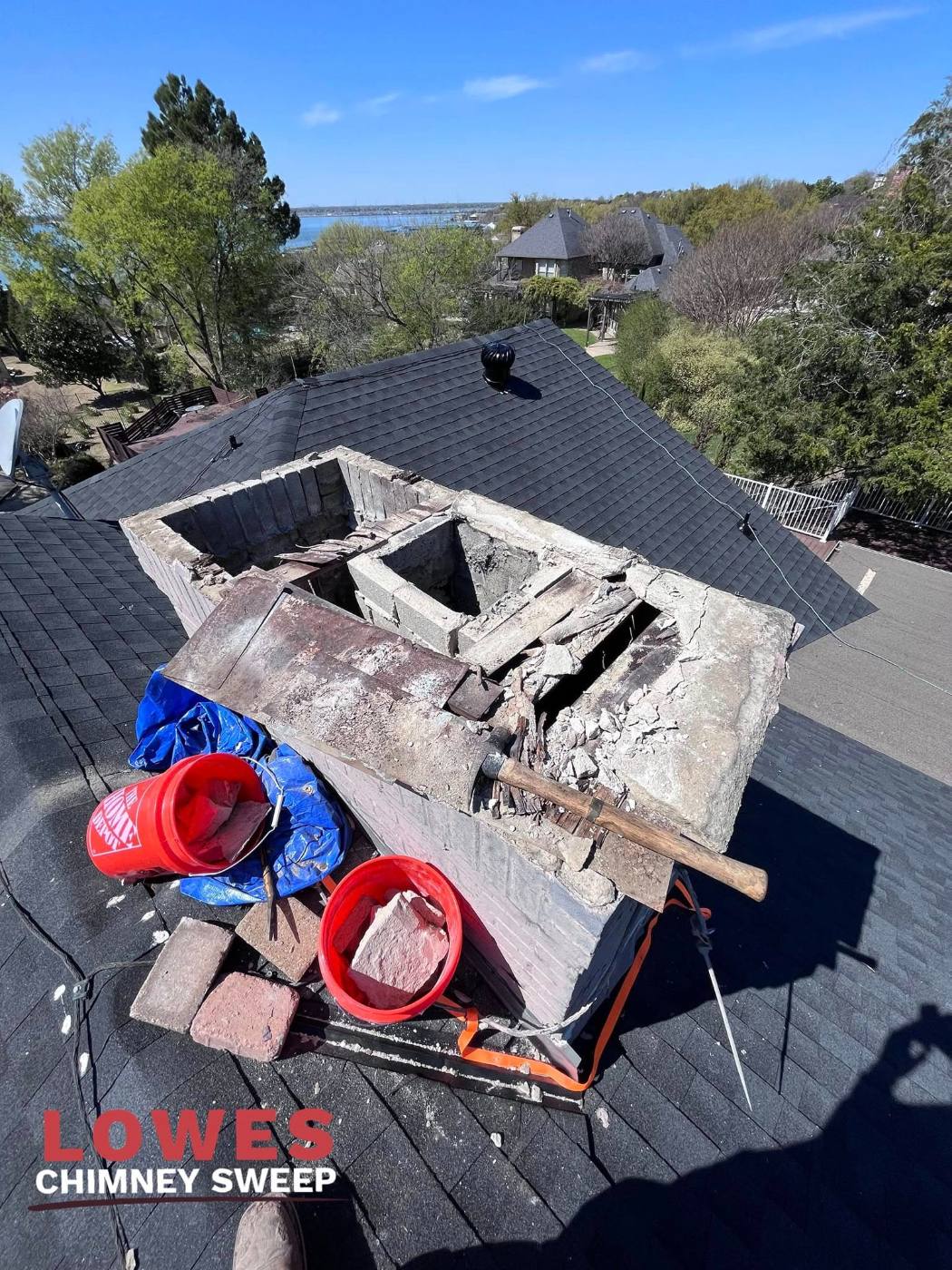
The chimney crown is one of the most important parts of your chimney and one of the least understood. It's the flat, sloped slab of concrete or mortar at the very top, not the metal cap, but the solid masonry surface the cap sits near, and its entire job is to shed rainwater away from the bricks and the flue below. When it cracks, water stops running off and starts running in. The question every North Texas homeowner faces at that point is simple to ask and expensive to get wrong: does this crown need a repair, or a full rebuild? Here's how to tell, what each one costs, and how to make sure you only pay for what the chimney actually needs.
What the Chimney Crown Actually Does
Picture the top of a masonry chimney. The flue opening rises out of the middle, and around it is a solid slab that slopes gently downward toward the edges, ending in a small overhang. That slab is the crown. Its slope and overhang are engineered to carry rain, snowmelt, and North Texas hail runoff away from the chimney structure and drop it clear of the brick face. A good crown is the umbrella over the entire chimney.
When the crown is intact, everything beneath it stays dry: the mortar joints, the brick, the flue liner, and the flashing where the chimney meets the roof. When the crown fails, that protection disappears at the highest and most exposed point of the whole system, which is exactly why a cracked crown causes damage out of proportion to its size. It's a small part with an enormous responsibility.
Why Crowns Crack in North Texas
Crowns crack for the same reasons the rest of a DFW chimney does, only faster, because the crown takes the worst of the weather. Many crowns were poured too thin or without proper reinforcement or expansion joints when the home was built, so they were destined to crack eventually. Then our climate goes to work: water settles in tiny surface cracks, freezes on a cold North Texas night, expands, and pries the crack wider, the freeze-thaw cycle, repeated every winter.
On top of that, the crown bakes and expands under brutal summer heat, then contracts, then gets pounded by hail. Our expansive clay soil shifts the whole chimney subtly year-round, flexing the masonry. Add normal aging and you get the near-universal result: almost every older chimney in the metroplex eventually develops crown cracks. Catching them while they're small is the difference between a cheap fix and a big one.
Repair: When the Crown Can Be Saved
If the crown is structurally sound and the damage is limited to surface cracks, hairlines, or minor spalling, it can usually be repaired rather than replaced. Repair means cleaning out and sealing the cracks and coating the crown with a flexible, waterproof crown sealant designed to bridge small gaps and flex with temperature swings. Done properly, a repair restores the water-shedding job and buys the crown many more years.
Repair is the right call when you catch the problem early, which is the whole argument for annual inspection. A crown with a few tight cracks and no crumbling is a straightforward, affordable chimney crown repair, typically a few hundred dollars depending on size and access. The mistake homeowners make is waiting: a crown that could have been sealed cheaply this year becomes a rebuild candidate after two more wet winters widen the cracks and let water rot the masonry underneath.
Rebuild: When Repair Isn't Enough
Some crowns are too far gone to save. When the concrete is deeply cracked all the way through, large chunks have broken off, the slab is crumbling, or water has already been getting in for years, sealing the surface won't fix a structure that's failing underneath. In that case the crown has to be rebuilt: the old material is removed and a new, properly sloped, correctly reinforced crown is formed and poured in its place, with the right overhang and expansion joint so it lasts.
A rebuild costs materially more than a repair, it's more labor, more material, and more time on the roof, but on a failed crown it's the only option that actually solves the problem. Paying for a repair on a crown that needs a rebuild is throwing money away, because the sealant sits on top of a structure that keeps deteriorating. A rebuilt crown, by contrast, resets the clock and protects everything below it for decades. Larger or badly damaged crowns are handled as part of full chimney masonry repair when surrounding brick is affected too.
Repair vs. Rebuild: What It Comes Down To on Cost
Rather than a single price, think in tiers. A crown repair, sealing and coating a sound crown, is the lower-cost option and the one you want to qualify for by acting early. A crown rebuild is a significantly larger investment because you're paying to remove and re-pour a structural slab at the top of the chimney. The gap between the two is exactly why an honest diagnosis matters so much: the same cracked crown can be a modest bill or a major one depending on how far the damage has progressed, and the only way to know which camp you're in is to have it looked at closely.
Because every crown, roof height, and access situation is different, we don't quote a flat number sight unseen. What we do is inspect the crown, show you photos of its actual condition, and tell you plainly whether it's a "seal it and you're good" repair or a "this one needs rebuilding" situation, with an itemized price either way, so you can decide from evidence instead of a sales pitch.
Why a Cracked Crown Gets Expensive If You Wait
The reason we push homeowners to deal with crown cracks quickly is the cascade of damage a failing crown causes below it. Water pouring through a cracked crown soaks the mortar joints and accelerates their erosion. It saturates the brick, which then spalls, flakes and crumbles, in the next freeze. It runs down to the flashing and finds its way toward the ceiling and framing inside your home. Worst of all, it can reach the flue liner and the interior of the chimney, turning a small crown problem into a repair bill that spans the whole structure.
In other words, a cracked crown is rarely just a cracked crown for long. It's the leak that quietly funds every other chimney repair. Spending a few hundred dollars to seal a crown now can prevent thousands in masonry, liner, and interior water damage later, which is why crown maintenance has one of the best returns of anything you can do to a chimney.
Protecting the Fix So It Lasts
Whether you repair or rebuild, a couple of steps make the result last far longer. A proper chimney cap keeps a large share of the rain off the crown and flue in the first place, reducing how hard the crown has to work. Waterproofing the surrounding masonry adds another layer of defense against North Texas moisture. And an annual look at the crown catches new hairlines while they're still a cheap seal rather than a rebuild. These are small, inexpensive habits that protect a significant investment.
The through-line is the same one that runs through good chimney care generally: water is the enemy, the crown is the front line, and catching problems early is dramatically cheaper than fixing the damage they cause. A crown you maintain is a crown you rarely have to rebuild.
Get an Honest Crown Assessment in DFW
If you've seen cracks on your crown, water stains near the chimney, or spalling brick up top, the smart move is to have the crown evaluated before the next wet season makes the decision for you. Lowes Chimney Sweep is certified, insured, and 5-star rated across the Dallas-Fort Worth metroplex. We'll get on the roof, photograph the crown's real condition, and give you a straight answer on repair versus rebuild with an itemized price, no pressure to jump to the expensive option, and no cheap patch on a crown that genuinely needs rebuilding. Call (214) 225-8874 to schedule.
Honest Work at an Honest Number
Free online quotes · Photos before prices · HEPA dust control · Open 7 days
Call (214) 225-8874Get an Instant Estimate →📍 1008 Ridgefield Dr, Plano TX 75075 | 🕗 Open 7 days · 8AM-8PM
Not sure whether your crown needs a patch or a rebuild? Our chimney crown repair and documented camera inspection pages show exactly how we diagnose it, or request your Free Online Quote from the form below.
Quick Answers
What is a chimney crown and how is it different from the cap?
The crown is the solid, sloped concrete or mortar slab at the top of the chimney that sheds water off the masonry. The cap is the metal-and-mesh cover over the flue opening. They work together, but the crown is the structural umbrella and the cap keeps rain and animals out of the flue itself.
Can a cracked chimney crown just be sealed, or does it need rebuilding?
It depends on the damage. A structurally sound crown with hairline or surface cracks can usually be sealed with a flexible waterproof coating. A crown that is deeply cracked through, crumbling, or missing chunks needs to be rebuilt. Only a close look tells you which you have.
How much does chimney crown repair cost in DFW?
A crown repair on a sound crown is typically a few hundred dollars, while a full rebuild costs significantly more because the slab has to be removed and re-poured. The exact price depends on crown size, damage, and roof access, so we quote it after inspecting and photographing the crown.
What happens if I ignore a cracked crown?
Water pours through the crack and soaks the mortar, brick, flashing, and eventually the flue liner and interior of your home. A small, cheap-to-seal crack becomes spalling brick, a rotted crown, and interior water damage, turning a few hundred dollars into thousands. It rarely stays a small problem.
Why do chimney crowns crack so often in North Texas?
Many were poured thin or without reinforcement, then our freeze-thaw cycles, summer heat, hail, and shifting clay soil work them over. Water in a small crack freezes, expands, and widens it every winter. That is why crown cracks are nearly universal on older DFW chimneys and worth checking yearly.
Where to go next
Ready for the service? → Chimney Crown Repair
Keep reading: → Why Your Chimney Leaks When It Rains
Did you like this article?
Your feedback helps us write better chimney guides for DFW homeowners.
Found a typo or wording we should improve? Email us and tell us exactly what to fix.