Lowes Chimney Sweep Blog
Chimney Damper Repair & Replacement Cost in Dallas 2026
By the Lowes Chimney Sweep crew · Dallas-Fort Worth, TX
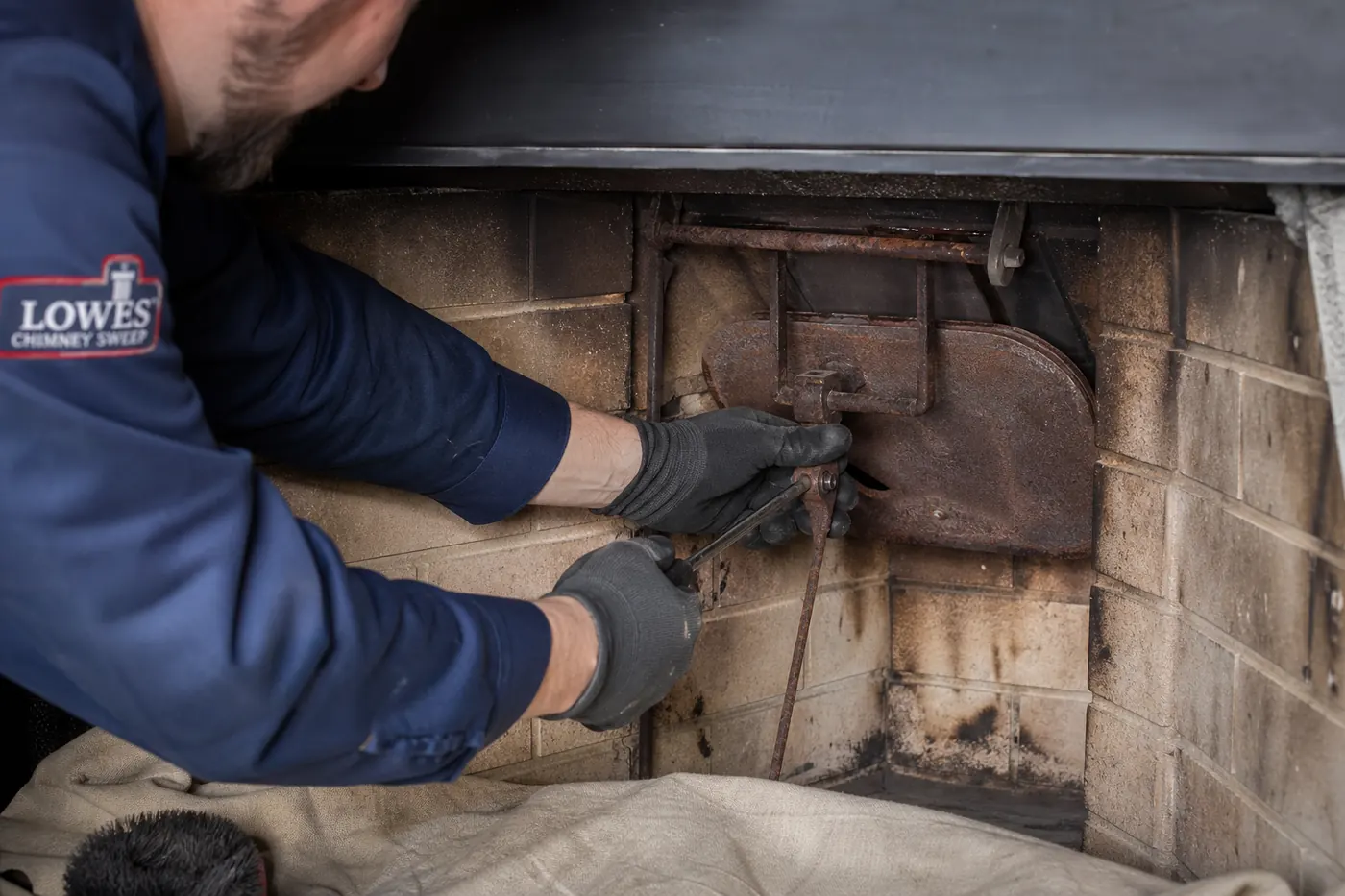
A chimney damper repair or replacement in Dallas costs $199 to $1,200 in 2026. Damper work ranges from freeing and adjusting an accessible throat damper to installing a compatible top-sealing system. Rust, missing parts, geometry, and access matter. The published planning price is $199 to $1,200. Final price is provided after a free on-site inspection, with photographs and a written scope before approved repair work.
- Damper repair or replacement: $199 to $1,200 (from freeing a throat damper to a top-sealing system)
- Standard single-flue cleaning + Level 1 inspection: $299
- Buyer, seller, or real-estate-agent inspection: $99 (no cleaning); second opinion on a written report: free
- Final price: after a free on-site inspection with photographs and a written scope
How much does chimney damper repair cost in Dallas in 2026?
| Item | Published price or rule |
|---|---|
| Full standard single-flue cleaning + Level 1 inspection | $299; higher for nonstandard conditions |
| Buyer, seller, or real-estate-agent inspection only | $99; no cleaning included |
| Second opinion with an existing written report | Free |
| Chimney Damper Repair & Replacement | $199 to $1,200 |
| Final repair price | After a free on-site inspection |
There is no $99 chimney cleaning. That number is reserved for the transaction-focused buyer, seller, or agent inspection. A homeowner booking the standard cleaning receives the full single-flue cleaning and Level 1 inspection for $299.
What does chimney damper repair include?
The working scope may include plate; frame; handle; linkage; rust; seal; top-sealing cable and cap assembly. The proposal should say which of these items is being serviced and which are outside the job. Repair stable complete hardware; replace missing, fractured, badly rusted, or incompatible components.
A technician should not use a broad label when a specific component can be named. The difference between sealing, partial repair, replacement, and rebuilding matters because each keeps or removes a different amount of existing work. It also changes preparation, material, labor, cure time, and the conditions that could affect the final price.
Why this matters specifically in Dallas-Fort Worth
Rain entering an uncapped flue commonly rusts Dallas throat dampers, while long cooling seasons make unwanted air leakage noticeable.
The National Weather Service describes DFW as humid subtropical with hot summers and a wide annual temperature range. It also notes that severe-weather frequency peaks in spring and that large hail and damaging winds occur somewhere in the Metroplex nearly every year. These are useful planning facts, but they do not prove which component failed at a particular home. Photographs and inspection must make that connection.
Neighborhood and building type matter too. Historic masonry in Old East Dallas, the M Streets, Lakewood, and Oak Cliff is different from postwar ranch chimneys around White Rock Lake and factory-built fireplace chases in newer northern suburbs. The method should follow the material and system actually installed.
Why isn't the lowest price the whole decision?
Lowes Chimney Sweep uses published planning ranges to help Dallas-Fort Worth homeowners budget before an appointment. The final price follows a free on-site inspection because a service title cannot reveal quantity, access, material, system type, or concealed conditions. If the scope changes, the technician should show the condition, explain the boundary, and obtain approval before additional work.
The sitewide anchor is $299 for a full standard single-flue cleaning plus Level 1 inspection. That is the cleaning price. The $99 inspection is only for a buyer, seller, or real-estate agent and does not include cleaning. Homeowners who already have a written report can request a free second opinion.
What should a chimney damper estimate show?
A useful DFW chimney estimate names the component, location, quantity, removal boundary, preparation, material, installation method, access plan, cleanup, and exclusions. Photographs should include an overview showing where the condition sits and a close-up showing the actual defect. A close-up without context can make a small condition look like the whole chimney; an overview alone can hide the detail.
Compare two estimates only after confirming that both include the same work. One proposal may retain sound material while another removes it. One may include staging, roof protection, debris disposal, and completion photographs while another lists only a service name. The lowest total is not the same value when the scope is smaller or undefined.
Six cost factors to compare
Quantity: Count flues, components, courses, joints, panels, penetrations, or route length. Condition: Separate routine wear from corrosion, displacement, missing material, hardened deposits, or damage extending behind the visible surface. Access: Identify roof pitch, height, fragile roofing, interior protection, narrow lots, and whether staging is needed. Preparation: Removal, cleaning, grinding, surface conditioning, temporary protection, and disposal can be as important as the new material. Compatibility: Masonry, metal, liners, venting, gas parts, and prefab components must work with the system that remains. Coordination: Roofing, gas, electrical, framing, historic review, permits, wildlife restrictions, or insurance documentation may create a separate responsibility.
The estimate should connect each applicable factor to a price, not hide all six inside a generic “labor and materials” line. If a condition cannot be confirmed until cleaning, access, or limited removal occurs, the proposal should identify that uncertainty and explain how approval will be handled.
What the $299 anchor includes, and what it does not
For one standard flue, the $299 package combines a full cleaning with a Level 1 visual inspection. It is designed to remove ordinary accessible deposits, protect the work area, review accessible fireplace and chimney components, and provide findings. Additional flues, heavy or glazed creosote, unusual access, blockages, repairs, Level 2 video work, destructive access, and separate appliances are not silently included.
This distinction protects both sides. The homeowner receives a real cleaning rather than a low-price sales appointment, while nonstandard work is identified before it is performed. The $99 real-estate inspection answers a different question and never represents a discounted cleaning.
The DFW inspection-first process
The visit begins with the homeowner's symptom and service history. The technician identifies the fireplace, appliance, flue, chimney, or chase involved; examines accessible interior and exterior components; documents limitations; and connects recommendations to visible evidence. Roof access is attempted only when conditions and the structure allow it safely.
Texas weather can make several defects appear at the same time. A spring storm may bend a cap, open a chase-cover seam, and damage nearby roofing. Summer heat can expose old sealants. Expansive soil can create movement at the house-to-chimney joint. The process must separate these conditions instead of selling one broad “chimney repair.”
Historic Dallas and permits
Exterior work on a City of Dallas landmark or a property inside a Landmark district may require a Certificate of Appropriateness before work begins. The City states that both routine and substantial exterior requests require review, although the review path differs. Owners in Swiss Avenue, Munger Place, Junius Heights, Winnetka Heights, and other protected areas should confirm requirements for the address and proposed scope.
Historic masonry also needs material judgment. Older brick can be softer than modern units, and a hard incompatible mortar can transfer stress into the brick faces. Matching color is not enough; the repair should consider strength, vapor movement, joint profile, tooling, and cleaning method.
Safety boundaries
Do not climb a steep, wet, storm-damaged, or unfamiliar roof for photographs. Stop using a fireplace or appliance when smoke enters occupied space, alarms activate, gas odor is present, venting is visibly damaged, masonry is falling, or emergency responders advise against use. For a suspected chimney or building fire, leave the home, call 911 from a safe location, and remain outside until firefighters say it is safe.
Gas components, listed factory-built fireplaces, liners, and venting systems require compatible parts and qualified work. An article or photograph cannot establish that a system is safe to operate. Working smoke and carbon-monoxide alarms and the appliance instructions remain essential.
How to prepare for the appointment
Identify the fireplace or appliance involved, record when the symptom occurs, and collect prior reports, invoices, permits, manuals, and storm dates. Clear reasonable interior access, keep children and pets away from the work area, and do not disassemble components before the technician arrives.
Ask four questions before approval: What exact component failed? What evidence shows it? What sound material will remain? What could legitimately change the price? Keep the written answers and completion photographs with the home's records.
Schedule service in Dallas-Fort Worth
Lowes Chimney Sweep serves Dallas, Fort Worth, Plano, Frisco, McKinney, and communities across the Metroplex. Call (214) 225-8874 or use the online quote form. A scheduling request should identify the service and preferred timing; final repair pricing follows the free on-site inspection.
Frequently asked questions
How much does chimney damper repair or replacement cost in Dallas?
Chimney damper repair or replacement in Dallas costs $199 to $1,200 in 2026, from freeing and adjusting an accessible throat damper to installing a compatible top-sealing system. Final pricing follows a free on-site inspection.
Is the published range a guaranteed quote?
No. It is a planning range for the stated scope. Final repair pricing follows a free on-site inspection of component, quantity, access, material, and condition.
Does the $99 inspection include cleaning?
No. The $99 service is only for a buyer, seller, or real-estate agent. Full standard single-flue cleaning plus Level 1 inspection is $299.
Can I send photographs first?
Yes. Photographs can help route the request, but they may not show depth, hidden damage, safe access, flue layout, or adjacent failures.
What if another company already inspected the chimney?
Send the written report and request a free second opinion. The review should address the report's documented conditions rather than restart with a sales pitch.
Do storms automatically mean insurance will pay?
No. Document the event and damage, prevent additional loss when safe, and contact the insurer. Coverage and claim decisions belong to the insurer and policy.
How do I schedule?
Call (214) 225-8874 or use the Lowes Chimney Sweep online quote form.
Honest Work at an Honest Number
Free online quotes · Photos before prices · HEPA dust control · Open 7 days
Call (214) 225-8874Get an Instant Estimate →📍 1008 Ridgefield Dr, Plano TX 75075 | 🕗 Open 7 days · 8AM-8PM
Did you like this article?
Your feedback helps us write better chimney guides for DFW homeowners.
Found a typo or wording we should improve? Email us and tell us exactly what to fix.