CROSS-SECTION ANATOMY OF A MASON
Cross-Section Anatomy of a Masonry Fireplace and Chimney
Lowes Chimney Sweep · Plano, TX · Serving 98 DFW cities
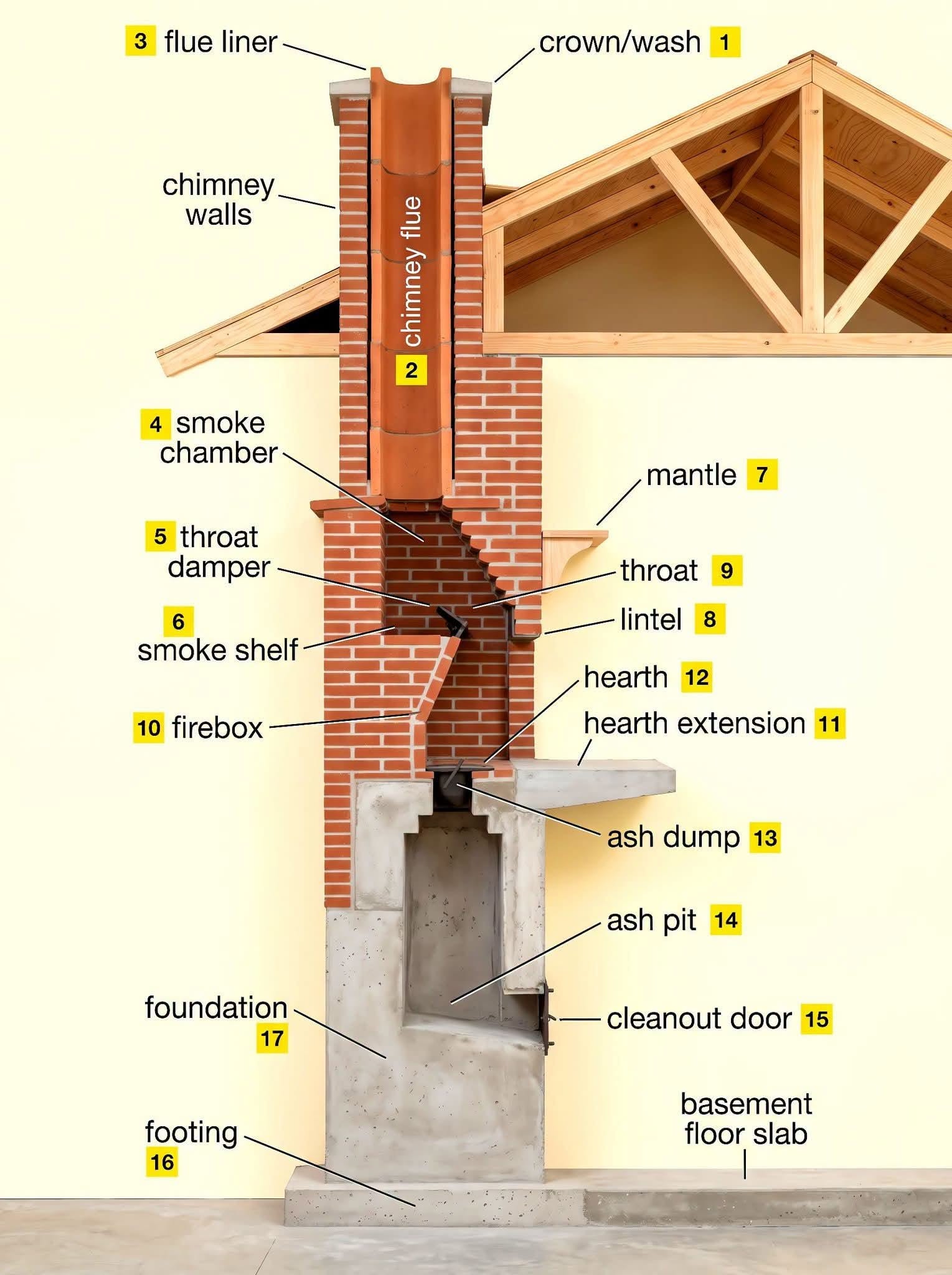
Most homeowners think of a fireplace as a decorative box in the wall. What they're actually looking at is an engineered system, seventeen distinct components, each with a specific job, all working together to generate heat, manage combustion gases, and protect your home from fire and moisture. When one part fails, the whole system suffers. The numbered cross-section illustration on this page labels every component. Use it as a reference guide the next time you have questions about your fireplace or talk with a technician.
Foundation and Structural Support
A masonry fireplace is heavy, often several tons of brick, mortar, and concrete. That weight has to go somewhere safe.
Footing (16) is the wide concrete base poured below grade. It distributes the entire load of the chimney and firebox across the soil so the structure doesn't settle or crack unevenly over time. Code requires the footing to extend beyond the footprint of the chimney on all sides and to sit below the frost line.
Foundation (17) sits directly on top of the footing and rises to floor level. It's the masonry platform on which everything above, firebox, smoke chamber, and chimney, is stacked. If either the footing or foundation develops a crack or begins to shift, you'll eventually see it reflected in the mortar joints higher up the system.
Ash Removal System
Wood fires produce ash continuously. A well-designed masonry fireplace handles that ash without requiring you to scoop it out through the firebox opening after every burn.
Ash Dump (13) is a small metal door set into the firebox floor. You push ash through it and it drops down into the ash pit below. Simple, clean, and keeps debris out of your living room.
Ash Pit (14) is the enclosed chamber beneath the firebox that stores ash until you're ready to remove it. In most designs it holds several fires' worth of ash before it needs to be emptied.
Cleanout Door (15) is an access panel built into the exterior base of the chimney, usually in the basement or on the outside of the home. You open it, remove accumulated ash from the pit, and close it back up. Keeping the ash pit from overfilling is important; packed ash can block the dump opening and trap heat in places it shouldn't be.
Firebox and Hearth
This is the combustion zone, where the fire actually burns. Every surface here is engineered to handle extreme temperatures.
Firebox (10) is the chamber where you build your fire. The walls are lined with firebrick and laid with refractory mortar, both rated to withstand temperatures that would crack standard brick and mortar within a single season of use. The firebox is sized in proportion to the flue above it; a mismatched ratio causes smoking problems and poor draft.
Hearth (12) is the non-combustible floor directly inside and immediately in front of the firebox opening. It's typically brick, stone, or tile set over a concrete substrate. Its job is to contain sparks and embers that roll forward when you tend the fire.
Hearth Extension (11) is the non-combustible floor area that projects into the room beyond the firebox opening. Building codes specify minimum dimensions, generally 16 inches in front of the opening and 8 inches on each side for openings under 6 square feet, with larger extensions required for bigger fireboxes. This protects your wood subfloor and finished flooring from radiant heat and stray embers. If you notice cracks in the firebox walls, that's worth addressing promptly, you can learn more on our cracked firebox repair page.
Fireplace Opening
The rectangular opening you see from the room is framed by two components that serve very different purposes.
Lintel (8) is a steel bar or angle iron that spans the top of the fireplace opening. It carries the weight of all the brickwork above the opening, the facing, the breast, and everything stacked above it up to the mantel line. Steel is used because masonry alone can't span that opening without cracking under the load. If a lintel corrodes or deflects, you'll see the brick above the opening begin to crack or sag.
Mantel (7) is the decorative surround framing the fireplace opening on the face of the wall. It can be wood, stone, tile, or cast concrete. The mantel is purely aesthetic, it carries no structural load, but codes require combustible mantels to maintain a minimum clearance from the firebox opening to prevent scorching or ignition from radiated heat.
Airflow and Draft Control
Good draft means smoke goes up and out. These two components control that airflow directly.
Throat (9) is the narrow passage directly above the firebox where the wide firebox opening compresses into the smaller flue pathway. That compression accelerates the speed of rising gases, helping establish and maintain an upward draft. The throat's geometry is one reason fireplace design is so precise, too narrow and it restricts airflow; too wide and it loses velocity.
Throat Damper (5) is an adjustable metal plate installed at the throat. Think of it as a valve. When you're burning a fire, you open it fully to allow smoke and combustion gases to rise freely into the chimney. When the fireplace isn't in use, you close it to seal the flue against cold outside air, animals, and energy loss. A damper that won't seal tightly is one of the most common sources of drafty rooms and high heating bills in older Dallas-Fort Worth homes. If yours sticks, rusts, or no longer seals, it's worth having it looked at, our chimney damper repair service covers exactly that.
Smoke Management
Between the throat and the flue, two more components work together to keep smoke moving in the right direction.
Smoke Chamber (4) is the funnel-shaped space above the throat damper. Its sloped walls gather smoke from the wide throat area and compress it progressively into the narrower flue liner above. Properly parged (coated) smoke chamber walls are smooth so gases flow evenly without turbulence. Rough, cracked, or corbeled smoke chamber walls create resistance and can harbor creosote deposits in the pockets and ledges.
Smoke Shelf (6) sits at the base of the smoke chamber, directly behind the throat damper. When cold air or wind pushes down the chimney from above, the smoke shelf deflects that downdraft and prevents it from driving smoke into the room. It also catches rain, debris, and any soot that falls back down the flue. The shelf needs to be cleaned during routine chimney sweeping, accumulated debris there can restrict airflow and become a fire hazard.
Chimney Flue System
The flue is the exhaust pathway for everything combustion produces, smoke, water vapor, carbon monoxide, and other byproducts. It runs from the smoke chamber all the way to the top of the chimney.
Chimney Flue (2) is the open channel inside the chimney through which gases travel upward and exit the home. Its size is engineered relative to the firebox opening, there's a specific ratio that produces adequate draft without pulling so much air that the fire burns inefficiently.
Flue Liner (3) is the clay tile, ceramic, or cast-in-place liner that lines the interior of the flue. This liner does three things: it contains heat within the flue so it doesn't transfer through mortar joints into combustible framing; it resists moisture that condenses inside the chimney; and it protects the surrounding brick from the corrosive acids in combustion gases. Without a functional liner, those acids eat the mortar from the inside out. In the Dallas area, we see a lot of older chimneys where the liner is cracked or missing sections entirely. A damaged liner is a safety issue, not a cosmetic one, you can see examples of what liner deterioration looks like in our before-and-after gallery.
Chimney Crown
Crown (1) is the concrete cap that covers the top of the chimney's masonry shell. It's sloped downward toward the edges so rainwater sheds off instead of pooling on top of the brick. This matters a great deal in DFW, where we cycle through heat and occasional freezes, water that soaks into brick and mortar, then freezes, expands the material and accelerates deterioration rapidly. A properly built crown overhangs the chimney sides slightly and leaves only the flue liner opening exposed. Crowns that are flat, cracked, or missing allow water to work directly into the masonry. If your crown is showing cracks or missing sections, our chimney crown repair team handles that regularly across the metroplex.
How a Masonry Fireplace Works as a System
Here's how all seventeen components connect when you light a fire. The footing and foundation anchor the entire structure so nothing shifts under the weight of combustion and weather cycles. The firebox, protected by firebrick and refractory mortar, contains the fire safely above the hearth and hearth extension. As the fire burns, hot gases and smoke rise through the throat, accelerated by its narrowing geometry. The open throat damper allows that flow to continue upward into the smoke chamber, where the sloped walls funnel everything efficiently toward the flue liner. The smoke shelf deflects any backdrafts from wind above. Inside the flue liner, gases travel upward and out through the chimney flue, protected from the surrounding brick by the liner itself. At the top, the crown sheds rain and prevents moisture from entering the system from above.
Every link in that chain matters. A cracked firebox lets heat reach combustible framing. A stuck damper wastes energy and lets animals in. A deteriorated flue liner exposes your home to carbon monoxide and fire. A failed crown lets water begin destroying the masonry from the top down.
The best way to stay ahead of problems is an annual chimney inspection. A technician goes through every component in this cross-section and identifies what's working and what needs attention before it becomes a safety issue or an expensive repair. If you're in the Dallas-Fort Worth area, including homeowners in Plano, TX, call Lowes Chimney Sweep at (214) 225-8874 or visit our contact page to schedule yours. You can also find answers to common questions on our FAQ page.
Honest Work at an Honest Number
Free online quotes · Photos before prices · HEPA dust control · Open 7 days
Call (214) 225-8874Get an Instant Estimate →📍 1008 Ridgefield Dr, Plano TX 75075 | 🕗 Open 7 days · 8AM-8PM
Quick Answers
Why does a masonry fireplace need a separate footing and foundation?
A full masonry fireplace and chimney can weigh several tons. Without a dedicated footing and foundation, that load would cause the structure to settle unevenly, cracking mortar joints and misaligning components up the entire system. The footing spreads the weight across soil below the frost line, and the foundation brings that support up to floor level.
What is the ash dump and how does it work?
The ash dump is a small metal door in the firebox floor. After a fire cools, you push ash through the opening and it falls into the enclosed ash pit below. This keeps the firebox clean without requiring you to carry ash through your living space. The ash pit is emptied periodically through the cleanout door at the base of the chimney.
Why is firebrick used in the firebox instead of standard brick?
Standard brick and mortar crack under the repeated extreme heat of a wood fire. Firebrick is a dense, high-temperature-rated material, and refractory mortar is formulated to flex and hold at those same temperatures. Using standard materials in a firebox leads to cracking and deterioration that can allow heat to reach combustible framing behind the fireplace.
What does the lintel do and what happens if it fails?
The steel lintel spans the top of the fireplace opening and carries the weight of all the brickwork above it. If the lintel corrodes, deflects, or shifts, the masonry it supports loses that structural bridge and begins to crack or sag. A failing lintel shows up as stepped cracks in the brick above the fireplace opening.
Should I close the throat damper when I'm not using the fireplace?
Yes. A closed damper seals the flue against outside air, preventing cold drafts from entering the room in winter and conditioned air from escaping up the chimney year-round. It also keeps rain, debris, and animals out of the firebox. Always confirm the damper is fully open before lighting a fire, starting a fire with a closed damper pushes smoke directly into your home.
What is the smoke shelf and why does it need to be cleaned?
The smoke shelf sits at the base of the smoke chamber behind the throat damper. It deflects cold downdrafts that push down the chimney so they don't drive smoke into the room. Over time it collects soot, debris, and rainwater. If it isn't cleared during annual chimney sweeping, the buildup restricts airflow and can become a fire hazard.
What is a flue liner and why does it matter for safety?
The flue liner, typically clay tile, ceramic, or cast-in-place material, lines the interior of the chimney flue. It contains heat within the flue channel so it doesn't transfer through mortar joints into surrounding combustible materials. It also protects the brick from acidic combustion byproducts and moisture. A cracked or missing liner is a direct fire and carbon monoxide hazard.
What causes chimney crowns to crack?
The most common cause is water infiltration followed by freeze-thaw cycles. If the concrete crown develops even a small crack, water seeps in. When that water freezes it expands, widening the crack. In DFW's climate this process accelerates during years with hard freezes. Flat or improperly sloped crowns that allow water to pool are especially vulnerable.
How often should a masonry fireplace be inspected?
Annual inspections are the standard recommendation for any actively used fireplace. A technician checks every component in the system, from the firebox floor to the crown, and identifies deterioration, blockages, or safety concerns before they become serious problems. If you've recently purchased a home with a fireplace or haven't had it checked in several years, scheduling an inspection is the right first step.
Can I use a masonry fireplace if the smoke chamber isn't properly parged?
You can, but you may experience draft problems, increased creosote buildup, and reduced efficiency. Rough or corbeled smoke chamber walls create turbulence in the rising gas flow and provide ledges where creosote accumulates faster than in a smooth, properly parged chamber. If a technician identifies unparged or damaged smoke chamber walls during an inspection, repairing them improves both safety and performance.
Where to go next
Ready for the service? → Chimney Repair
Keep reading: → 7 Warning Signs Your Chimney Needs Repair
Did you like this article?
Your feedback helps us write better chimney guides for DFW homeowners.
Found a typo or wording we should improve? Email us and tell us exactly what to fix.