● Pricing reviewed & current for October 2026
Press the button, nothing happens. Before you assume the whole fireplace is broken, the problem is usually a a clear, upfront price receiver part or a dead battery, not the gas system itself. We diagnose it on the spot and fix only what actually failed.
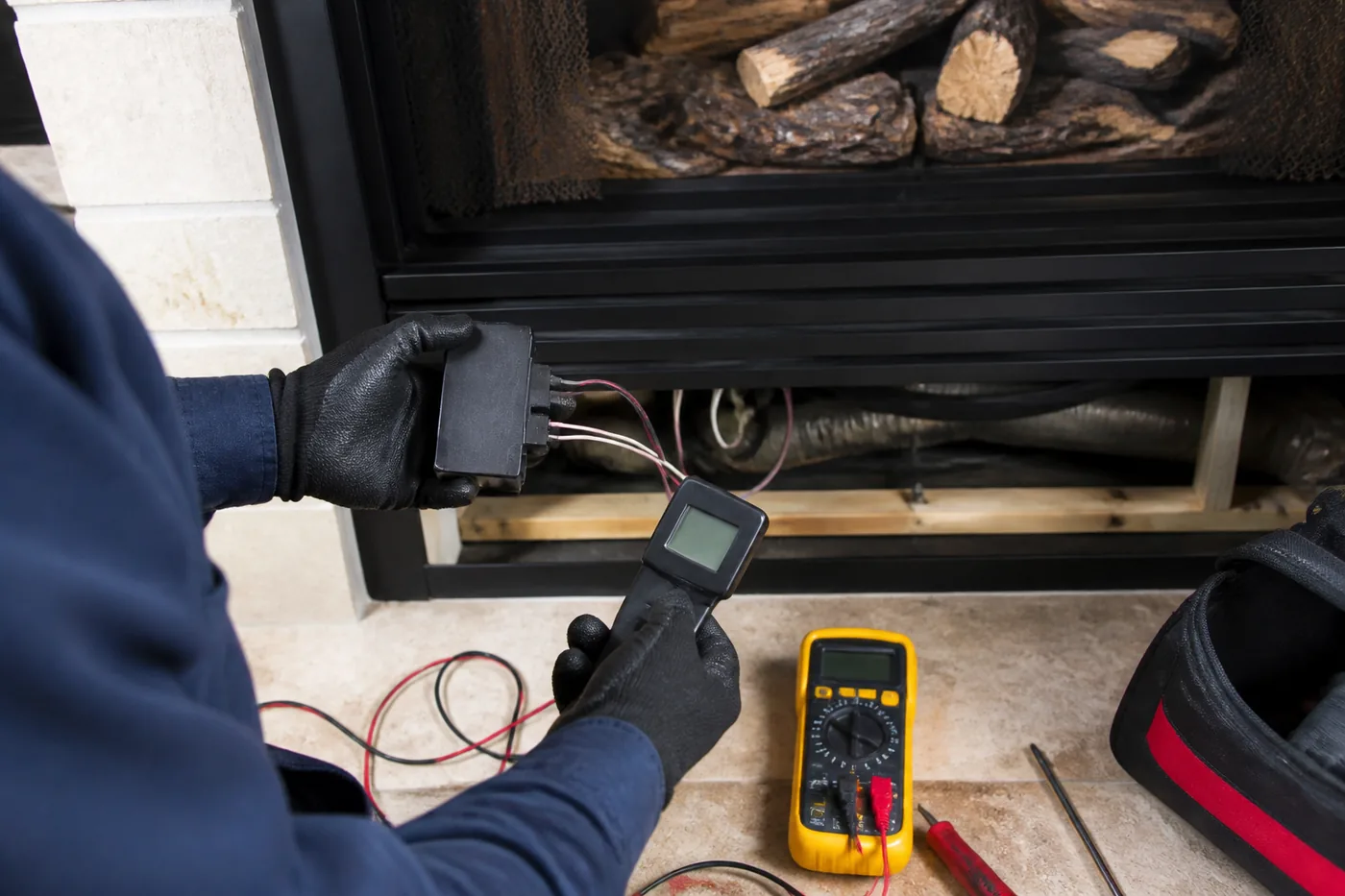
A fireplace remote control repair in Dallas-Fort Worth costs $150 to $400 in 2026, depending on the receiver and parts.
Every remote-start gas fireplace hides the same three parts behind the decorative front: a handheld transmitter, a receiver module wired into the firebox near the valve, and a low-voltage gas valve that only opens when the receiver tells it to. When any one of those three stops talking to the others, the whole system looks dead from the couch, even though the fireplace itself is usually fine.
That's the trap most DFW homeowners fall into with fireplace remote control repair. A a clear, upfront price receiver problem gets mistaken for a failed fireplace, and a working fireplace gets written off as broken because nobody checked the small box first. Lowes Chimney Sweep diagnoses the actual failure point before recommending anything, so you're not paying to replace parts that were never the problem.
Remote gone quiet, pilot won't respond to the button, or the fireplace only lights half the time? Call (214) 225-8874 and we'll trace it back to the actual cause.
The cheapest and most common failure: dead or corroded batteries in the handheld remote, or in the receiver's own battery pack tucked inside the firebox. Corrosion on the contacts is the usual giveaway, and it's often mistaken for a bigger electrical problem when it's really a five-minute fix.
The receiver is the module that actually opens the valve when it hears the remote's signal. These fail from age, heat exposure inside the firebox, or a lost pairing between remote and receiver after a battery change. A universal replacement remote bought online almost never re-pairs correctly with an existing receiver, this is the single most common reason a "new remote" still doesn't work.
Less often, the receiver and remote are both fine but a tripped safety switch, a loose low-voltage wire, or a valve-side fault blocks ignition anyway. This is where diagnosis matters most, replacing a good receiver on a bad valve connection fixes nothing and wastes the part.
Since three different components can cause the exact same symptom, we test in order rather than guessing which part to replace first:
What the remote does, and doesn't do, when pressed
Fresh batteries and clean contacts in both remote and receiver
Brand, valve type, and protocol confirmed before any part is ordered
Confirms whether the remote is transmitting and the receiver is listening
The exact part needed, priced before any repair begins
Receiver swap, re-pairing, or wall switch conversion as needed
Multiple ignition cycles confirmed working before we leave
Same visit diagnosis and repair available throughout DFW. We work Sundays.
(214) 225-8874"My remote used to work fine and now it's completely dead."
Almost always batteries first, in both the handheld unit and the receiver's own battery pack. If fresh batteries in both spots don't restore it, the receiver has likely failed internally or lost its pairing, both fixable same visit.
"I already bought a replacement remote online and it still won't light the fireplace."
That's the classic sign the receiver, not the remote, is the actual failure point. Universal remotes only work if the frequency and protocol match your existing receiver exactly, and most off-shelf units don't. We identify your real receiver type and match the fix to it.
"Can you just install a wall switch instead of dealing with a remote at all?"
Yes, and plenty of DFW homeowners choose exactly that after the second or third lost remote. A wall switch wires directly into the valve's low-voltage terminals, no batteries, no pairing, no clicker to misplace.
"Is this a gas safety issue or just an electronics problem?"
In almost every remote-failure call, it's electronics, not gas. The exception is a fireplace that lights inconsistently with flare-ups or any smell of gas, that's a signal to stop and call us for a safety check before touching the remote system again.
Three different failure points cause the exact same symptom. We test batteries, pairing, and valve wiring in order so you only pay for the part that actually failed, not a guess.
Skytech, Proflame, Basic, millivolt on/off systems, and thermostatic remote kits all show up in DFW gas fireplaces built across different decades. Identifying yours correctly is most of the job.
Our technicians are trained to Chimney Safety Institute of America (CSIA) standards, and we follow National Fire Protection Association (NFPA) guidance on annual fireplace and venting inspection, so a remote or receiver repair never happens in isolation from the safety checks the rest of the system needs.
Most remote and receiver issues get diagnosed and fixed in one visit. Call early in the day and we'll typically have a technician out before evening.
Unlike many DFW chimney and fireplace companies, we're available seven days a week, including Sundays, for homeowners who can't schedule around a weekday.
No hidden fees, no upsell to parts you don't need. We quote the specific repair in writing after diagnosis, and that's the number you pay.
Browse completed repairs, installs, and rebuilds from homes throughout the metroplex.
View the Gallery →A remote failure is sometimes the whole story, and sometimes the visible symptom of something upstream. Here's the chain we check, and the page that solves each link:
Lowes Chimney Sweep repairs and installs fireplace remote systems across 98 cities throughout the DFW metroplex, including:
+ 80 more DFW cities! Find yours on the service areas page or call (214) 225-8874.
"Very pleased with the professionalism and promptness of service. The chimney sweep was done quickly and efficiently at significantly less cost than the first quote I got from another company. Happy to recommend Lowes Chimney Sweep to anyone in Plano!"
"Outstanding chimney sweep service from start to finish. They were punctual, courteous, and left our chimney spotless with no mess in our home. I won't use anyone else for chimney services in Dallas TX!"
More reviews from homeowners across the metroplex are on our reviews section, or learn more about our team before you book.
Diagnosis alone often solves it, dead batteries or a lost frequency pairing cost nothing but a service call to fix. A replacement receiver module typically is priced with a clear, upfront quote after an on-site inspection installed, and a full remote-and-receiver kit swap is priced with a clear, upfront quote after an on-site inspection depending on your valve type. A written quote follows the diagnosis, before any part is ordered.
The three usual suspects are dead or corroded batteries in the handheld remote, a receiver module inside the fireplace that has lost power or failed internally, or the remote losing its paired frequency to the receiver. Less often, a tripped safety switch on the gas valve blocks ignition even though the remote itself works fine.
Universal remotes only work if the frequency, code set, and valve protocol match your existing receiver, and most off-shelf remotes don't match older or brand-specific systems. If pairing fails, the receiver itself is usually the real point of failure, not the remote, and needs to be tested or replaced to match your valve.
Yes. Wall switch conversions wire directly to the valve's low-voltage terminals, removing the receiver and batteries from the equation entirely. It's a common upgrade for rental properties, households that keep losing the remote, or anyone tired of battery replacement.
A remote that won't light the fireplace is usually just an electronics problem, not a gas leak. But if you smell gas, hear hissing, or the fireplace lights inconsistently with flare-ups, stop using it and call us for a safety check before touching the remote system again.
Yes, we work with the common receiver and remote platforms installed in DFW gas fireplaces, including Skytech, Proflame, Basic, and millivolt on/off systems, along with thermostatic remote kits. We identify your exact valve and receiver type during diagnosis so any replacement part matches correctly.
Yes, that's always worth trying first, fresh batteries in both the handheld remote and the receiver's battery pack fix a surprising share of dead-remote calls. If fresh batteries in both locations don't restore function, the receiver or the pairing itself has failed and needs a technician.
Most diagnosis-and-repair visits take 30 to 60 minutes. A straightforward receiver swap or re-pairing is usually finished same visit; a wall switch conversion that requires new low-voltage wiring can take a bit longer depending on access to the valve.
Yes, for most remote and receiver issues we offer FAST-scheduling service throughout Dallas, Fort Worth, Plano, Frisco, McKinney, and the rest of our 98-city DFW service area. Call (214) 225-8874 early in the day to schedule.
Remote and receiver work often comes up alongside these related fireplace services:
Free online quotes · Same visit diagnosis · We work Sundays · Hundreds of 5-star reviews
(214) 225-88741008 Ridgefield Dr, Plano TX 75075 | Open 7 days · 8AM-8PM
We test in order rather than guessing: fresh batteries in the handheld remote and the receiver's own battery pack first, then whether the remote is transmitting at all, then whether the receiver is listening and passing signal to the valve. Three different failure points create the identical symptom, so skipping a step means replacing parts that were never broken.
Corroded battery contacts in the receiver, a universal replacement remote that never actually paired with the existing receiver, and receivers that simply fail after years of heat cycling inside the firebox. Less often, a loose low-voltage wire or a tripped safety switch on the valve blocks ignition even though the remote itself is fine.
A remote that won't light the fireplace is almost always electronics, not gas. The exception is a fireplace that lights inconsistently with flare-ups, or any smell of gas, both signs to stop and call for a safety check before touching the remote system again.
A straightforward receiver swap or re-pairing usually resolves it same visit. If the household keeps losing the remote, a wall switch conversion wired directly to the valve's low-voltage terminals removes batteries and pairing from the equation permanently.
Swap both sets of batteries, remote and receiver, on the same schedule you'd use for smoke detectors, and keep the receiver's battery compartment free of dust and moisture. Most repeat failures trace back to corrosion that a yearly battery change would have caught early.
If the receiver is more than a decade old, or the exact model is discontinued and no longer pairs reliably with modern replacement remotes, a full remote-and-receiver kit swap is usually the more honest fix than chasing repeated pairing failures on aging hardware.
Straight answers from our DFW chimney pros before you book.
Get an honest ballpark range for this service, no phone call needed. Built from real Dallas-Fort Worth pricing, then book when you’re ready.
Get My Instant Estimate →