● Pricing reviewed & current for October 2026
Adding a fireplace is mostly a planning problem. Where it can go, what it has to vent through, how much clearance the structure needs, and which type actually suits your home. We work through all of that with you before anything gets built.
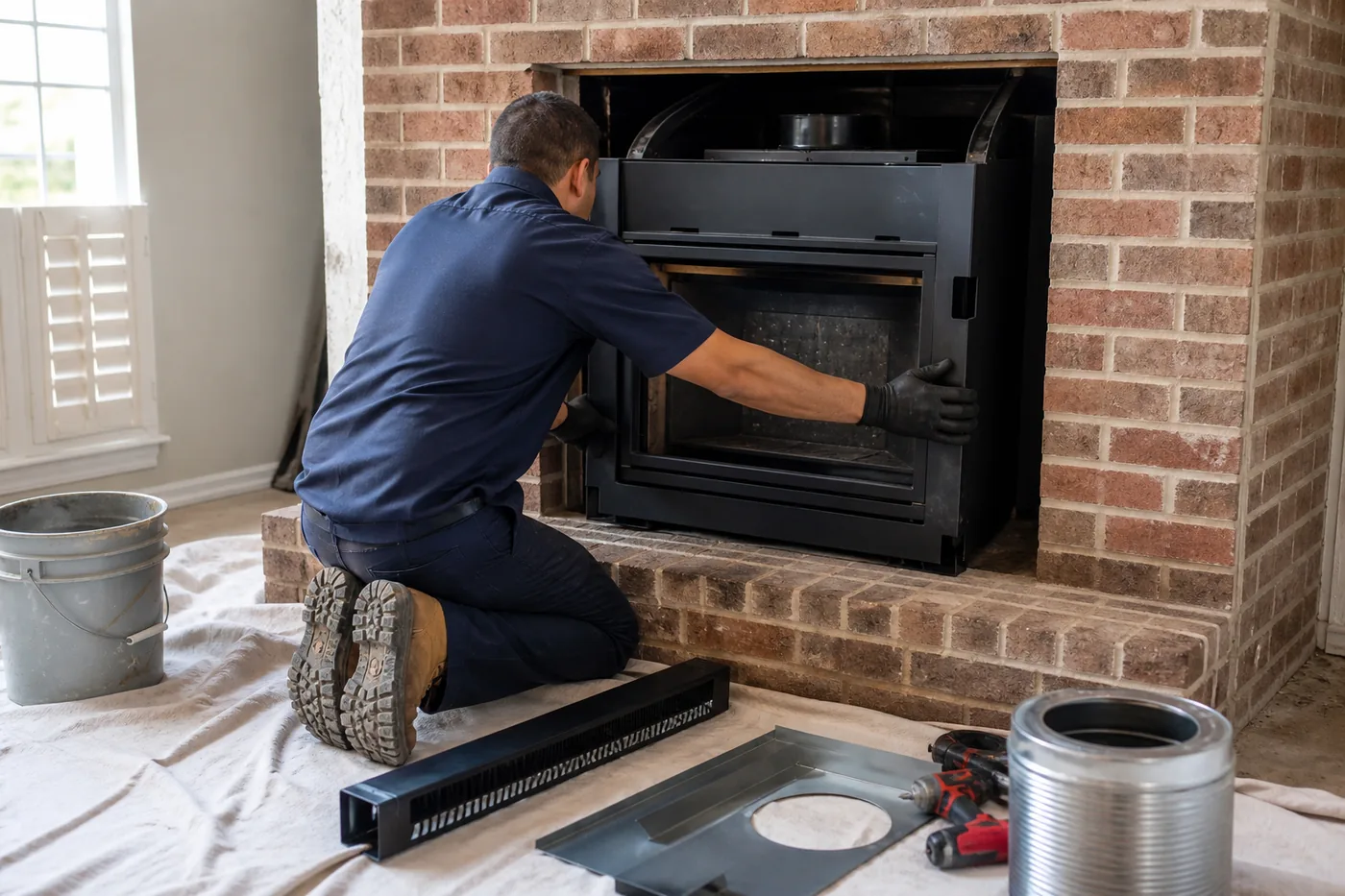
A fireplace installation in Dallas-Fort Worth costs $1,500 to $5,000 in 2026, depending on the unit and the venting required.
Most fireplace installations succeed or fail at the planning stage, not the building stage. The three questions that decide everything are where it goes, how it vents, and what type suits the room. Get those right and the install is straightforward. Get them wrong and you are rebuilding a wall.
What makes DFW installs specific: a lot of North Texas housing stock was built without fireplaces or with prefabricated units that have reached the end of their service life. Adding a fireplace to an existing home means finding a viable venting path, confirming the structure can carry the load, and working within the clearances the appliance requires. On new construction it is far simpler, because the chase and venting can be designed in from the start.
We walk the space with you, identify what is actually possible, and give you the honest version, including when the answer is that a particular spot will not work. If your existing fireplace is simply worn rather than absent, fireplace repair is usually the better spend.
Thinking about adding a fireplace? Call (214) 225-8874 and we will talk through what your home allows.
The type you choose drives the venting, the clearances, the cost, and how much structural work is involved. Here is the honest comparison:
Three broad categories, each suited to different situations:
Within wood-burning there is a second decision that matters just as much:
Built on site from brick and block with a masonry chimney. They last generations, hold and radiate heat well, and carry the highest cost and the heaviest structural requirements, including a foundation capable of carrying the weight.
These arrive as an engineered unit with a matched venting system. They cost considerably less, install faster, weigh far less, and fit homes where a masonry build is not practical. They have a finite service life and must be installed exactly to the manufacturer's specifications.
Each of those points somewhere cheaper than a new installation, whether that is fireplace repair, firebox repair, solving a smoking fireplace, or a new liner. We will tell you which applies, call (214) 225-8874.
An installation is a sequence, and skipping ahead is how projects go wrong. Venting feasibility in particular has to be settled before anyone picks a unit. Here is the order we work in:
We walk the space, discuss how you want to use the fireplace, and identify which locations are actually viable.
We determine how the unit can vent, since the route to the roof usually decides both location and feasibility.
We confirm the floor, framing, and surrounding materials can carry the load and meet the required clearances.
We match the fireplace type and specific unit to the space, your heating goals, and what the structure allows.
We prepare the documentation your municipality requires and confirm what inspections apply before work begins.
We build or set the unit, run the venting to spec, and maintain the manufacturer required clearances throughout.
The installation is inspected, we run a first fire with you, and we explain the maintenance the unit will need.
Find out what your home can actually accommodate, consultations across DFW, 7 days a week.
(214) 225-8874The questions that come up on nearly every fireplace installation conversation:
Not quite anywhere. The limiting factor is almost always the venting path, whether a flue or vent can reach the roof without running through something it cannot. Structural capacity and required clearances narrow it further. Electric units are the exception, since without combustion there is nothing to vent.
It varies enormously by type. An electric unit sits at the low end, a factory-built wood-burning fireplace in the middle, and a full masonry build with a masonry chimney at the top. Because the structural and venting work differs so much per home, we quote after seeing the space. Request your Free Online Quote.
Fireplace installations generally require permitting, and requirements differ between DFW municipalities. We prepare the documentation and confirm what applies in your city before work begins. We would encourage you to verify specifics with your local building department, since those rules change and vary by jurisdiction.
Budget and structure usually decide it. Masonry lasts generations and radiates heat beautifully but costs the most and needs a foundation that can carry it. Factory-built units cost far less, install faster, and suit most existing homes, with a finite service life in exchange.
A factory-built unit is typically measured in days once permitting is settled. A full masonry fireplace and chimney is a considerably longer project. We give you a realistic schedule at the quote stage. Start here.
Plenty of installation quotes describe what a company will happily build. We start with what your home actually allows, including the locations that are not viable, so you are not designing around a plan that cannot be permitted or vented.
We are a chimney company, not a showroom. The same crew that installs your fireplace handles the inspections and sweeping it will need for years afterward, which tends to change how carefully an install gets done.
If you already have a fireplace and the structure is sound, we will say so. A restored firebox or a new liner often delivers what a homeowner actually wanted for a fraction of an installation.
Our installation work is backed by our written promise, alongside the manufacturer's warranty on the unit itself.
Fireplaces built, fireboxes restored, venting run and finished, browse real before-and-after photos from projects across Dallas Fort Worth.
View the Before & After GalleryThese are the technical constraints that shape every installation, and the reason a fireplace cannot simply go wherever it looks best:
Every one of these is set by the specific unit and your building department's requirements. We confirm them for your installation rather than working from general rules. Curious what an inspection covers afterward? See chimney inspection.
From our home base in Plano, our installation crews cover 98 cities throughout the DFW metroplex, including:
+ 78 more DFW cities! See our full service area list, or call (214) 225-8874, chances are we serve your neighborhood.
"Very pleased with the professionalism and promptness of service. The chimney sweep was done quickly and efficiently at significantly less cost than the first quote I got from another company. Happy to recommend Lowes Chimney Sweep to anyone in Plano!"
"Outstanding chimney sweep service from start to finish. They were punctual, courteous, and left our chimney spotless with no mess in our home. I won't use anyone else for chimney services in Dallas TX!"
More reviews from homeowners across the metroplex are on our reviews section, or learn more about our team before you book.
It varies widely by type. Electric units sit at the low end, factory-built wood-burning fireplaces in the middle, and full masonry builds at the top because of the structural and chimney work involved. We quote after seeing the space, since venting and structure differ per home. Request your Free Online Quote.
Usually yes, provided a viable venting path exists and the structure can accommodate the unit and its required clearances. The venting route is normally what decides both feasibility and location. Electric units avoid the issue entirely since they do not vent.
Fireplace installations generally require permitting, and the requirements differ between DFW municipalities. We prepare the documentation and confirm what applies in your city before work starts. We would still encourage verifying specifics with your local building department, since requirements vary and change.
Budget and structure usually decide. Masonry lasts generations and radiates heat well but costs the most and needs a foundation that can carry the weight. Factory-built units cost significantly less, install faster, and suit most existing homes, with a finite service life in return.
Wood-burning needs a full venting system, greater clearances, and ongoing sweeping. Gas needs a gas supply and venting matched to the specific system, with its own set of requirements. We cover gas separately on our gas fireplace installation page.
A factory-built unit is typically a matter of days once permitting is settled. A full masonry fireplace with a masonry chimney is a substantially longer project. We provide a realistic schedule with the quote.
Yes. New installations are inspected as part of the permitting process, and we also recommend annual inspection afterward. See chimney inspection for what that covers.
Often yes, and it is a common way to improve efficiency without a full rebuild. The existing firebox and venting have to be sound and correctly sized for the insert, which we verify first. For gas inserts specifically, see our gas fireplace installation page.
Wood-burning fireplaces need annual inspection and regular sweeping to manage creosote. Gas systems need annual servicing. Electric units need essentially none beyond normal cleaning.
We can usually schedule a consultation same or next day across all 98 DFW cities. The installation itself depends on permitting and unit availability, which we outline at the quote stage. Call (214) 225-8874.
Installation is one part of a fireplace's life. These are the services that surround it:
Useful background: preparing your fireplace for a Texas winter, what a chimney inspection includes, and how often a fireplace should be cleaned. You can also browse the before-and-after gallery, see every DFW city we serve, or request your Free Online Quote.
Free online quotes · FAST scheduling service · We work Sundays · 5-star rated across DFW
(214) 225-8874📍 1008 Ridgefield Dr, Plano TX 75075 | 🕗 Open 7 days · 8AM-8PM
Homeowners usually start with where the fireplace should look best. We start with where it can vent. Those two answers sometimes match, and when they do not, the venting path wins every time.
Clearance to combustibles is set by the manufacturer for that specific unit and tested at those distances. Reducing them because a wall is in the way is how installations become fire hazards, so they are treated as fixed.
A masonry fireplace and chimney is a substantial structure that requires a foundation designed to carry it. This is the constraint that rules masonry out of most retrofits and steers homeowners toward factory-built units.
A properly installed factory-built fireplace is engineered as a matched system, unit and venting designed together. It performs predictably, costs far less, and fits homes where masonry simply is not feasible.
Newer DFW construction is sealed well enough that a fireplace can struggle to find combustion air, which shows up as poor draft or smoke in the room. Planning for that during installation avoids a frustrating problem later.
A wood-burning fireplace commits you to annual inspection and sweeping. Gas commits you to annual servicing. Electric commits you to almost nothing. Choosing honestly against how you will actually use it matters more than the showroom appeal.
Straight answers from our DFW chimney pros before you book.
Get an honest ballpark range for this service, no phone call needed. Built from real Dallas-Fort Worth pricing, then book when you’re ready.
Get My Instant Estimate →