Lowes Chimney Sweep Blog
Should You Replace One Cracked Firebox Panel or the Entire Set?
By the Lowes Chimney Sweep crew · Plano, TX
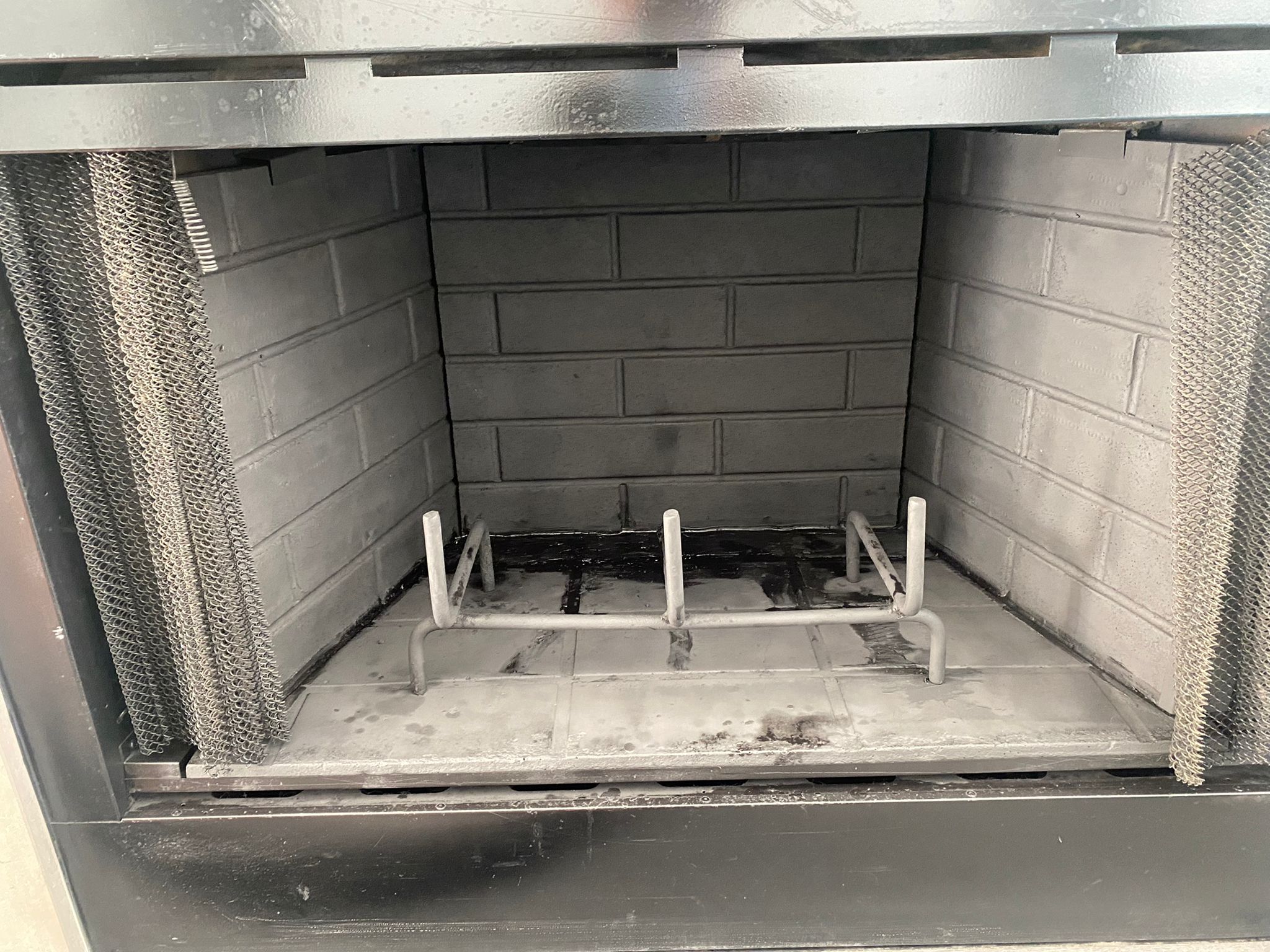
If the panel cracked from age, replace the set; if it cracked from impact, replacing the one panel is usually fine. That is the short version. Refractory panels installed together have absorbed the same heat cycles, so when one wall panel finally fails from wear, its neighbors are rarely far behind. A dropped log on a five-year-old fireplace is a different story. This post assumes the replacement decision is already made, whether a given crack crosses the line at all is the coin-gap test's job. This decision starts after it: the panel is done, and the question is one panel or the whole set.
Why Panels That Went In Together Fail Together
Refractory panels do their job by absorbing fire-level heat, and every fire spends a little of their working life. Panels installed as a set have lived through the same number of heat cycles at the same temperatures. When one crosses the line, an open crack, a crumbling face, the others carry the same mileage. Replacing only the failed panel often buys a season or two before a neighbor fails, and that means paying for a second service visit for work that could have been done in one trip.
There is also a fit issue. Panel sets are made to mate at the corners, and a new panel seated against neighbors that have spent years expanding, contracting, and wearing at the edges rarely lines up as cleanly as a matched set does. The seams stay serviceable, but they are seldom as tight or as tidy, and inside a firebox, tight seams are the whole point.
When Replacing One Panel Is the Right Call
Impact damage on a younger fireplace. A dropped log or a heavy grate can crack a floor panel that had plenty of life left. If the fireplace is relatively young and the other panels inspect sound, replacing the one damaged panel is the honest recommendation.
A floor panel worn early while the walls test sound. The floor takes the most abuse of the four panels, direct contact with burning logs, the weight of the grate, scraping during ash cleanup, and it usually fails first, sometimes years before the walls. If the wall panels pass inspection with real margin, replacing the floor alone is reasonable.
What You Can Safely Check
With the firebox cold, look at all the panels under a flashlight, not just the cracked one. Fine surface crazing, a shallow network of hairlines, is normal aging; open cracks you could catch a fingernail in are not. Check whether the floor panel is worn thin or dished in the middle, whether any faces are crumbling or powdery, and whether the panels still sit flat in the firebox. Photograph anything questionable, those photos make the quote conversation faster. What is not safe or useful: prying at panels, or smearing ordinary mortar or hardware-store filler into cracks. Refractory is a specific material, and surface patches do not restore it.
When the Fireplace Has to Sit Out
The standard is simple: a crack that fails the coin-gap test, wide enough to hold the edge of a coin, means no fires until the panel is replaced. That rule does not change based on whether you are replacing one panel or four; the firebox is out of service either way until new refractory is in place.
How a Professional Settles One-or-All
We do not decide this by policy, we decide it by panel. During a cracked firebox repair visit we evaluate all four panels individually: crack width, surface condition, wear on the floor, and the age and model of the unit. Then we quote both options, the single panel and the full set, with photos of each panel, so you can see exactly why we recommend what we recommend. If the neighbors genuinely look strong, we say so and quote the one panel without drama. If three panels are at the same end-of-life point, the photos make that case better than we could.
Honest Work at an Honest Number
Free online quotes · Photos before prices · HEPA dust control · Open 7 days
Call (214) 225-8874Get an Instant Estimate →📍 1008 Ridgefield Dr, Plano TX 75075 | 🕗 Open 7 days · 8AM-8PM
The DFW Factor
Most fireplaces in DFW homes are factory-built units, and factory-built means refractory panels, so this decision comes up here constantly. Our burn pattern sharpens it: a DFW fireplace does most of its work in a few concentrated cold snaps, with hot fires pushed hard after months of sitting idle, and that stop-start cycling is exactly what ages a panel set together. Late summer and fall are the time to settle the one-or-all question, because replacement panels are matched to the fireplace's make and model, having the set measured and ordered before the first cold front beats discovering a dead firebox in December.
Looking at one cracked panel and wondering whether the other three are next? Request a Free Online Quote with the fireplace's make and model if you have it, or call (214) 225-8874. We will inspect every panel, photograph what we find, and quote both options, so the panels, not a sales pitch, make the decision.
Quick Answers
If only one panel is cracked, why would you suggest replacing all of them?
Panels installed together carry identical mileage, when one fails from age, the others are usually close behind, and a matched set seats together more cleanly than a new panel against worn neighbors. If the other panels genuinely test sound, we say so and quote the single panel.
Is the full set much more expensive than a single panel?
The set costs more than one panel on the day, but considerably less than two separate service visits a season or two apart. When the neighboring panels are near the end anyway, the set is usually the cheaper path over the life of the fireplace.
Can I keep having fires until the replacement is scheduled?
Not if the crack fails the coin-gap test, a gap wide enough to hold a coin's edge means the firebox is out of service until new refractory is installed. Hairline crazing without open gaps is a different situation, and an inspection can confirm which one you have.
Where to go next
Ready for the service? → Firebox Panel Replacement
Keep reading: → Cracked Panel: Repair or Replace?
Did you like this article?
Your feedback helps us write better chimney guides for DFW homeowners.
Found a typo or wording we should improve? Email us and tell us exactly what to fix.