
Lowes Chimney Sweep Blog
Why Does a Chimney Need a Cricket, and Does My Roof Need One?
By the Lowes Chimney Sweep crew · Plano, TX
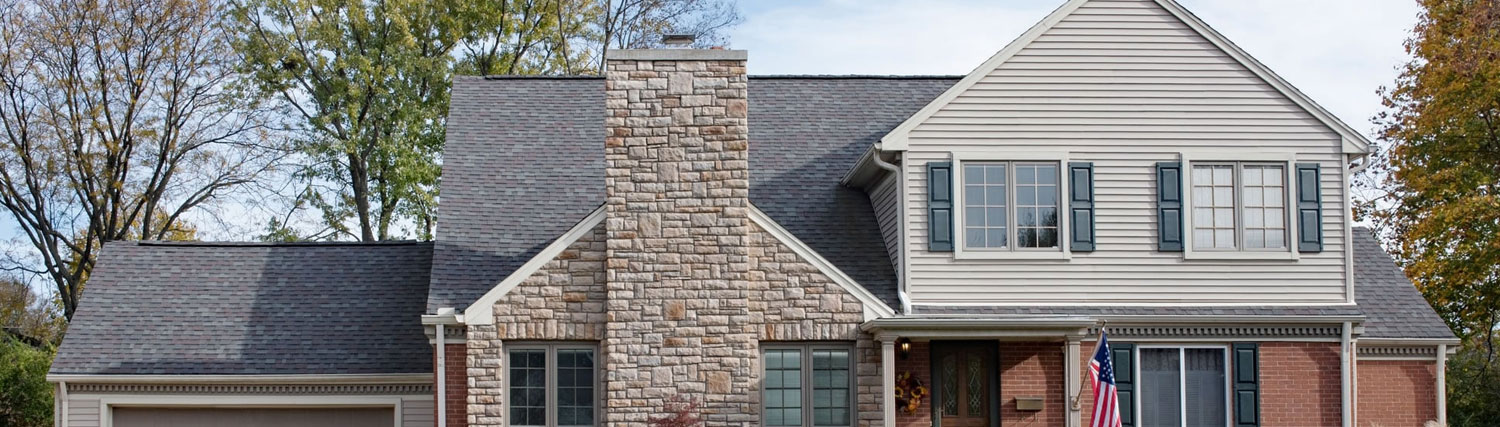
A chimney cricket, also called a saddle, is a small peaked diverter built on the uphill side of a chimney that splits water around it instead of letting rain pond against the back. The rule of thumb from building codes: any chimney wider than 30 inches, measured parallel to the ridge, should have one. Plenty of DFW chimneys are wider than 30 inches. Far fewer have crickets, and that gap explains a remarkable number of mystery leaks behind fireplace walls.
Why the Back of a Chimney Is the Roof's Weak Spot
A roof works by keeping water moving. A chimney is a wall standing in the middle of that flow. Water rushes past the sides and the downhill face without trouble, but on the uphill side, the flow hits the brick, stops, and stacks up. So does everything the water was carrying: leaves, twigs, shingle grit.
The flashing behind the chimney, roofers call it the back pan, is built to shed moving water. It was never designed to hold a puddle, and certainly not a puddle full of wet leaves for days after a storm. A cricket fixes the geometry itself: two small sloped planes meeting in a ridge, like a miniature roof, so water arriving from above hits a peak and is steered around the chimney before it can ever stand still.
The 30-inch rule exists because width is what makes the dam. Under 30 inches, a well-formed back pan can usually move the water fast enough. Over 30 inches, the code answer is a cricket, and the wider the chimney and steeper the roof, the taller the cricket needs to be.
What You Can Safely Check
You do not need to get on the roof, please don't. From the ground, find the spot where the roofline meets the high side of the chimney. If the shingles run flat into the back of the brick, there is no cricket. If there is a small peaked hump, sometimes shingled to match the roof, sometimes bare metal, you have one. From inside the attic, look at the framing on the uphill side of the chimney chase: water staining, rusty nail tips, or darkened sheathing there is the back pan already telling on itself. You can even estimate width without a tape measure, a standard brick plus its mortar joint runs about eight inches, so a chimney four bricks across is right at the 30-inch line.
Signs the Back Pan Is Already Losing the Fight
Some symptoms mean the question is no longer "should I add a cricket someday." Leaves and shingle grit piling up behind the chimney after every storm mean water is ponding there, debris only collects where flow stops. A ceiling stain behind or beside the fireplace wall, especially one that appears a day or two after a hard rain, means standing water has already found its way past the flashing. So does a musty smell in the fireplace room after storms. None of this makes the fireplace unsafe to use, but it makes waiting expensive, because every storm works the same seam a little wider: rusting the pan, wicking under the shingles, soaking the decking.
How a Professional Adds a Cricket
A cricket is not bolted on top of the shingles, it is built into the roof. The shingles behind the chimney come up, a peaked structure is framed from lumber or bent from heavy metal, sized to the roof's pitch and the chimney's width, and then flashed and woven into the surrounding roof so the water it diverts is handed off cleanly to each side. That is why our chimney cricket installation work is so often done together with chimney flashing repair: by the time a missing cricket is discovered, the back pan behind it has usually spent years holding water it was never meant to hold, and replacing it while everything is open is the sensible order of operations. A reroof is the other natural moment, the shingles are already up, and adding the cricket then costs the least it ever will.
Honest Work at an Honest Number
Free online quotes · Photos before prices · HEPA dust control · Open 7 days
Call (214) 225-8874Get an Instant Estimate →📍 1008 Ridgefield Dr, Plano TX 75075 | 🕗 Open 7 days · 8AM-8PM
The DFW Factor
DFW builders love a broad brick chimney on the front elevation, and many of those homes went up fast during boom years, when crickets were treated as an extra rather than a requirement. Wide chimneys with flat back pans are common across the metroplex as a result. Then there is our rain: North Texas storms are not gentle soakers but short, violent downpours that send sheets of water down the roof at once, exactly the flow a flat back pan cannot keep up with. "It only leaks when it really storms" is one of the most common sentences we hear, and a missing cricket is one of its most common causes.
Chasing a leak behind the fireplace wall that only shows up after hard rain? Tell us your chimney's rough width and what you see behind it, and request a Free Online Quote, or call (214) 225-8874. We will inspect the back pan, measure the chimney, and tell you plainly whether your roof has been missing its cricket.
Quick Answers
How do I know if my chimney is wider than 30 inches?
Measure the side that faces up the roof, the one parallel to the ridge. If you cannot get a tape on it, count bricks: a standard brick plus its mortar joint runs about eight inches, so four bricks across puts you right at the 30-inch line where a cricket becomes the code answer.
What does adding a chimney cricket cost?
It is straightforward framing and flashing work, and it is least expensive when bundled with flashing repair or a reroof, since the shingles around the chimney are already coming up. Compared to repeatedly patching a leak behind the fireplace wall, fixing the geometry once is the cheaper path.
My house passed inspection without a cricket. Was it built wrong?
Not necessarily wrong for its era, many production builders skipped crickets on wide chimneys and enforcement varied. But passing inspection years ago does not change what water does behind a wide chimney today, which is why the leak often shows up a decade or more after the home was built.
Where to go next
Ready for the service? → Chimney Cricket Installation
Keep reading: → Chimney Leaks When It Rains
Did you like this article?
Your feedback helps us write better chimney guides for DFW homeowners.
Found a typo or wording we should improve? Email us and tell us exactly what to fix.