● Pricing reviewed & current for October 2026
Converting a wood-burning fireplace to gas means no more hauling logs or shoveling ash, just instant, controllable heat at the flip of a switch. We explain the honest differences between gas logs and a sealed insert, check your flue first, and handle the venting and licensed gas connection to code.
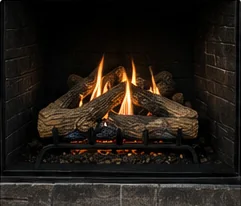
A wood-to-gas fireplace conversion in Dallas-Fort Worth costs $1,500 to $5,000 in 2026, depending on whether you choose gas logs or a sealed insert and the gas line and venting work required.
A conversion takes the wood-burning fireplace you already have and turns it into a gas-burning one. Nothing changes about the masonry or the mantel, what changes is the fuel. Instead of splitting logs, hauling them inside, and sweeping ash, you get a controllable flame that lights instantly and shuts off just as fast.
There are two honest ways to do it in an existing firebox, plus a decision about how the unit vents. We walk you through all of it before any work starts, because the right answer depends on whether you want the look of a fire or a room that is genuinely warmer.
Not sure which route fits your fireplace? Call (214) 225-8874.
This is the choice that decides most of the cost and most of the result. All three routes below are legitimate, and none is universally right:
A vented log set drops into your existing open firebox and burns with the damper open, exhausting up the chimney just like wood. It gives the most realistic flame and keeps combustion byproducts out of the room, but much of the heat goes up the flue with the exhaust. This is the least expensive route and the one most homeowners picture when they say "gas logs."
Vent-free logs burn without sending exhaust up the flue, so they release nearly all their heat into the room and are far more efficient as heaters. They run with an oxygen depletion sensor that shuts the unit down if oxygen falls too low. The trade-offs are a less realistic flame, added indoor moisture, and restrictions in some jurisdictions, so we confirm what your city allows and size the room correctly before recommending one.
An insert is a sealed appliance fitted into the fireplace opening, with the fire behind glass and a dedicated liner running up the chimney. It is the most efficient option and the one that genuinely heats a room. It costs more than a log set because the unit is a real appliance and usually needs a new stainless liner sized for gas, but it is the right call when heat, not just ambiance, is the goal.
Want the trade-offs side by side? Read gas logs vs. wood vs. insert in North Texas.
Turning a wood fireplace into a gas one is not just dropping in a burner. A safe, code-compliant conversion depends on several things being right:
Gas work leaves no margin for shortcuts. Talk it through with us first, call (214) 225-8874.
A gas appliance that vents through masonry is only as safe as that masonry. We inspect the flue as part of the conversion rather than assuming it is fine, see chimney inspection. Gas often needs a different flue size than the wood fireplace it replaces, which is why a new liner is common on insert conversions.
The $1,500 to $5,000 range is wide because a handful of factors move the number:
We give an itemized, upfront quote after seeing the space, so the gas line, venting, and unit are all spelled out with no surprise additions.
Find out which conversion fits your fireplace, consultations across DFW, 7 days a week.
(214) 225-8874A conversion combines three trades: the flue, the venting, and the gas connection. Here is the sequence we follow:
We establish whether you want ambiance or real heat, which decides between gas logs and a sealed insert immediately.
We inspect the chimney and measure the opening, since both determine what will fit and vent safely.
We confirm whether a suitable gas line exists, or what running one to the fireplace would involve.
You get an itemized quote covering the unit, any liner, the venting, and the gas connection, no surprises.
A licensed installer runs or connects the gas supply and pressure-tests it for leaks.
We set the log set or insert, install any liner, and set the damper correctly for the system.
We test ignition, check for leaks, confirm the venting draws, and show you how to run it.
Gas means no logs to buy or store, no ash to shovel, and far less buildup in the flue. It is the single biggest reason homeowners call us for a conversion.
A gas fire lights on the first press and reaches full output in seconds, with no kindling and no waiting. Shut it off just as fast when you leave the room.
Gas burns far cleaner than wood, so the flue stays cleaner between visits. It still needs annual service, see gas fireplace repair and service, but it is a fraction of the mess of a wood fire.
No stray sparks and no popping embers, and a sealed insert keeps the fire behind glass entirely, a real consideration with kids and pets.
From our home base in Plano, our gas conversion crews cover 98 cities throughout the DFW metroplex, including:
+ 78 more DFW cities! See our full service area list, or call (214) 225-8874, chances are we serve your neighborhood.
"Very pleased with the professionalism and promptness of service. The chimney sweep was done quickly and efficiently at significantly less cost than the first quote I got from another company. Happy to recommend Lowes Chimney Sweep to anyone in Plano!"
"Outstanding chimney sweep service from start to finish. They were punctual, courteous, and left our chimney spotless with no mess in our home. I won't use anyone else for chimney services in Dallas TX!"
More reviews from homeowners across the metroplex are on our reviews section, or learn more about our team before you book.
Most sound masonry wood-burning fireplaces can be converted, either with a gas log set in the existing firebox or a sealed gas insert. The firebox condition, the flue, and whether gas can reach the location decide which is possible, and we check all three before recommending.
Yes. A gas conversion needs a gas supply run to the fireplace and connected by a licensed installer. If gas is already nearby the run is short and inexpensive; if not, running a new line adds to the cost, and we confirm what is involved in the quote.
Vented logs burn with the damper open and exhaust up the chimney, giving the most realistic flame but sending much of the heat outside. Vent-free logs burn without a flue and heat the room far more efficiently, with a less realistic flame, added indoor moisture, and restrictions in some jurisdictions.
Yes. If the system vents through the chimney, the flue still needs to be sound and correctly sized for gas, and it needs annual inspection. Gas often requires a different flue size than the wood fireplace it replaces, which is why a new liner is common on conversions.
If you want the room genuinely warmer, yes. A sealed insert is far more efficient and can heat the space, while a log set is mainly for ambiance with modest heat. Logs cost less; an insert costs more but delivers real heat.
A gas log set is often a single visit. An insert typically takes longer because of the liner and venting work, and running a new gas line adds time. We give a realistic timeline with the quote.
We can usually schedule a consultation same or next day across all 98 DFW cities. The conversion itself is scheduled once the unit and any gas or venting work are confirmed. Call (214) 225-8874.
A gas conversion connects to the rest of the system, and to what happens once the unit is in:
Background reading: converting a wood fireplace to gas in a DFW home and gas logs vs. wood vs. insert in North Texas. You can also request your Free Online Quote or see every DFW city we serve.
Free online quotes · FAST scheduling service · We work Sundays · 5-star rated across DFW
(214) 225-8874📍 1008 Ridgefield Dr, Plano TX 75075 | 🕗 Open 7 days · 8AM-8PM
This single question resolves most of the confusion. If you want the look of a fire, a vented log set is the cheapest route that delivers it. If you want a room that is genuinely warmer, a sealed insert is the honest answer.
Gas appliances frequently require a different flue size than the wood fireplace they replace, and an oversized flue can cause condensation and poor draft. This is why relining comes up so often on insert conversions.
Vented gas logs need the damper open whenever the fireplace runs, which is why conversions include a damper clamp or stop. Getting this wrong sends exhaust into the room, so it is checked and set on every conversion.
Vent-free units are legitimate and efficient, but they put moisture and combustion byproducts into the room and are restricted in some places. They suit correctly sized rooms with good detection, and we will tell you when yours is not one.
A converted fireplace that vents through masonry depends entirely on that masonry. Companies that sell the unit but never look up the flue miss the half of the system that actually carries the exhaust.
Gas is cleaner than wood, not maintenance-free. Annual servicing covers burner cleaning, pilot and thermocouple checks, glass and gasket inspection, and confirming the venting still draws correctly.
Straight answers from our DFW chimney pros before you book.
Get an honest ballpark range for this service, no phone call needed. Built from real Dallas-Fort Worth pricing, then book when you’re ready.
Get My Instant Estimate →