
Lowes Chimney Sweep Blog
Why Is My Fireplace Damper Stuck, and Can It Be Repaired?
By the Lowes Chimney Sweep crew · Plano, TX
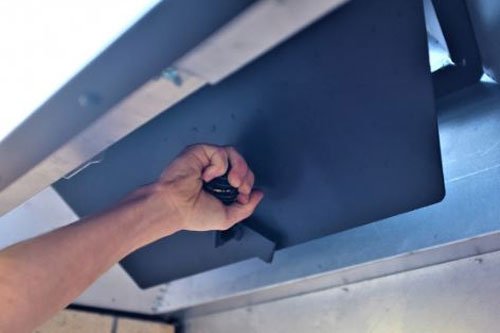
A stuck fireplace damper is almost always caused by rust, creosote buildup, or a warped frame, and in most cases it can be repaired without replacing the whole assembly. A chimney professional can usually free, clean, and adjust a jammed damper in a single visit, or fit a new top-sealing damper when the old throat damper is beyond saving.
What Makes a Damper Stick
The damper lives in the harshest spot in your fireplace, directly above the fire and directly below every drop of rain that gets past your cap. The usual culprits:
Rust and corrosion. Moisture coming down the flue settles on the damper plate and hinges. Over a few seasons the pivot points seize, and the handle either will not move or moves without opening the plate.
Creosote and soot buildup. Hardened creosote cakes around the damper frame and effectively glues the plate in place. If your chimney has not been swept in years, this is the first suspect.
A warped plate or frame. Metal expands with heat. After years of hot fires, or one overly hot one, the plate can warp just enough to bind against the frame.
Broken handle or linkage. Sometimes the damper itself is fine and only the operating mechanism has failed.
What You Can Safely Check Yourself
With the fireplace completely cold, put on a glove, take a flashlight, and look up past the firebox. You can safely note three things: whether the plate looks rusted or coated in black buildup, whether the handle turns freely or grinds, and whether you can see daylight when the damper should be open. Do not force a stuck handle with tools, and do not hammer on the plate, a warped damper that gets bent further often turns a repair into a replacement.
When to Stop Using the Fireplace
If the damper is stuck closed or only partially opens, stop using the fireplace immediately. Smoke and carbon monoxide need a full, clear opening to leave your home. If the damper is stuck open, the fireplace is safe to burn, but you are paying for it every day in lost heating and cooling, which in a Texas summer adds up fast.
How a Professional Repairs It
A chimney technician starts by sweeping the throat area so the damper can be inspected clean, then frees the hinges, removes rust from the pivot points, and re-seats or adjusts the plate. If the frame is cracked or the plate is badly warped, the modern fix is usually a top-sealing damper mounted at the top of the flue, it seals tighter than an old throat damper, keeps rain and animals out, and operates with a simple cable handle at the firebox. Either way, you should get photos of what was found and a clear recommendation before any work is done.
Honest Work at an Honest Number
Free online quotes · Photos before prices · HEPA dust control · Open 7 days
Call (214) 225-8874Get an Instant Estimate →📍 1008 Ridgefield Dr, Plano TX 75075 | 🕗 Open 7 days · 8AM-8PM
The DFW Factor
North Texas is hard on dampers from both directions: spring storms drive rain down uncapped or poorly capped flues and accelerate rust, while our long air-conditioning season means a damper stuck open leaks expensive cooled air up the chimney all summer. We repair dampers across Dallas, Fort Worth, Plano, Arlington and the whole metroplex, and a surprising number of "broken" dampers turn out to be one cleaning and one adjustment away from working like new.
Is your damper stuck, rusted, or refusing to close? Send Lowes Chimney Sweep a photo or request a Free Online Quote, or call (214) 225-8874. We will determine whether it needs cleaning, adjustment, repair, or replacement before recommending any work.
Quick Answers
Can a rusted damper be fixed without replacing it?
Usually yes. If the plate and frame are structurally sound, a technician can free the hinges, clean off rust and creosote, and lubricate the pivots. Replacement is only needed when the plate is warped or the frame is cracked.
How much does damper repair cost compared to replacement?
Freeing and adjusting a stuck damper is one of the least expensive chimney repairs. A new top-sealing damper costs more but also replaces your chimney cap function and seals far better than an old throat damper, we quote both options after inspecting.
Is it safe to use my fireplace if the damper only opens halfway?
No. A partially open damper cannot vent smoke and carbon monoxide reliably, especially on windy days. Stop burning until the damper opens fully and holds its position.
Where to go next
Ready for the service? → Chimney Damper Repair
Keep reading: → Cold Air Coming Through the Fireplace?
Did you like this article?
Your feedback helps us write better chimney guides for DFW homeowners.
Found a typo or wording we should improve? Email us and tell us exactly what to fix.