● Pricing reviewed & current for October 2026
Every load of laundry sheds lint past the trap and into the vent line. Give it a couple of years and that line is a packed tube of the most flammable material in your house, sitting behind a 130-degree appliance.

A dryer vent cleaning in Dallas-Fort Worth costs $99 to $199 in 2026, depending on vent length and roof access.
The National Fire Protection Association counts thousands of home dryer fires in the United States every year, and failure to clean the vent is the leading factor. The mechanics are simple. Lint escapes the lint trap on every cycle, sticks to the damp walls of the vent line, and builds inward until airflow chokes. The dryer runs hotter and longer against the restriction, and superheated air meets packed lint.
You do not see any of this happen, which is exactly why it keeps happening. The vent runs inside walls, under floors, and in DFW two-story homes, very often straight up through the roof.
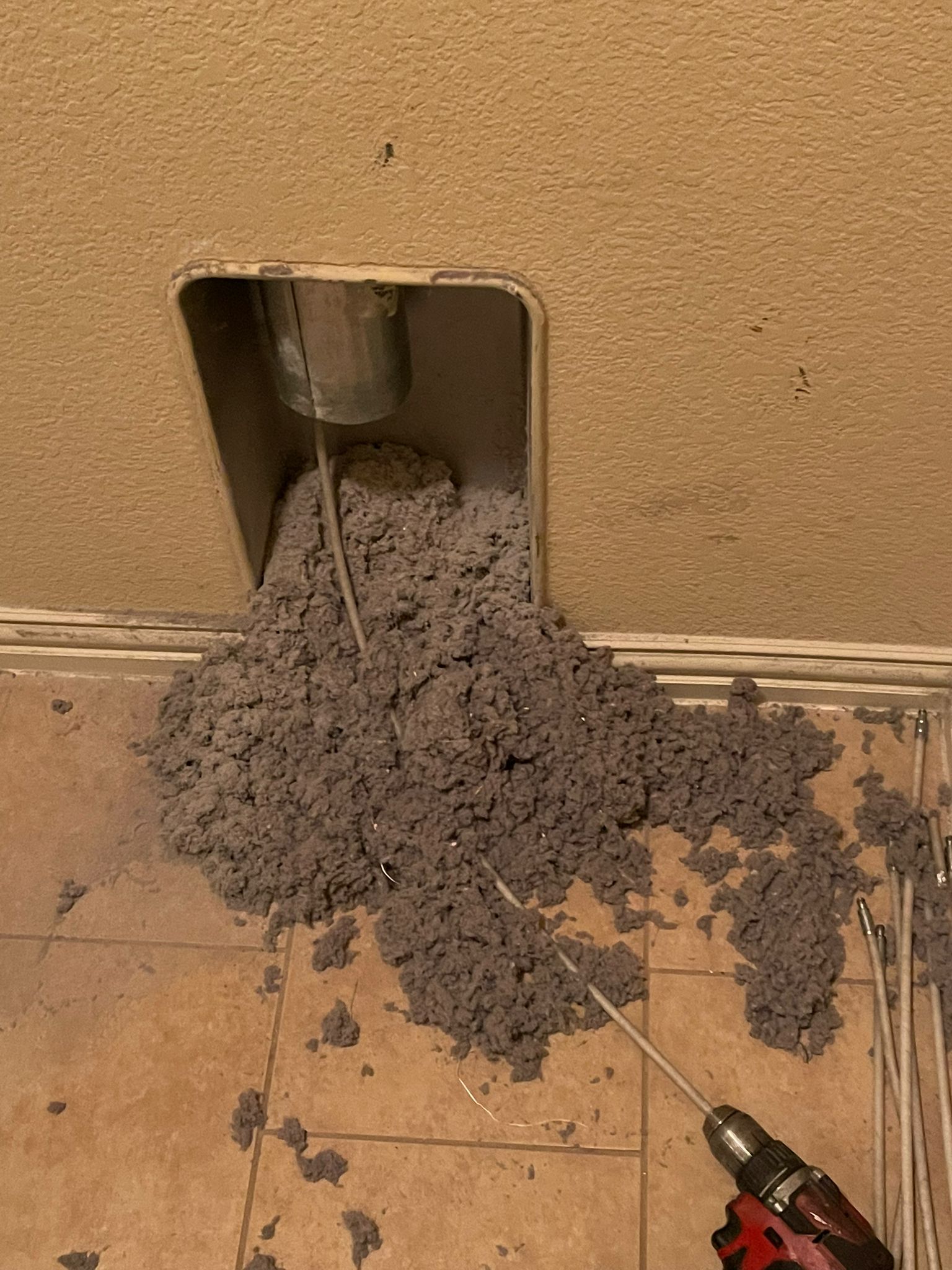
Dryer vent cleaning is venting work, and venting is what we do all day. The same professional rotary rod and brush systems we run through flues, and the same HEPA-filtered vacuum containment we use to keep soot out of living rooms during a chimney sweep, are what a dryer vent needs. The lint comes out of the line and into our equipment, not onto your laundry room floor.
Roof-terminated vents, the hardest kind, are routine for a crew that spends its working life on DFW rooflines anyway.
Clothes needing a second cycle is the classic tell, and it is also the expensive one, since every extra cycle is electricity spent fighting a clog. Other signs: the top of the dryer is hot to the touch, the laundry room turns humid while the dryer runs, a burning smell on long cycles, visible lint collecting around the outside vent hood, or the hood flap no longer moving when the dryer is on.
One more DFW special: birds nesting in the vent hood. If you hear scratching or chirping from the wall, that is a job for our animal removal service before any brush goes in.
We disconnect the dryer, clean the transition hose and the wall connection, then run the rotary brush the entire length of the line to the termination, whether that exit is on a side wall or the roof. The exterior hood gets cleared and its damper checked, because a stuck damper re-clogs a clean line in months. Before we leave, we verify airflow at the termination so you know the run is actually open, not just partially better.
The whole visit typically takes under an hour, and you will notice the difference on the very next load. Our gallery shows what comes out of a neglected line.
Most DFW households need this once a year. Big families, pet owners, and homes with long or roof-terminated runs sometimes need it twice. The Chimney Safety Institute of America, which certifies dryer exhaust technicians, recommends annual service as the baseline. Pricing depends on run length and termination height, and we tell you the exact number before any work starts. Request a Free Online Quote and pair it with your annual fireplace cleaning to knock out both vents in one visit.
"Very pleased with the professionalism and promptness of service. The chimney sweep was done quickly and efficiently at significantly less cost than the first quote I got from another company. Happy to recommend Lowes Chimney Sweep to anyone in Plano!"
"Outstanding chimney sweep service from start to finish. They were punctual, courteous, and left our chimney spotless with no mess in our home. I won't use anyone else for chimney services in Dallas TX!"
More reviews from homeowners across the metroplex are on our reviews section, or learn more about our team before you book.
Once a year for a typical household. Homes with heavy laundry loads, pets, or long roof-terminated vent runs benefit from every six months. If the dryer already needs two cycles to dry a load, the vent is overdue now.
Restricted airflow is the most common cause, and a lint-packed vent line is the most common restriction. The dryer cannot exhaust moist air, so clothes tumble in humidity. Cleaning the full vent run usually restores one-cycle drying immediately.
Yes. Lint is extremely flammable, and a clogged vent forces the heating element to run hotter and longer right next to it. Vent lint buildup is the leading contributing factor in the thousands of dryer fires U.S. fire departments respond to each year.
Yes, and DFW has a lot of them, especially in two-story homes. Roof terminations clog faster because the long vertical run gives lint more surface to grab, and they are the runs homeowners can least maintain themselves. Roof work is our home turf.
Usually 45 minutes to an hour, including moving the dryer, brushing the full run, clearing the exterior hood, and verifying airflow. Longer or badly clogged runs can take a bit more.
It depends on the length of the run and where it terminates, with roof exits priced a little higher than wall exits. We quote the exact price up front through our Free Online Quote before anything is disconnected.
If you hear scratching or chirping behind the laundry wall in spring, very likely yes. Vent hoods with broken flaps are prime nesting spots. We remove the nest safely, clean the line, and fit a proper guard so it does not happen again.
Short, straight wall-exit runs are sometimes manageable with a drill kit. Long runs, hidden bends, and roof terminations are where DIY kits leave compacted lint behind or, worse, punch the brush through a foil transition. A full-length rotary cleaning with airflow verification is a different result.
It genuinely can. A dryer fighting a clogged vent runs longer per load, and drying time is the single biggest driver of its energy use. One cycle instead of two, every load, adds up over a Texas summer.
Most customers book this alongside chimney work, since one visit covers both vents in the house. Annual chimney sweeping and fireplace cleaning are natural companions, and a chimney inspection makes the visit a full venting checkup. If critters found your vents first, animal and nest removal comes before the brush. Curious who does what? Our article on who to call for chimney cleaning explains the trade, and our FAQ covers the rest.
Book a dryer vent cleaning, get one-cycle drying back, and stop feeding the statistic. Same careful crew, same clean-floor standard we bring to every fireplace.
Lint trap screens catch most fibers, not all. The escapees ride damp exhaust air, stick to the vent walls, dry in place, and catch the next wave. The buildup is gradual, which is why owners rarely notice until drying times double.
Vertical runs fight gravity, so heavy damp lint falls back and packs at bends. The termination is also somewhere nobody looks. Out of sight, thirty feet up, is where clogs mature undisturbed.
That shiny accordion hose behind the dryer traps lint in every ridge and crushes easily against the wall. Smooth rigid or semi-rigid metal duct flows better and traps far less. If yours needs swapping, we will say so during the visit.
A nest at the hood blocks exhaust completely, and nesting material dragged down the line turns a lint problem into a debris problem. Spring is peak season across North Texas.
The heating element keeps firing while moist air has nowhere to go. Thermal fuses trip, elements burn out, and in the bad scenario the lint itself ignites. Most expensive dryer repairs start as cheap vent cleanings that never happened.
Crushed ducts, disconnected joints inside walls, and illegal plastic runs need replacement, not brushing. If we find one, you get photos and a straight recommendation, not a surprise invoice.