● Pricing reviewed & current for October 2026
Most crowns in North Texas were never built correctly. They were a wash of mortar troweled flat with no overhang. Replacement is the chance to build the one that should have been there.
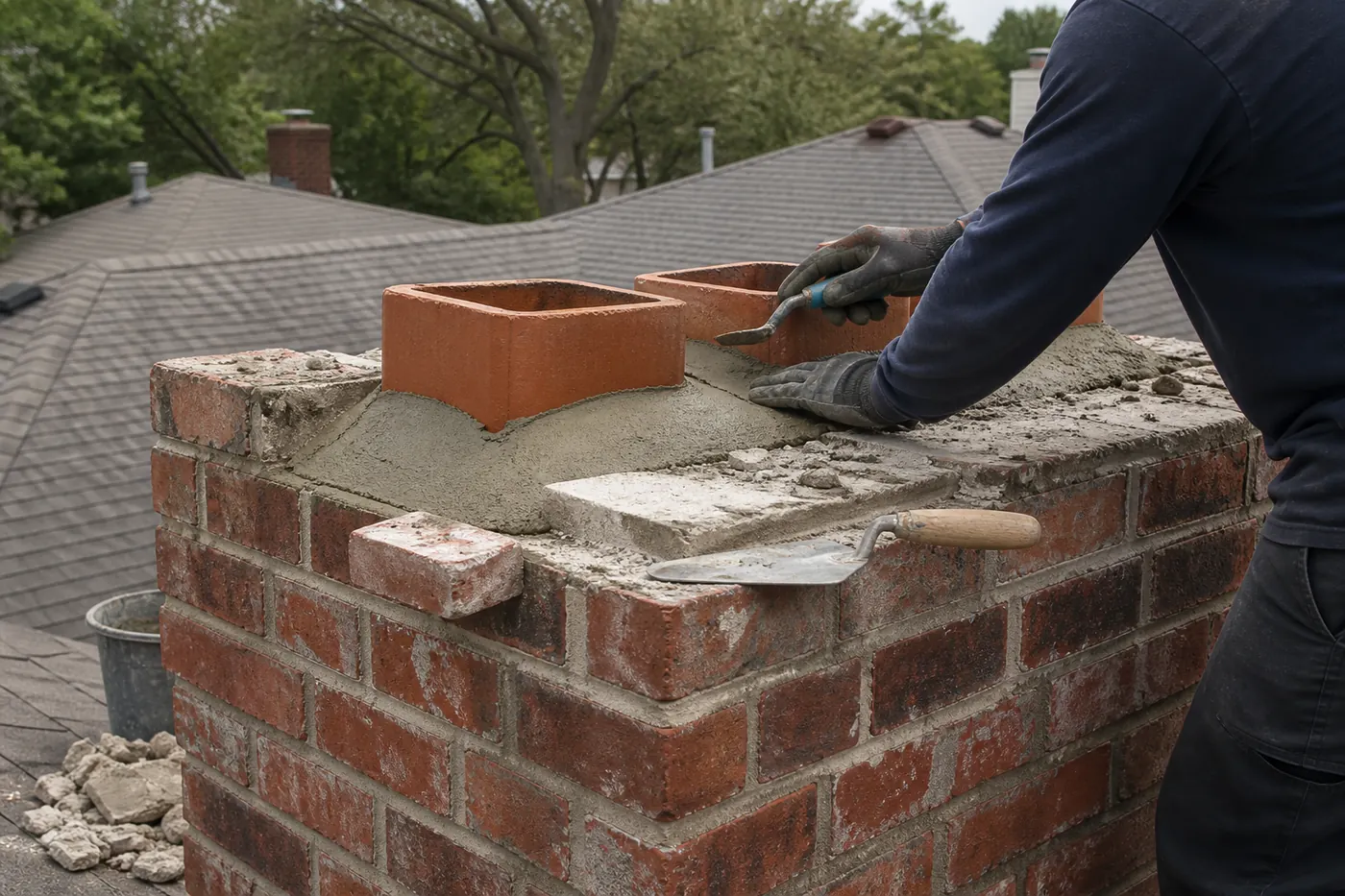
Quick answer: Chimney crown replacement in Dallas-Fort Worth typically costs $900 to $2,500 in 2026, depending on chimney size and the condition of the masonry underneath.
The crown is the slab on top of your chimney. Its entire job is to shed rain away from the flue and away from the brick below. When it works, the chimney stays dry. When it fails, water goes straight into the structure, and almost every expensive chimney problem downstream traces back to it.
If the cracks are hairline and the slab is otherwise sound, crown repair with a flexible crown coating is the right answer and we will recommend it. Replacement is for when the crown is beyond patching: crumbling, deeply cracked, sitting flush with the brick with no overhang, or simply never built properly to begin with. Sealing a failed crown is putting a bandage on a broken plate.
This is the most common thing we find. A crown is supposed to be a poured concrete slab. Instead, a mason troweled leftover mortar across the top and shaped it flat. Mortar is not made for horizontal exposure to weather. It cracks within a few years, every time.
A proper crown extends past the brick face by a couple of inches and has a drip edge cut into the underside, so water drips clear of the chimney instead of running back down the brick. A crown poured flush with the brick sends every drop of water straight down the masonry face.
The flue tile gets hot and expands. The crown does not. If the concrete is poured tight against the flue with no compressible joint, the flue expands into it and cracks it from the inside. This is why some crowns crack in a ring around the flue.
A crown of any size needs reinforcement to resist cracking. Poured plain, at a thickness someone guessed at, it eventually cracks under its own thermal cycling.
We remove the failed crown down to sound masonry. We form a new crown poured in concrete, not mortar, at a proper thickness, sloped so water runs off rather than pooling. It extends past the brick with a drip edge cut underneath. A compressible expansion joint goes around the flue so thermal movement has somewhere to go. Reinforcement goes in where the span calls for it.
It gets photographed at every stage, including what the old one looked like when it came off, which is usually the moment the homeowner understands why the chimney has been leaking.
Sometimes, and if that is the honest answer you will get it. A flexible crown coating over a structurally sound slab is a legitimate repair that buys real years. Over a crumbling crown it is a way of hiding the problem, and we will not take money for that.
A correctly poured, reinforced crown with an overhang and an expansion joint should outlast most of the rest of the chimney. That is the entire argument for building it right rather than washing mortar across the top again.
If the brick below has spalled from years of water running down it, that is tuckpointing or brick replacement, and doing it while we are already up there is far cheaper than a second visit. We will quote it separately and honestly, including telling you if it can wait.
Usually yes, once the masonry is repaired and dry. That is chimney waterproofing, and it goes last, never first.
Water through a cracked crown does not stay at the top. It runs down the outside of the flue liner inside the chimney structure, saturating the masonry from within where nobody can see it. It rusts the damper. It spalls brick from the inside out. It rots the framing where the chimney passes through the roof. And it destroys the liner, which turns a water problem into a combustion safety problem.
The Chimney Safety Institute of America identifies water as the leading cause of chimney deterioration. The National Fire Protection Association recommends an annual inspection, which is how a cracked crown gets found while it is still a crown problem and not a rebuild.
"Very pleased with the professionalism and promptness of service. The chimney sweep was done quickly and efficiently at significantly less cost than the first quote I got from another company. Happy to recommend Lowes Chimney Sweep to anyone in Plano!"
"Outstanding chimney sweep service from start to finish. They were punctual, courteous, and left our chimney spotless with no mess in our home. I won't use anyone else for chimney services in Dallas TX!"
More reviews from homeowners across the metroplex are on our reviews section, or learn more about our team before you book.
The crown is the concrete slab covering the top of the masonry chimney and sealing around the flue. The cap is the metal cover with mesh sides that sits over the flue opening itself, keeping rain, animals, and debris out. They are different parts doing different jobs and most chimneys need both.
When the slab is structurally gone: deep cracks, crumbling material, pieces lifting off, no overhang, or a coating that was already applied and failed. A sound crown with hairline cracks can be sealed with a flexible crown coating, and that is a legitimate repair that buys real years.
Almost always because it was a mortar wash rather than a poured concrete crown, or because it was poured tight against the flue with no expansion joint. Mortar is not made for flat weather exposure, and a flue that expands with heat will crack a crown that gives it nowhere to go.
A drip edge is a groove cut into the underside of the crown overhang. Water running to the edge of the crown drips off there instead of curling back and running down the brick face. It is a small detail that determines whether your masonry stays dry for decades.
It depends on the size of the chimney, the condition of the masonry underneath, and whether brick repair is needed at the same time. We inspect, photograph, and give you a real number before we start, and that number does not change once we begin.
Typically one day for the demolition and pour on a standard chimney, plus curing time before the chimney should be exposed to heavy rain. We schedule around the weather rather than pouring concrete into a forecast.
Usually, once everything is repaired and dry. Waterproofing is the final step and it protects the brick below the crown, which is often the masonry that took the most abuse while the old crown was failing.
It is a concrete-forming job on a roof, at height, with structural and thermal detailing that has to be right. The failure mode is a crown that cracks again in three years, which puts you back where you started with money spent. This is one we would not recommend as a DIY project.
We serve 98 cities across the Dallas Fort Worth metroplex, seven days a week from 8 AM to 8 PM. Check our service areas or call and we will confirm we cover you before scheduling.
If the slab is still sound, crown repair with a flexible coating is cheaper and honest. A failed crown usually means water has already been getting in, so start with chimney leak repair if you are seeing stains. Brick damaged by years of runoff is restored with tuckpointing, protected afterwards with waterproofing, and the flue opening itself should be covered by a chimney cap. Severe deterioration becomes a chimney rebuild. Start with a chimney inspection, and see the work on our before and after gallery.
Poured concrete, proper overhang, drip edge, expansion joint. Photographed at every stage. Seven days a week across 98 DFW cities.
Call (214) 225-8874It is faster. It uses material already on site. It looks fine on the day it is finished, and the mason is long gone by the time it cracks. An enormous share of the chimney water damage we repair in DFW traces directly back to a mortar wash that was never going to last, on a house whose owner was never told the difference.
Water leaving the top of a crown with no overhang runs directly onto the brick below and stays in contact with it all the way down. Multiply that by every rain for twenty years and you get the spalled, stained, eroded brick faces we photograph constantly. Two inches of overhang and a drip groove change the entire life expectancy of the masonry underneath.
Light a fire and the flue tile heats and grows. The concrete crown around it does not. Without a compressible joint between them, the tile pushes into the concrete every time you use the fireplace, and eventually the crown cracks in a ring around the flue. When we see that crack pattern, we know exactly what happened without asking.
They are not the same material. Concrete has aggregate and is formulated for structural, weather-exposed use. Mortar is a bonding agent for holding bricks together in a vertical assembly protected from standing water. Using mortar as a horizontal weather surface is asking it to do a job it was never designed for.
Before we even look at the crown, we look at the brick directly beneath it. If the top few courses are spalled, stained, or eroded and the rest of the stack is fine, we already know the crown has been dumping water down the face for years. The damage below is the receipt.
Concrete needs to cure. Pouring a crown into a forecast that includes heavy rain the next day is how you get a weak, surface-damaged slab that fails early. We would rather move your appointment than hand you a crown that will not last.
Straight answers from our DFW chimney pros before you book.
Get an honest ballpark range for this service, no phone call needed. Built from real Dallas-Fort Worth pricing, then book when you’re ready.
Get My Instant Estimate →